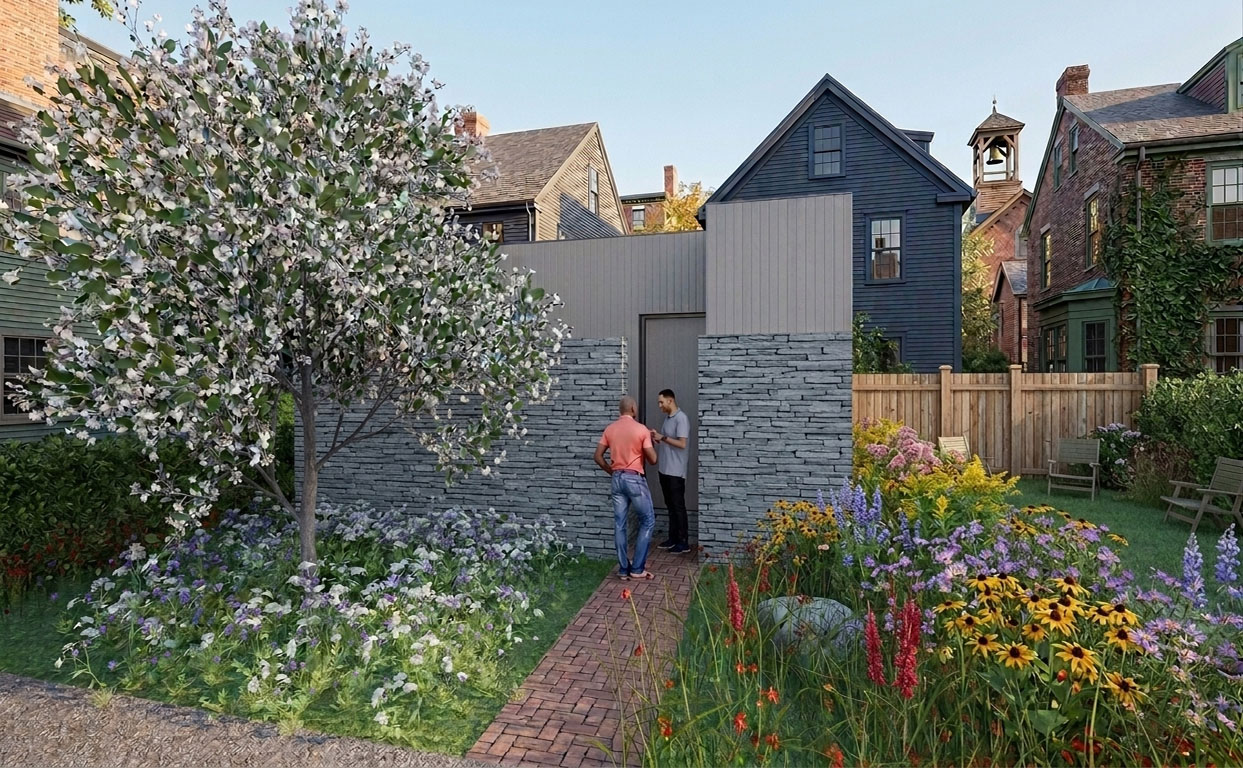
The Massachusetts ADU Challenge invited proposals for accessory dwelling units that could be built across the state under a new policy permitting them as of right in single-family zones. The hard problem an ADU has to solve is small but stubborn: how to make a one- or two-person home that has real light, real privacy, and a real outlook, on lots whose perimeters are rarely generous enough to provide any of those things reliably. A side yard might face a neighbor’s driveway; a back yard might be the only deep view on the lot and already promised to the existing house. The usual answer is to take what the site offers and hope.
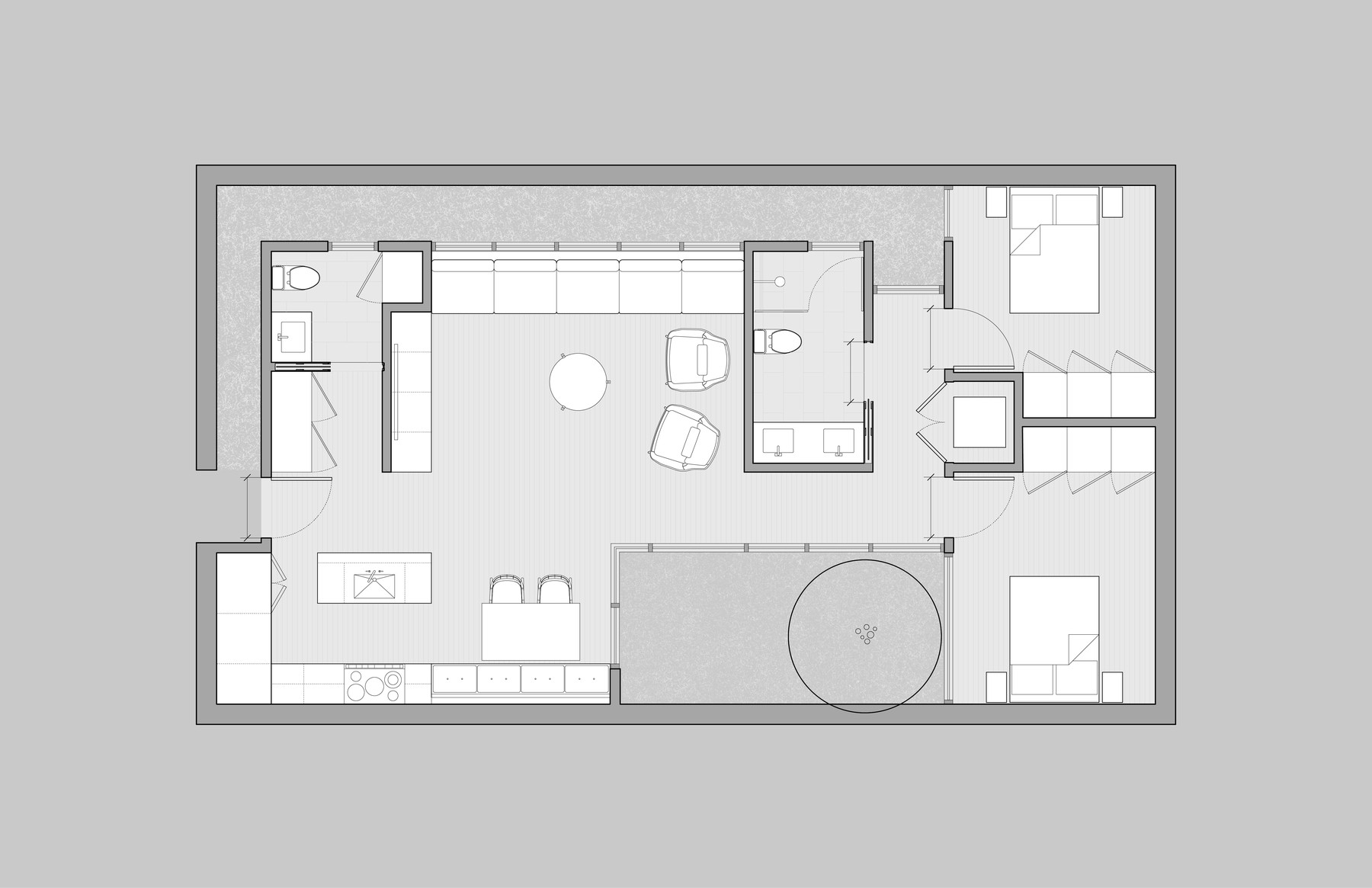
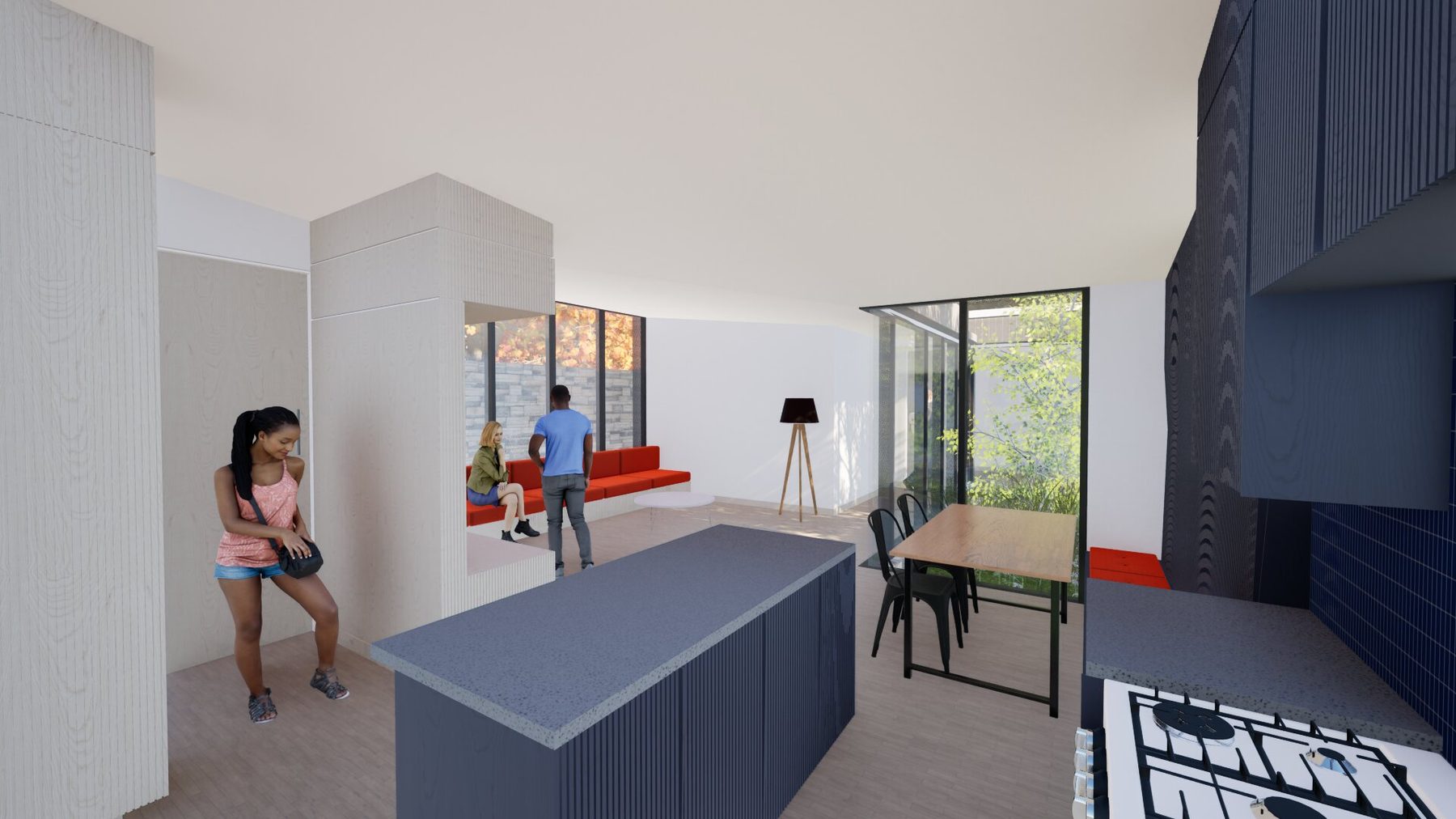
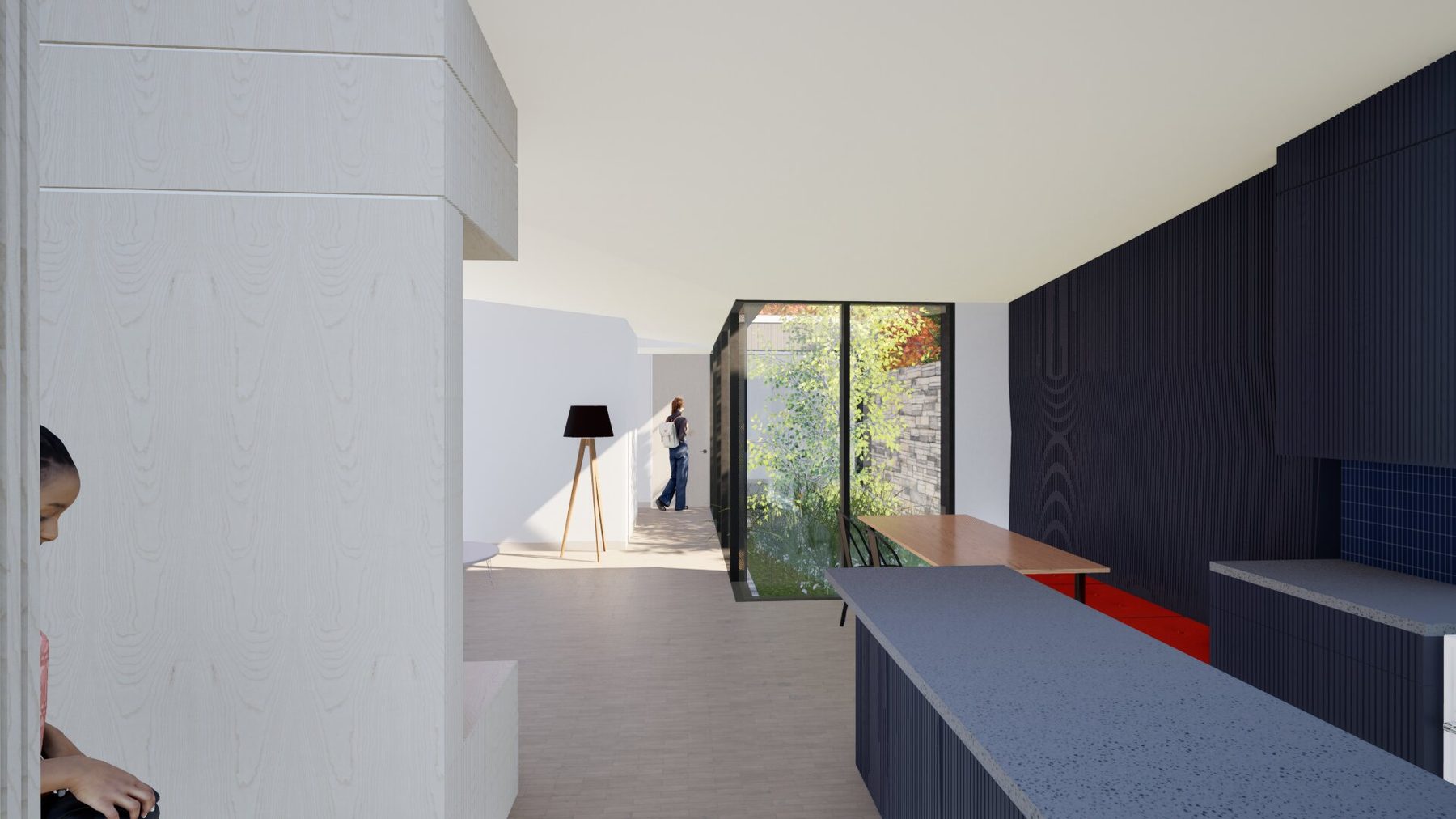
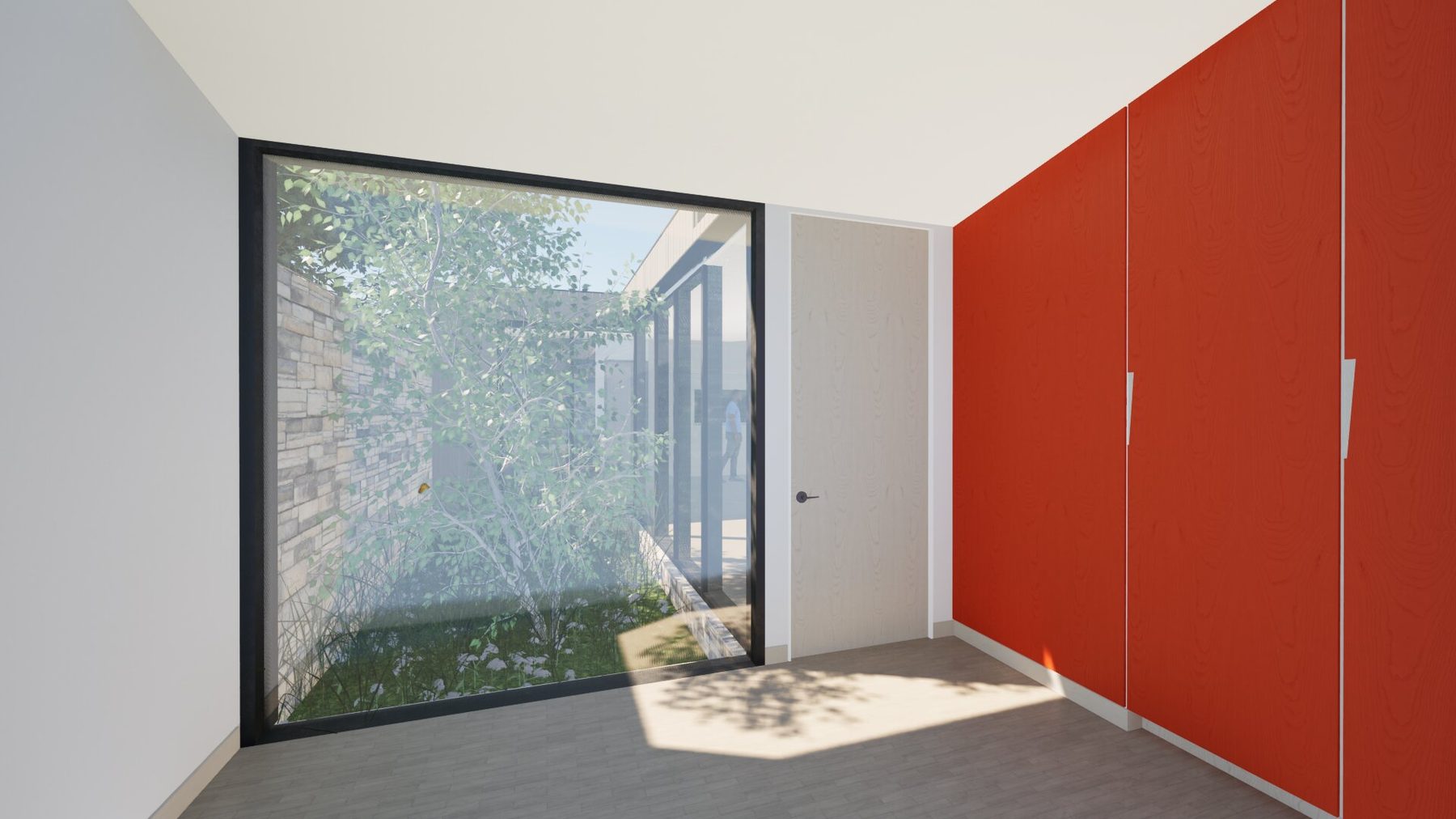
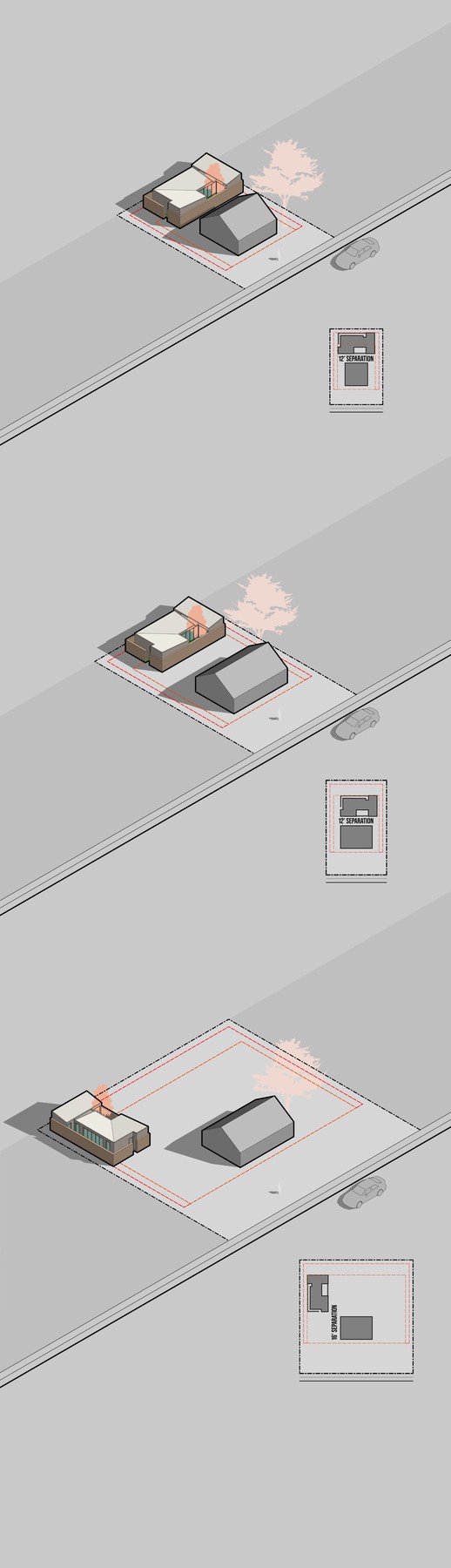
The office proposed an ADU that draws its light and privacy from two interior courtyards rather than from its perimeter. Every habitable room opens to one of the courtyards through a large window; the perimeter walls have almost no openings. The building stops depending on its site for its livability. The same plan works on a tight infill lot in Somerville, a mid-block parcel in Worcester, or an open suburban lot in Lexington — the rooms get the same light and the same outlook in each case, because the outlook is built in. On a large site the courtyard walls can be opened to release the views outward; the move runs in both directions.
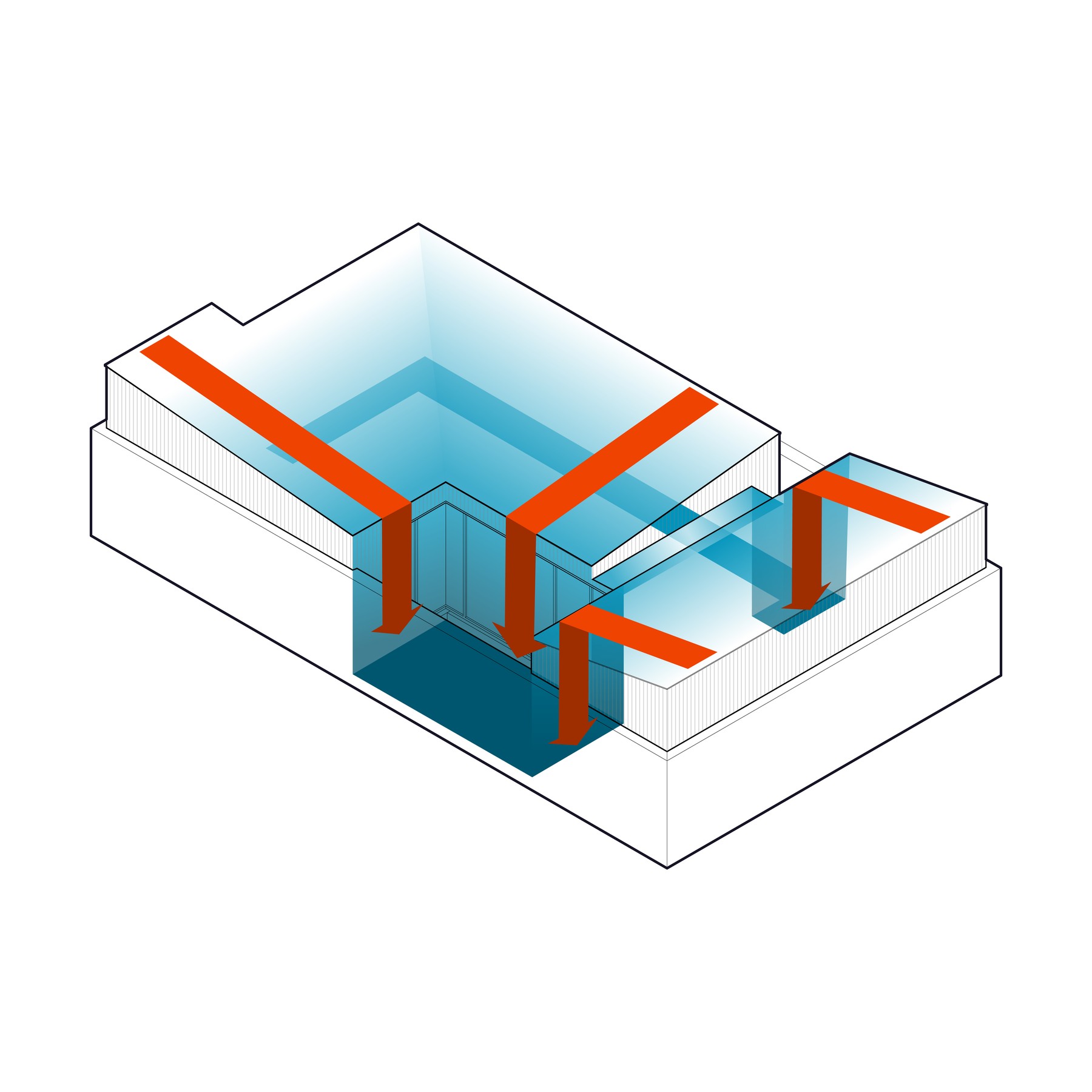
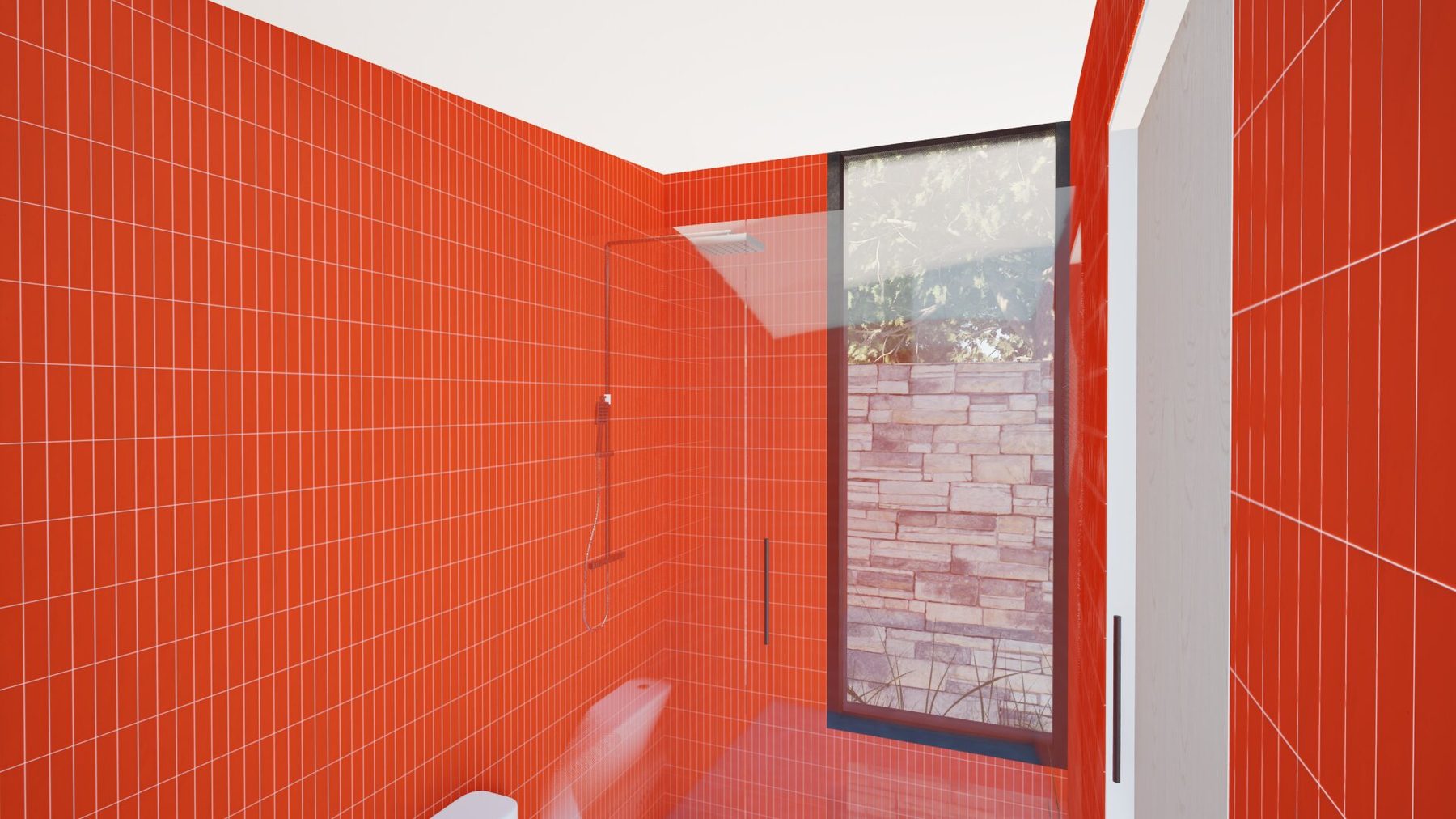
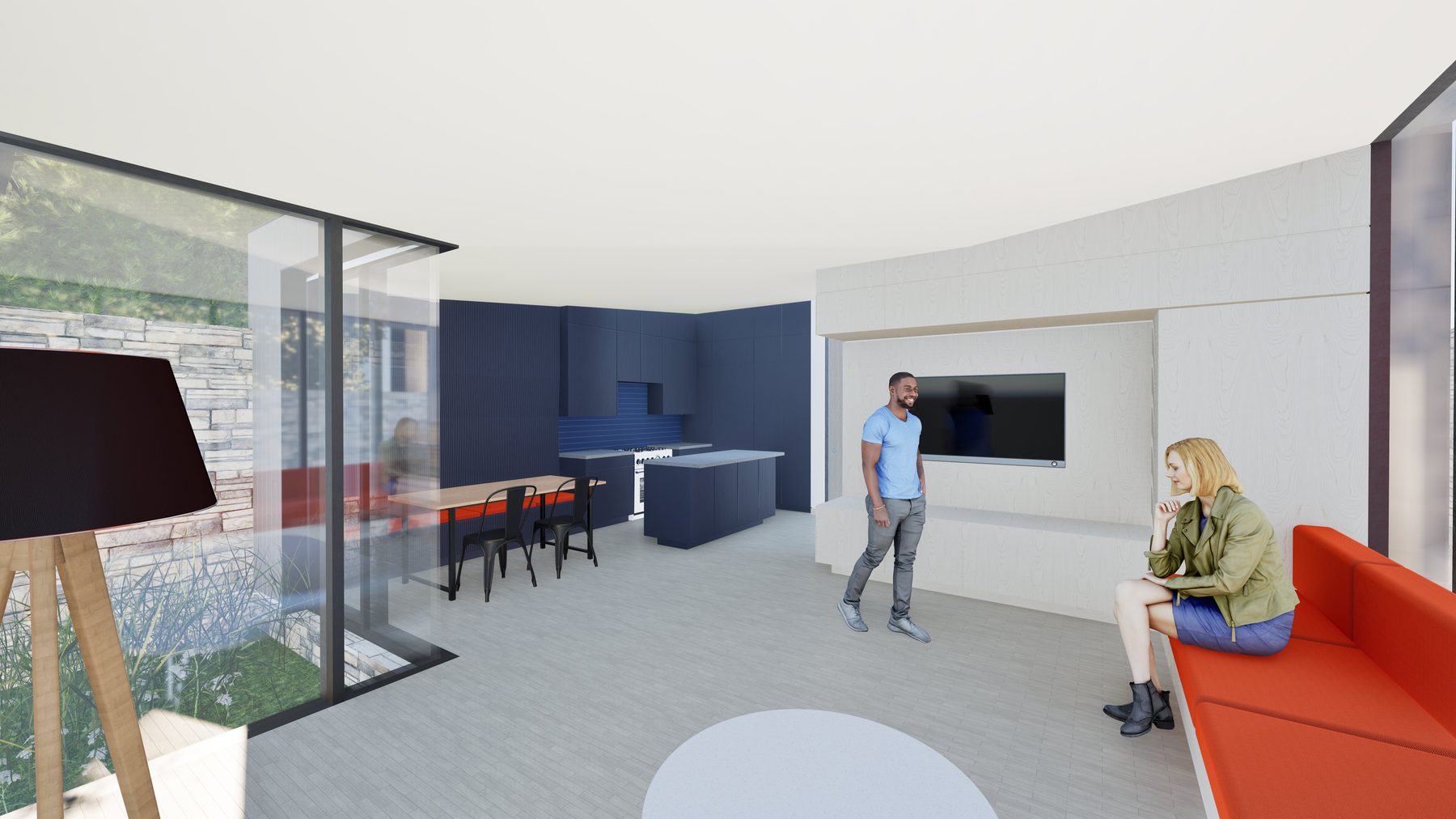
The consequences extend past the plan. Fewer perimeter windows mean a simpler exterior wall assembly and a smaller share of the budget spent on one of the most expensive components in residential construction. Stormwater is collected and managed entirely within the courtyards, which carries no burden onto the surrounding site and removes the need for separate drainage infrastructure. Inside, the public rooms — kitchen, dining, living — sit in the middle of the plan and open to both courtyards; the bathroom buffers the bedrooms acoustically and spatially, so the building zones cleanly without a corridor. The footprint is small. The plan reads larger than it is.