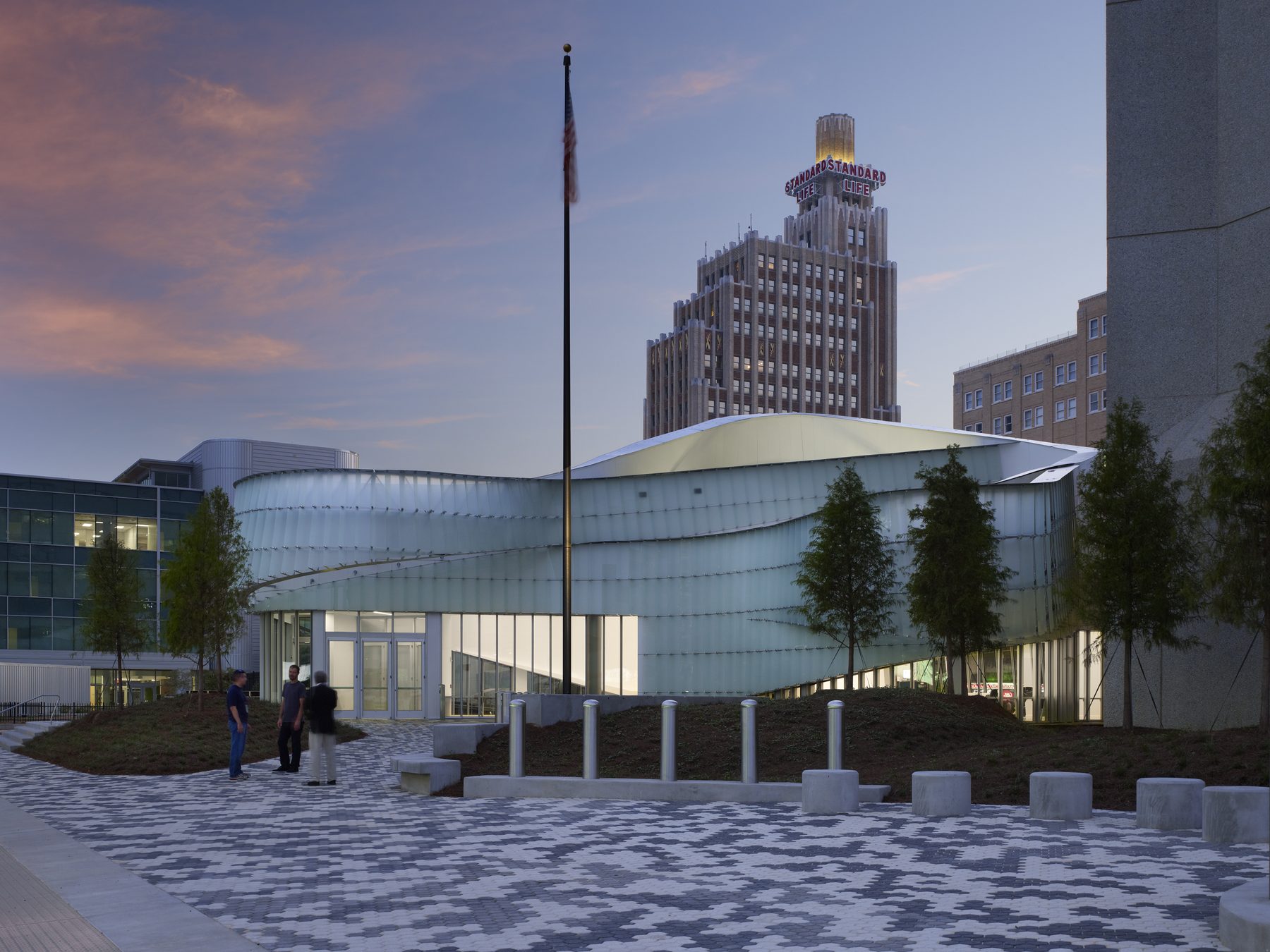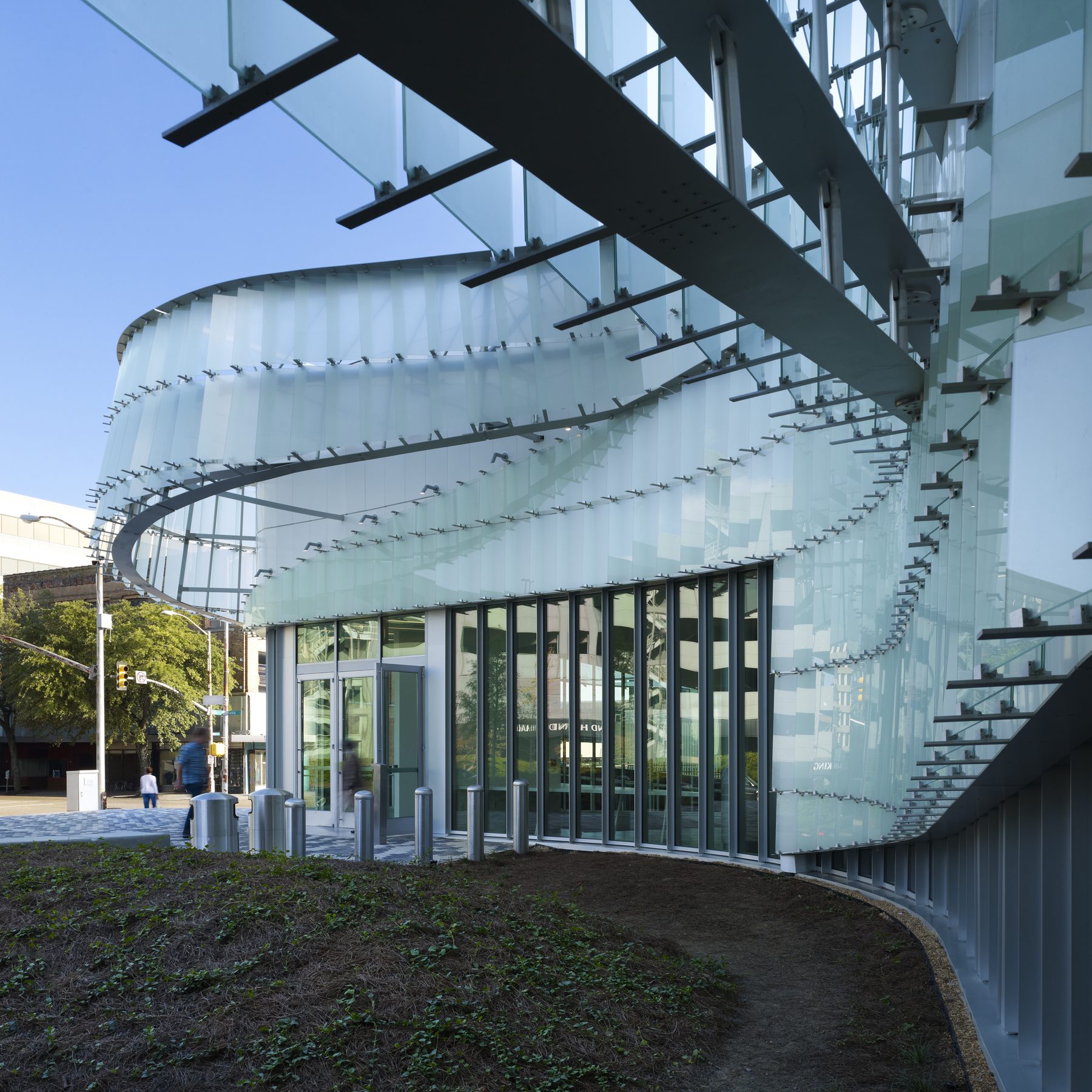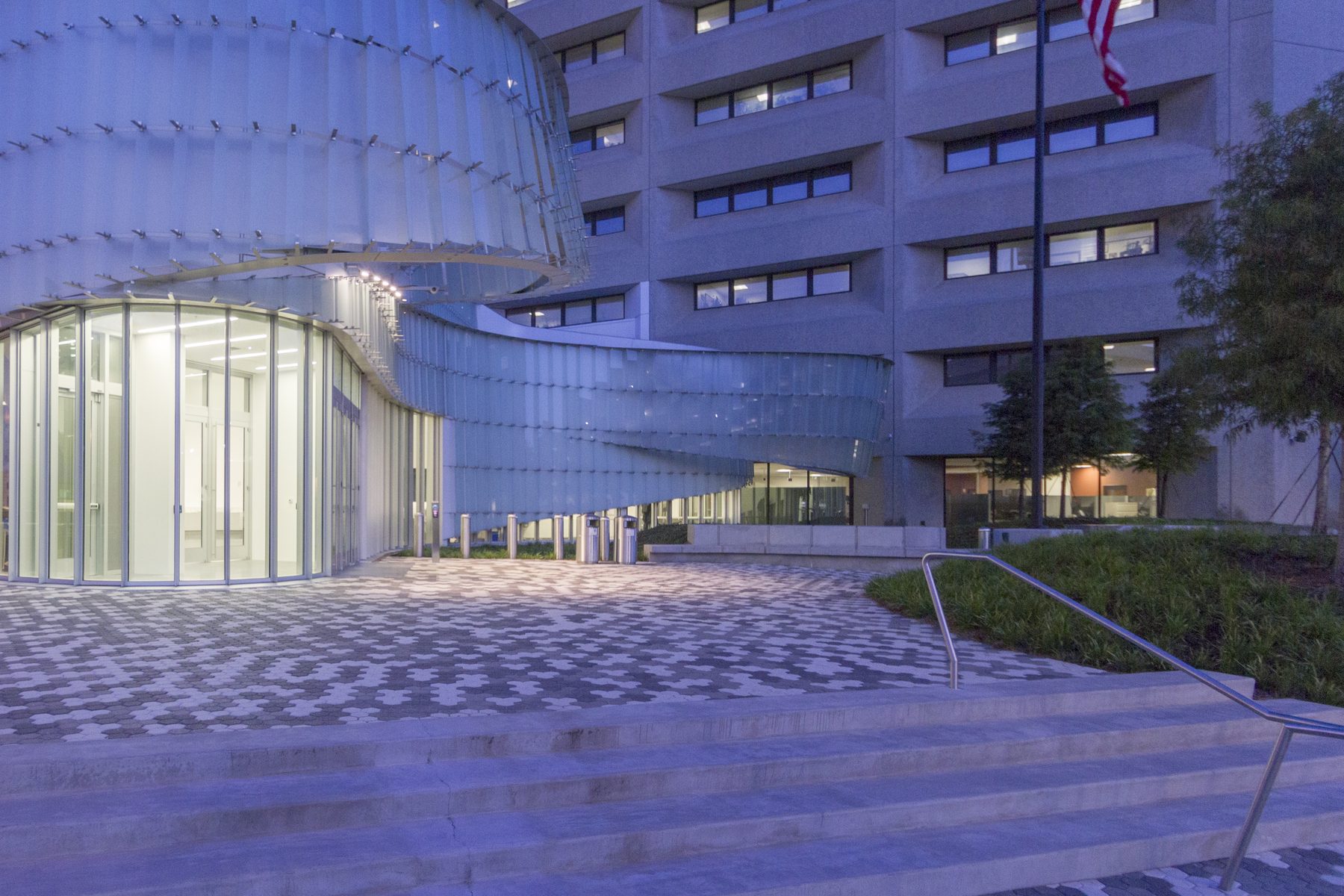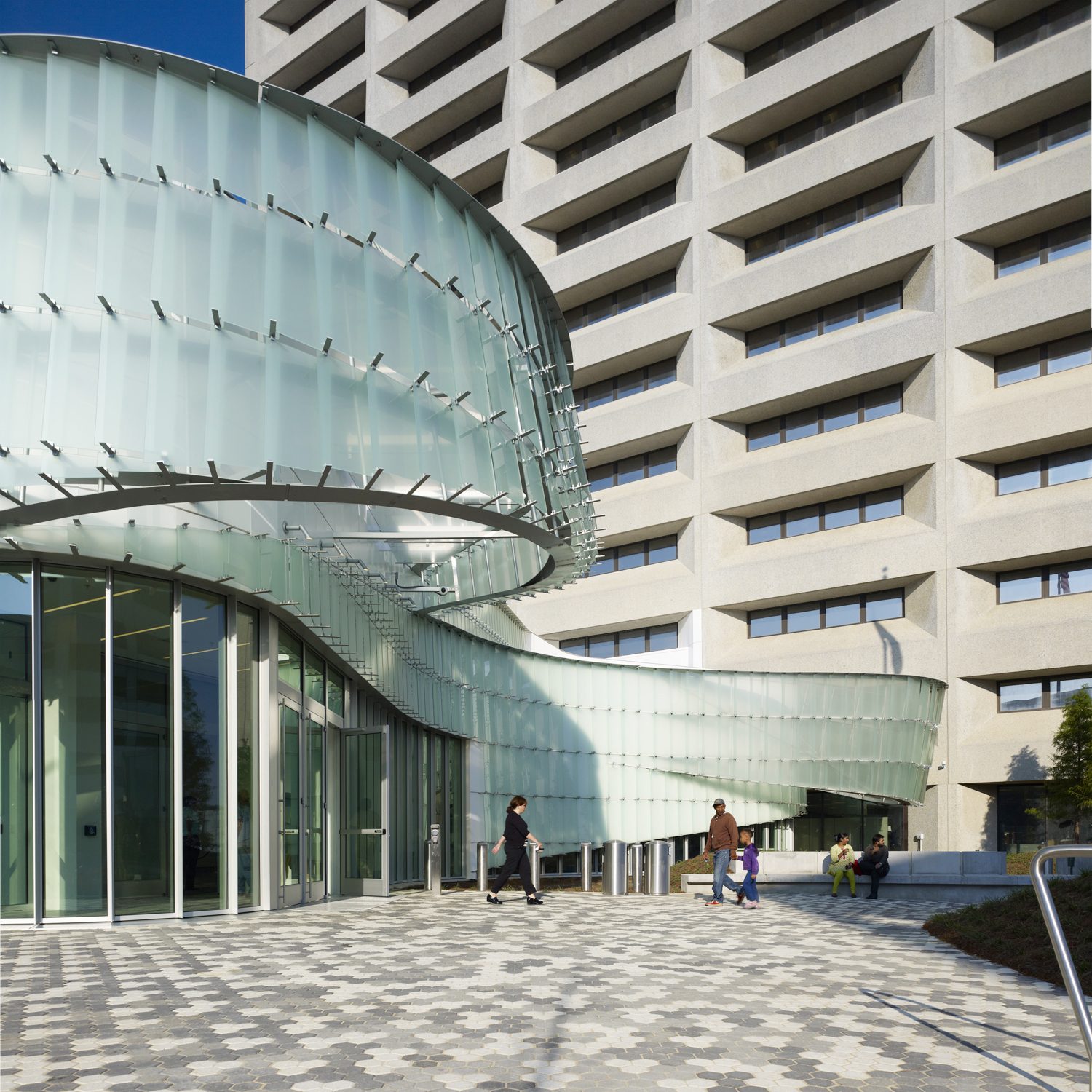
The McCoy pavilion's translucent glass-shingle curve against the concrete grid of the federal tower behind it

Dr. A.H. McCoy Federal Building

Jackson, Mississippi

The McCoy Federal Building is a 1970s concrete office tower in downtown Jackson, Mississippi. After the Oklahoma City bombing, the General Services Administration moved to relocate security screening out of federal buildings and into separate pavilions at their base — sacrificial structures meant to absorb a blast before it reaches the primary building. The McCoy pavilion is one of those. The project asked us to take that brief and make it civic: a building that announces what it is without being defensive about it, and that gives the tower a new public face on the street.

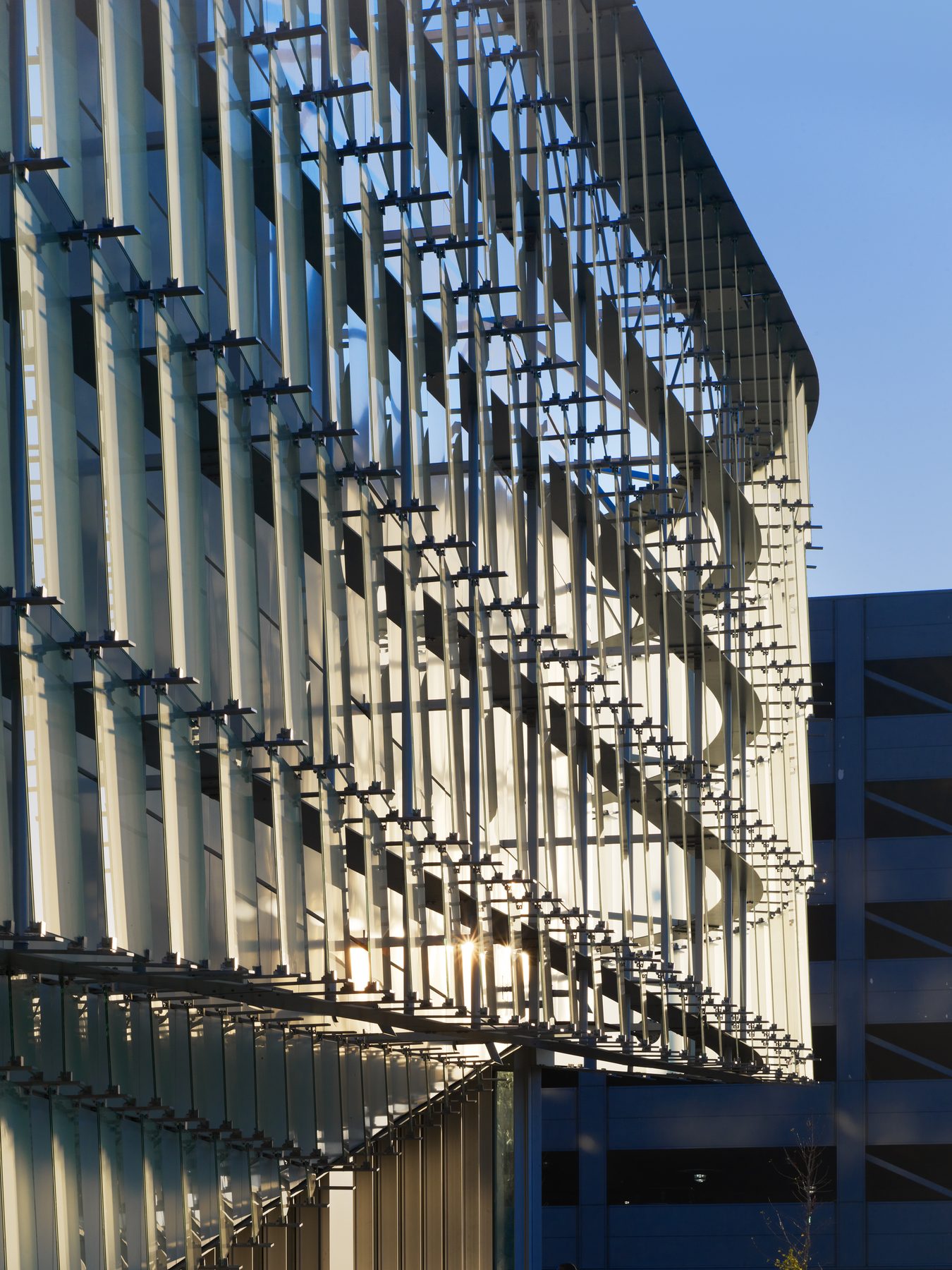
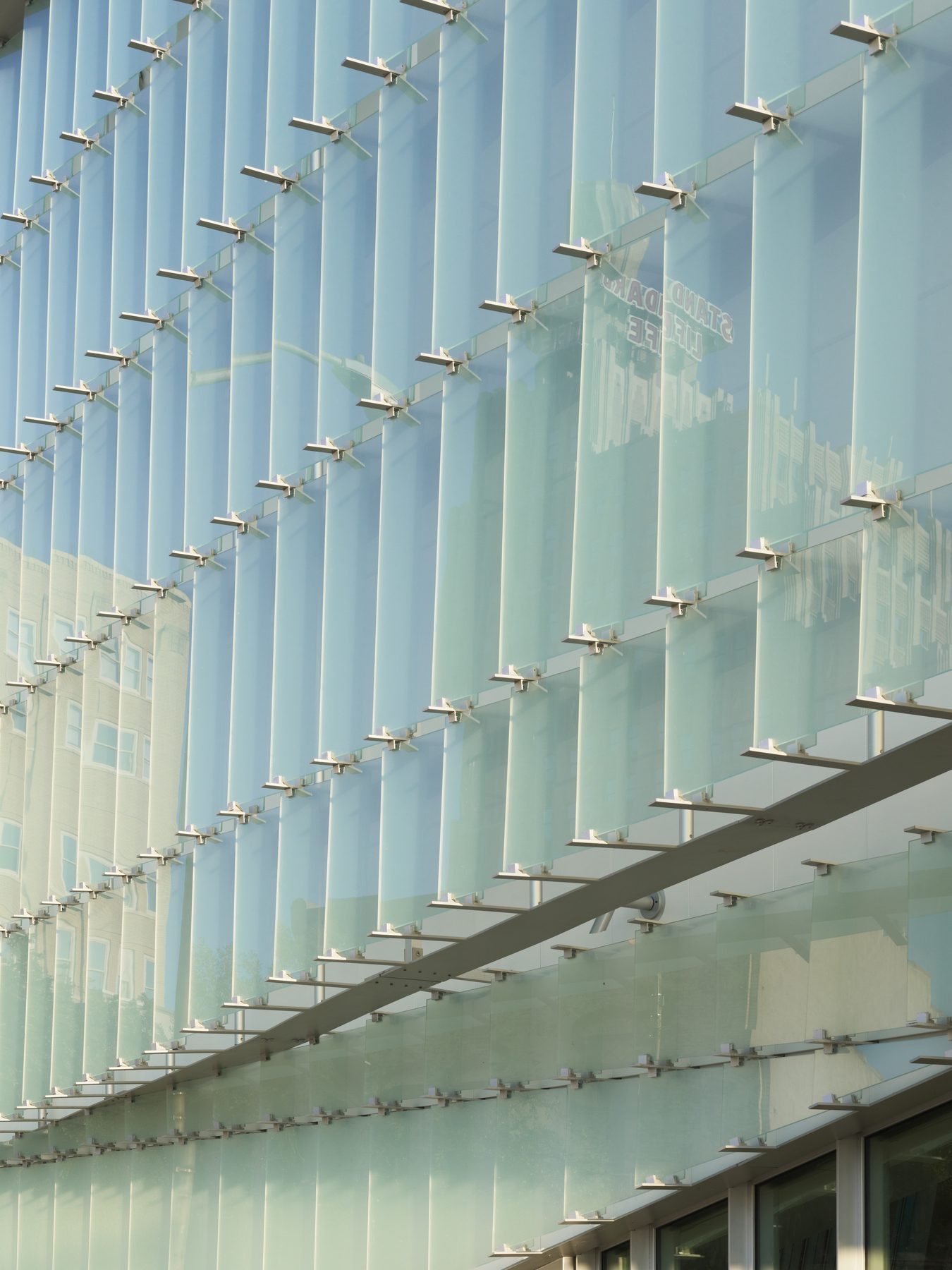
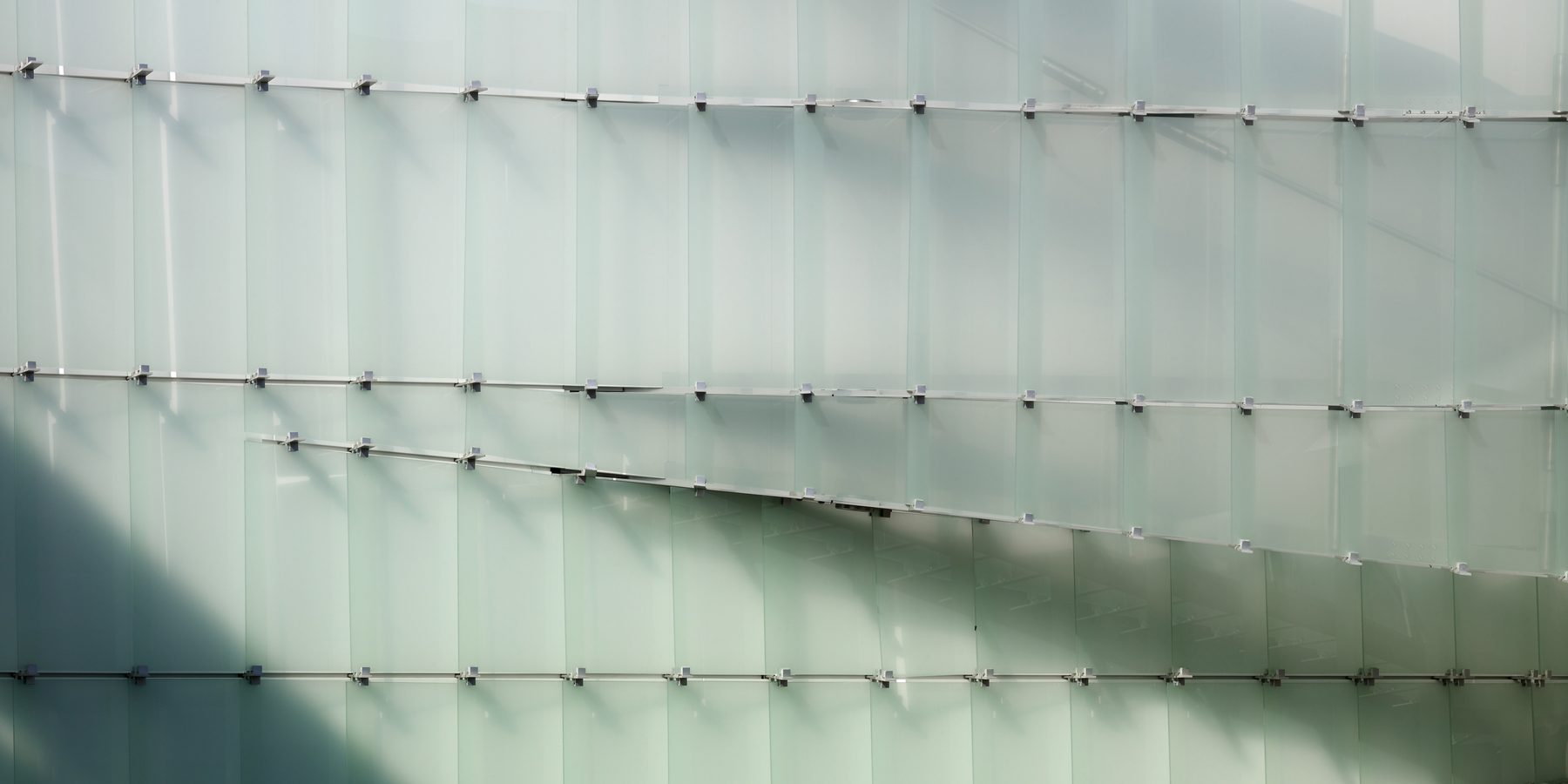
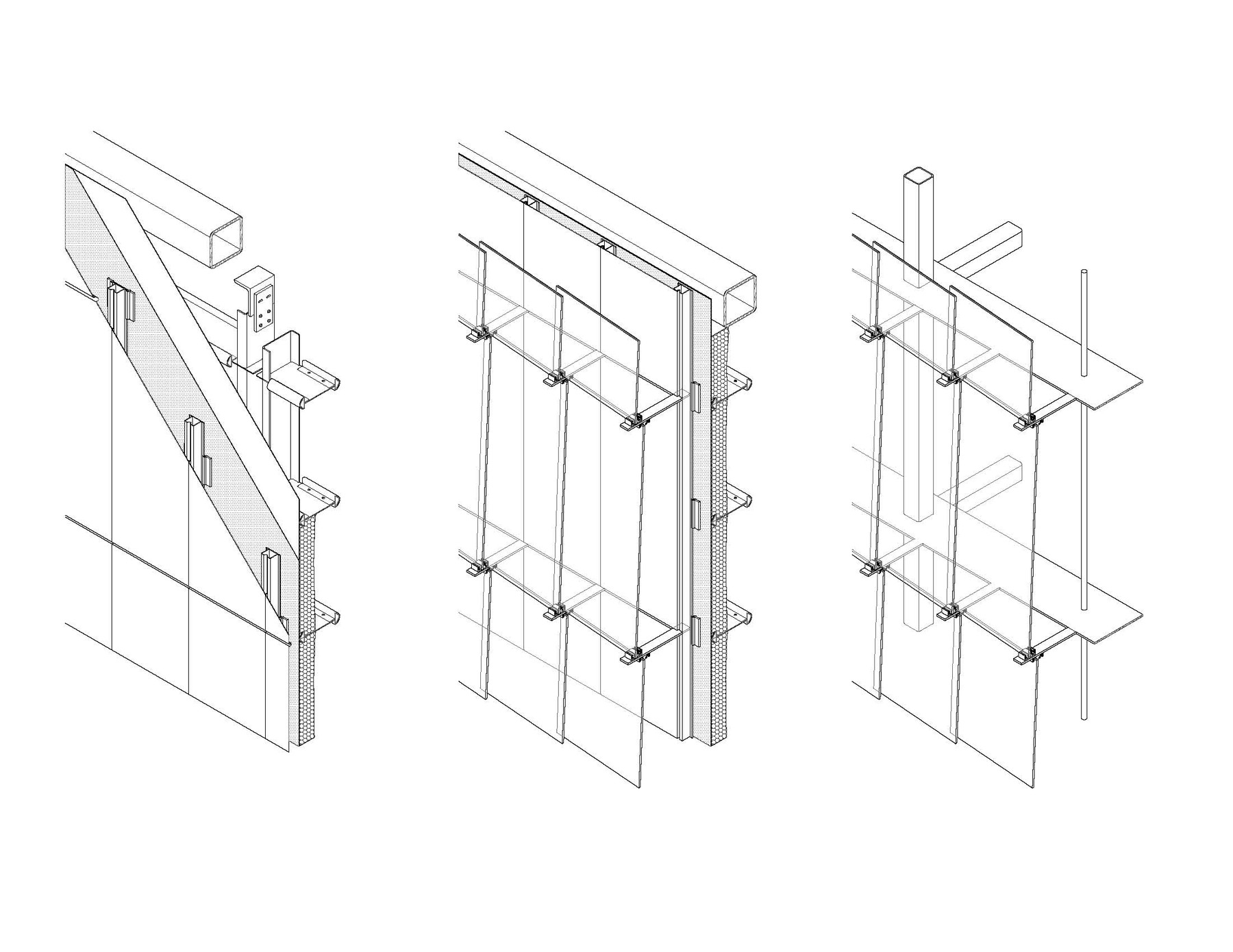
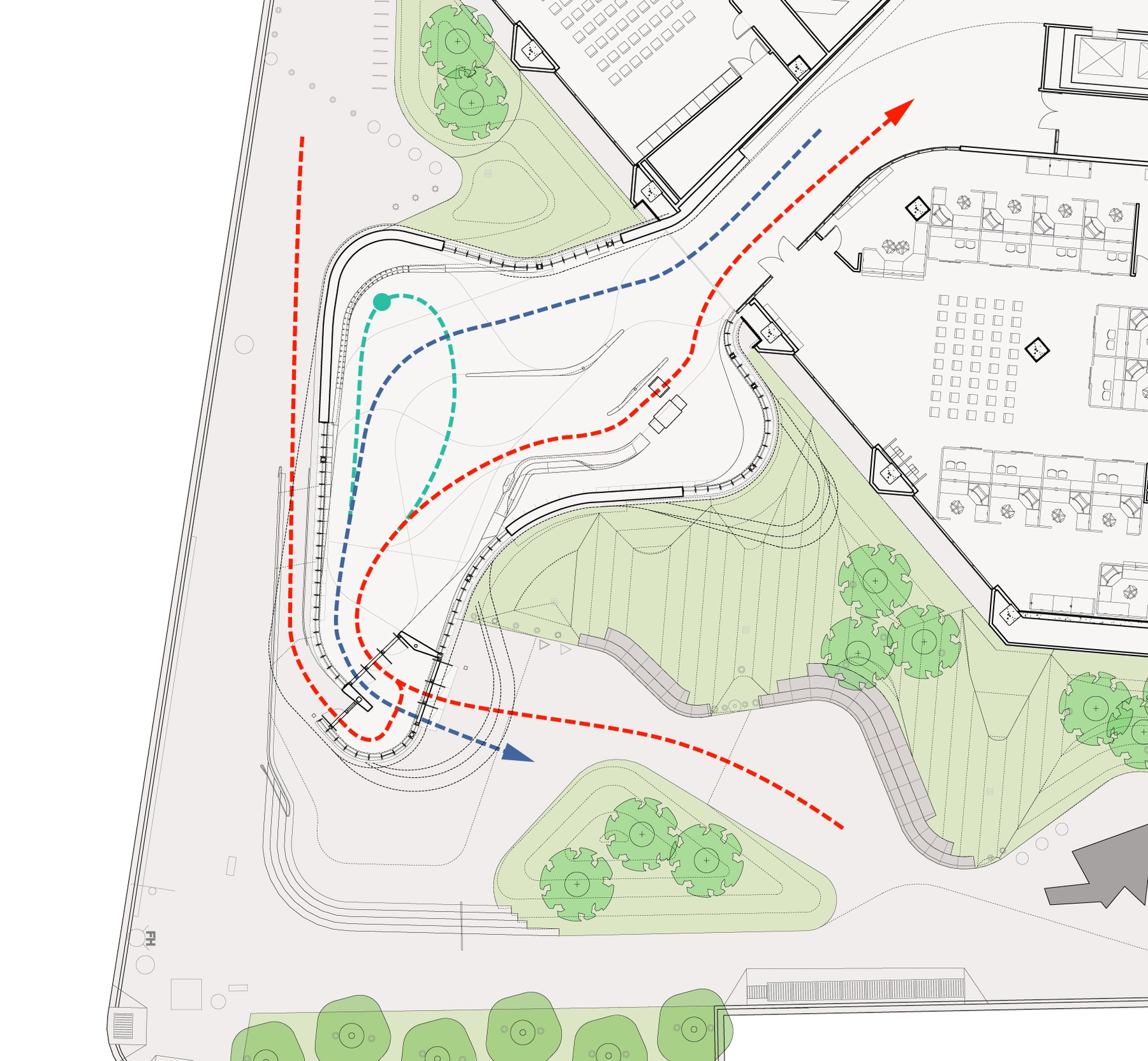
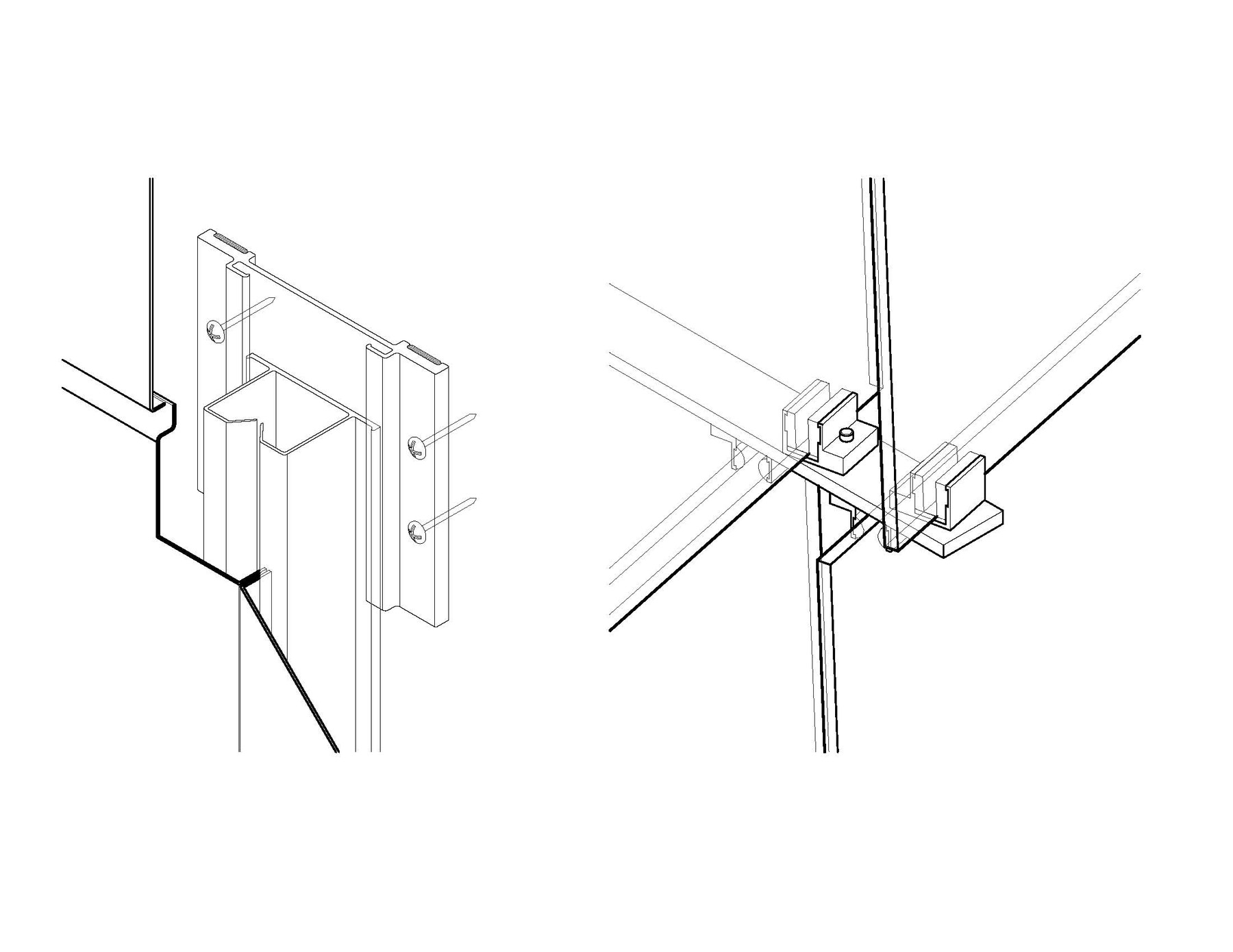
The plan geometry took its cues from the Mississippi River meander patterns documented in Harold Fisk’s 1944 maps for the Army Corps of Engineers — the looping, oxbowed traces of where the river has been. The pavilion’s sinuous footprint is a small piece of that landscape logic translated to a downtown corner. The skin is a system of 19″ × 50″ glass shingles hung from aluminum rails on a ribbon-and-quill structure that lets the shingles flow around the curving plan while staying a standard size — a piece of constructional discipline we developed with Dewhurst MacFarlane on the engineering and Zahner on the fabrication, working in close 3D coordination because the tolerances left no room to figure it out in the field. The aluminum rails grow incrementally longer as they rise, so the skin bristles slightly toward the top: a quiet acknowledgment of the building’s defensive role beneath the welcoming surface.

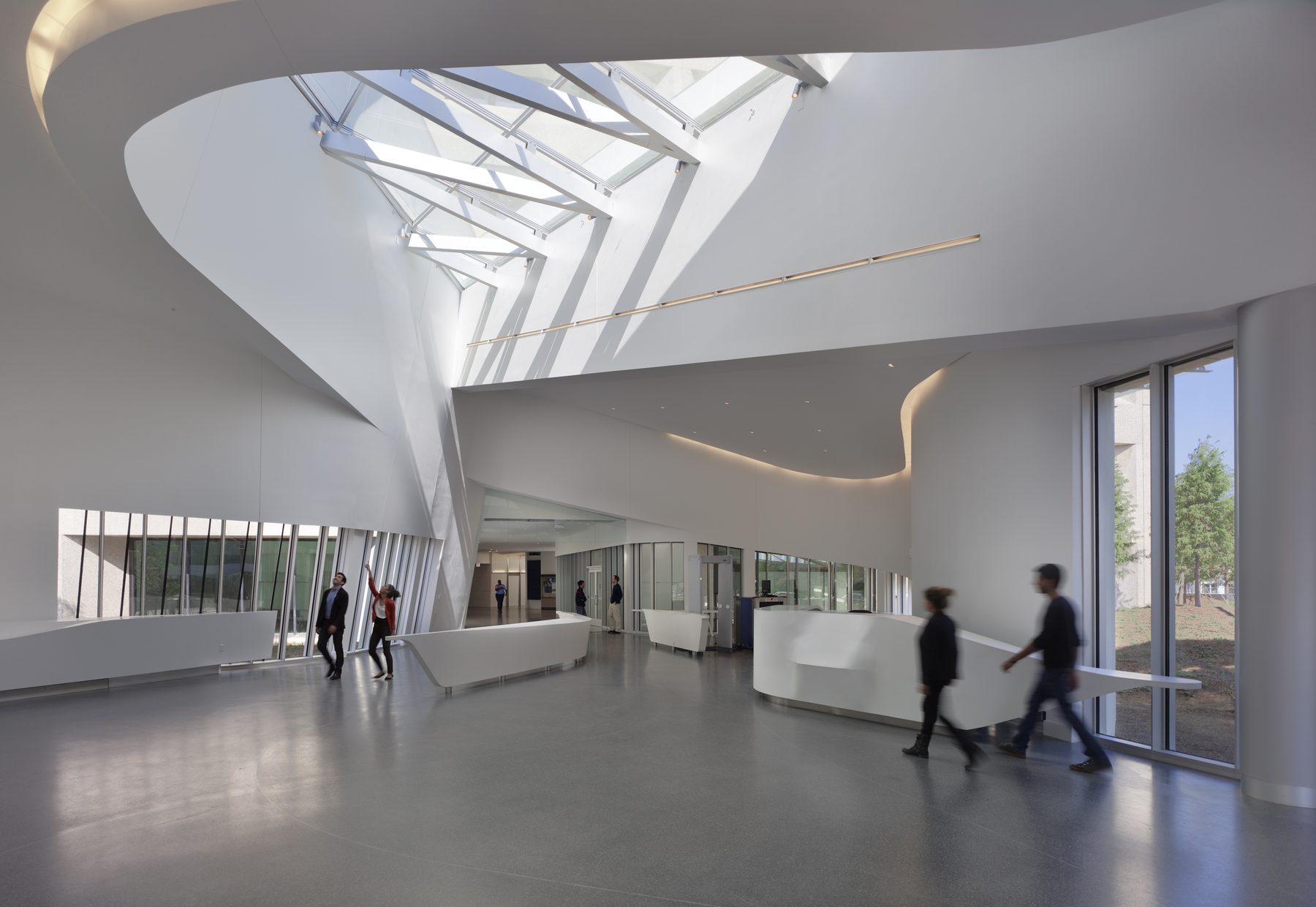
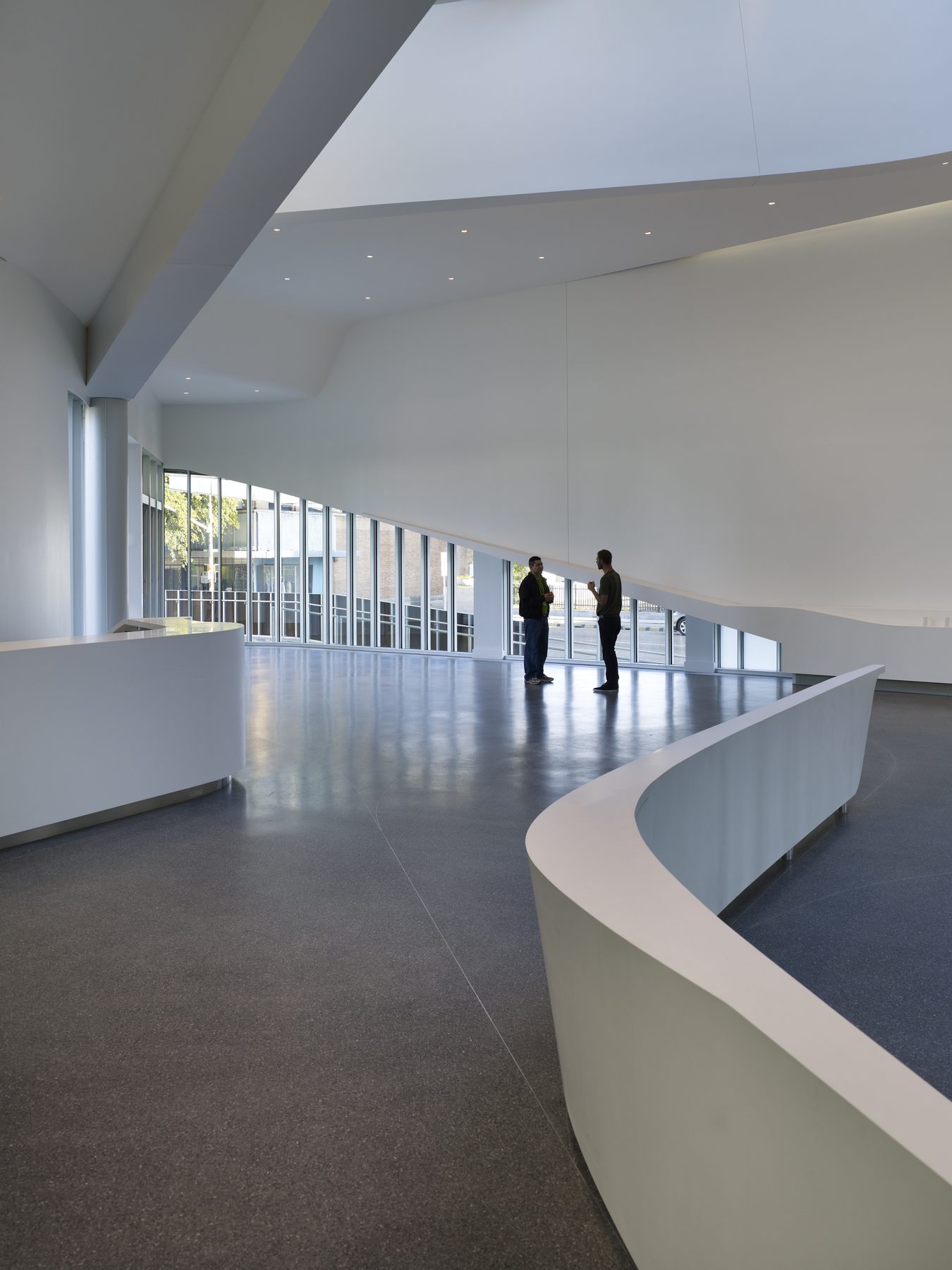
Inside, the pavilion opens to a skylit lobby that carries the spiral of the plan upward. The geometry that reads as a soft curve from the street resolves overhead into faceted white planes and a large skylight that pulls daylight down through the screening floor. The translucent glass holds the city as a soft reflection in daylight and lets the lobby read as a lantern from the street at dusk.

Project Team
Principal
Warren Schwartz, AIA
Project Manager
Peter Kleiner, AIA
Project Architect
Michael Schanbacher, AIA
Project Team
Nelson Liu  ·  Kerri Frick, AIA  ·  Zach Craun, AIA
Collaborators
Structural & Façade Engineering · Dewhurst MacFarlane and Partners
Fabrication · A. Zahner Company
The pavilion at dusk, with the Standard Life tower rising behind and a flagpole on the entry plaza
The ribbon-and-quill structure backlit at dusk, the aluminum rails reading as a vertical rhythm Looking up at the glass-shingle skin, the aluminum rails growing longer as they rise
A close view of the glass-shingle skin, the 19 by 50 inch panels lapped in horizontal courses
Three axonometric drawings showing the glass-shingle skin assembly, the ribbon-and-quill structure, and the steel framing behind it
Assembly Axonometric · Schwartz/Silver Architects
Plan of the pavilion showing the sinuous footprint between the entry plaza and the federal tower behind, with public circulation traced as a dashed line through the building
Site Plan & Public Circulation · Schwartz/Silver Architects
The skylit lobby with the spiral geometry resolving overhead into faceted white planes, people moving through the screening floor
The curved white counter and full-height glazing at the lobby, two people in conversation beside the windows
Two axonometric details showing the aluminum clip and rail system that holds the glass shingles in place
Shingle Clip Detail · Schwartz/Silver Architects
The pavilion at the street corner, the steel framing visible beneath the curving glass-shingle skin
The pavilion at dusk read as a lantern from the entry plaza, the lobby visible through the translucent skin and the curving glass skin sweeping around toward the tower
Photography: Alan Karchmer and A. Zahner Company  /  Courtesy Schwartz/Silver Architects
More
View all projects Project archive