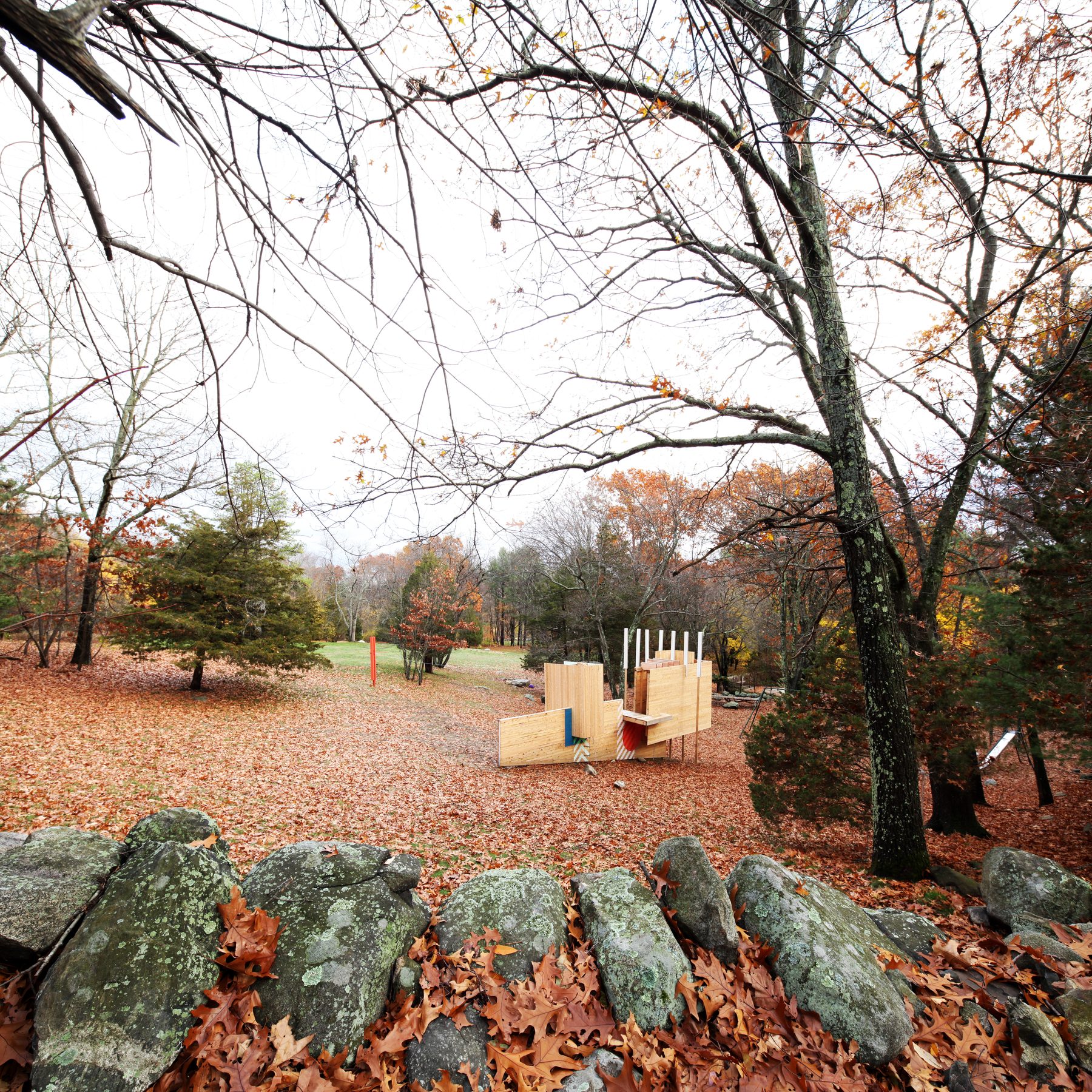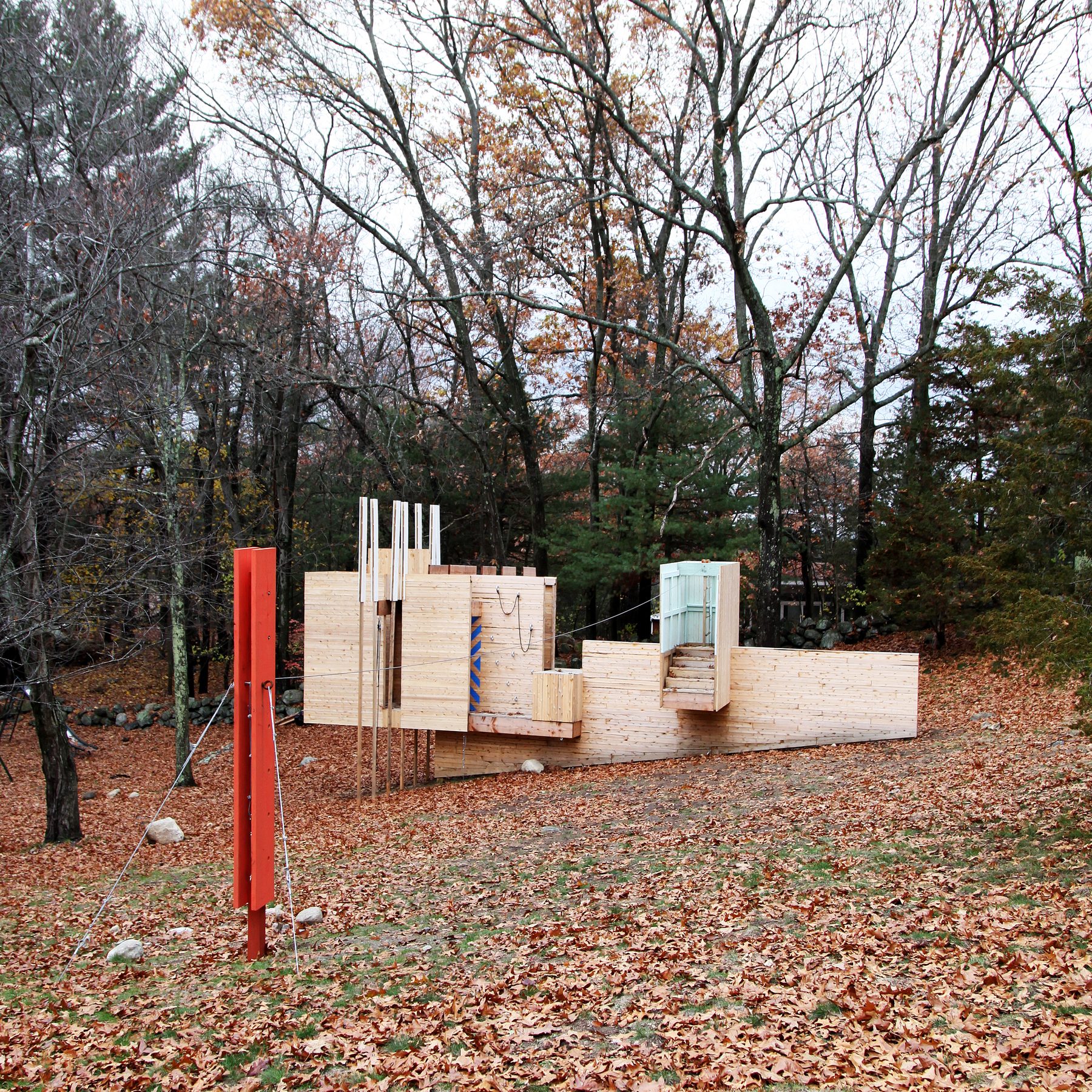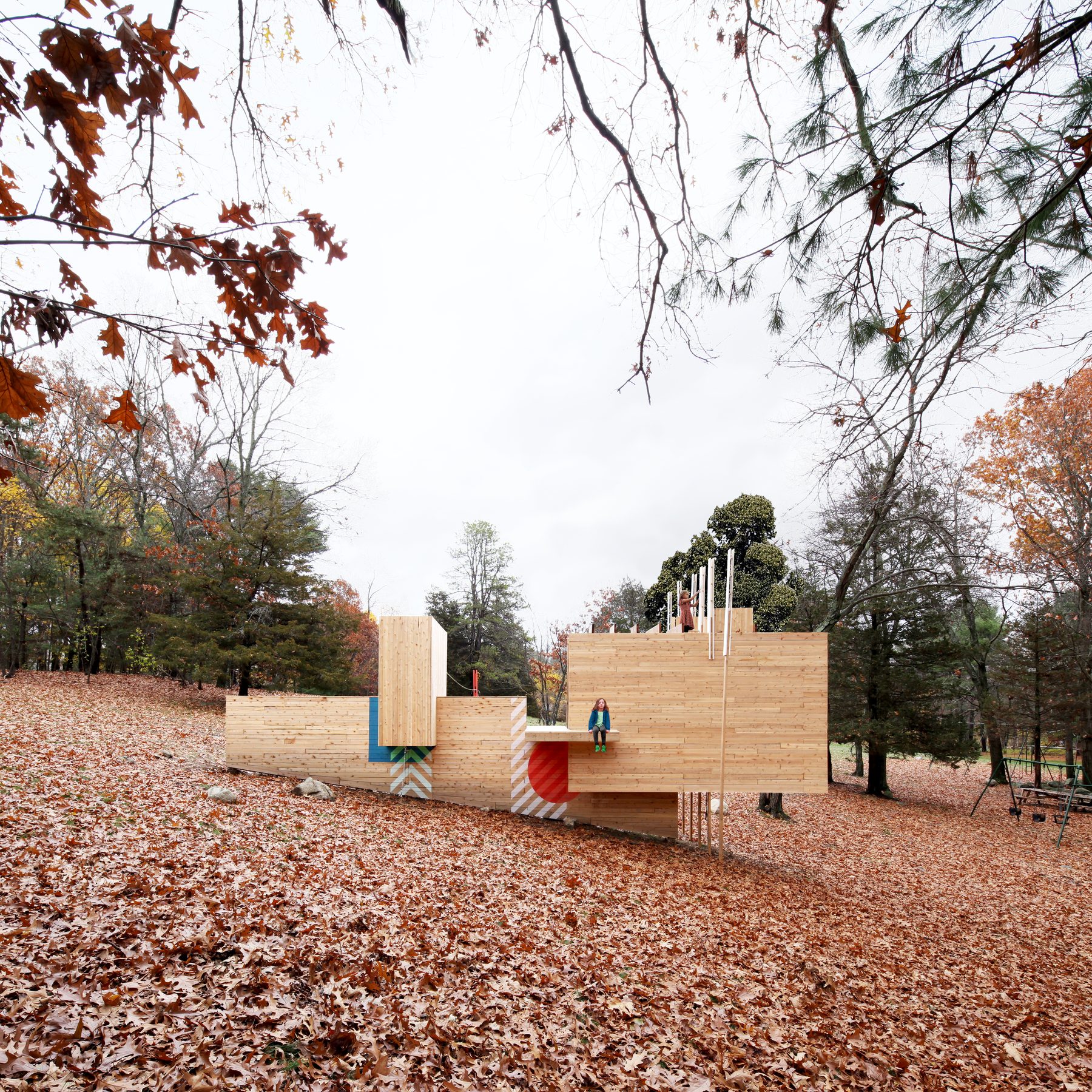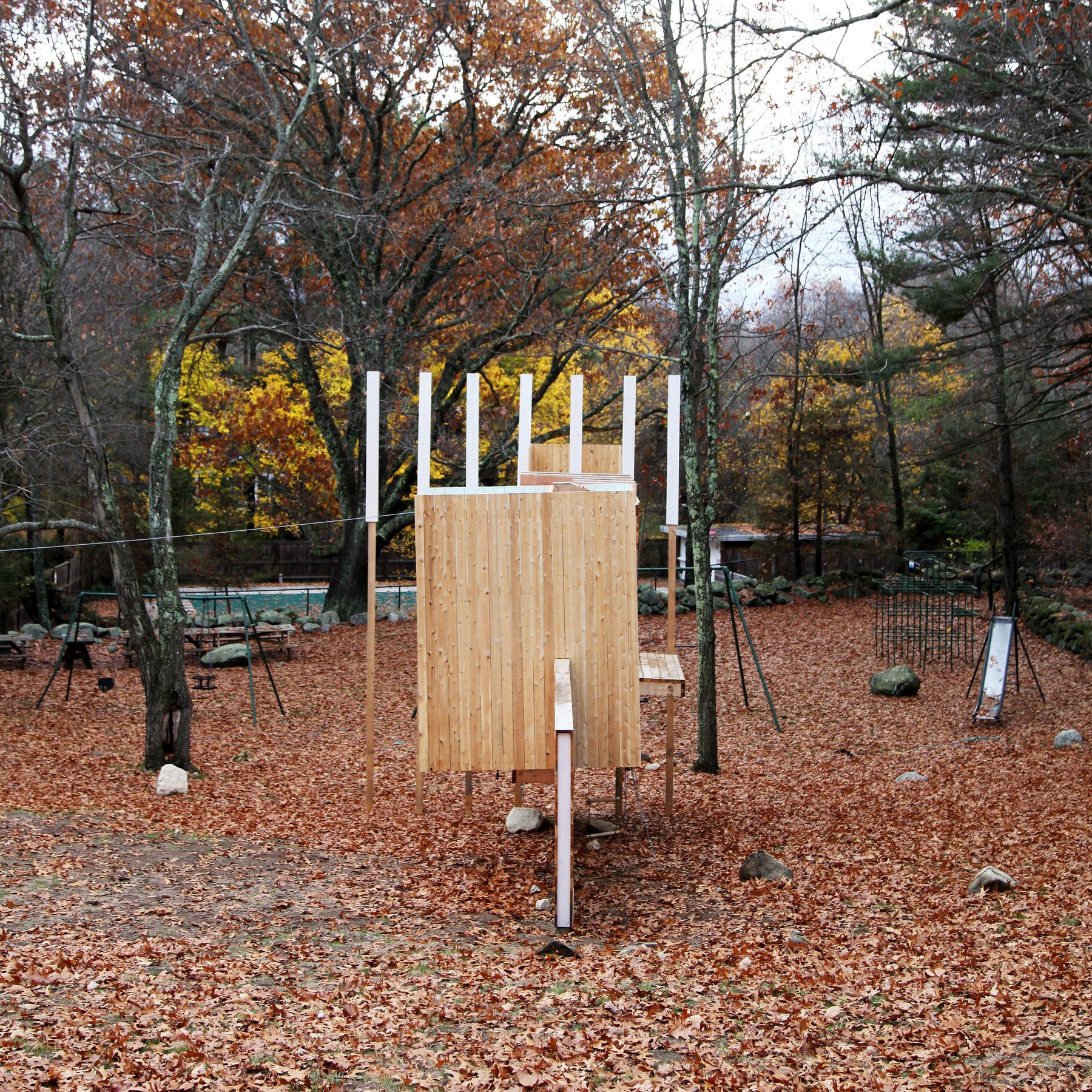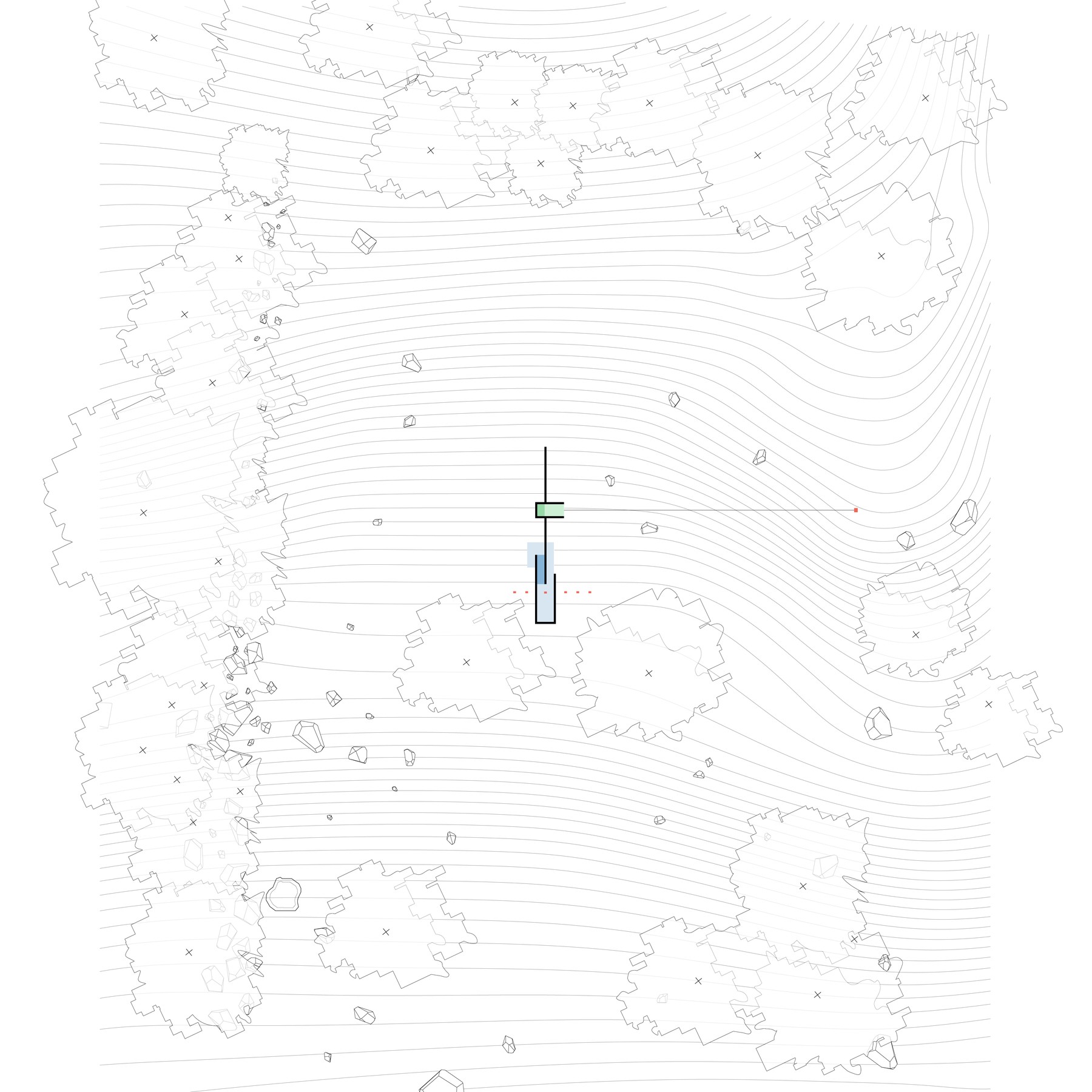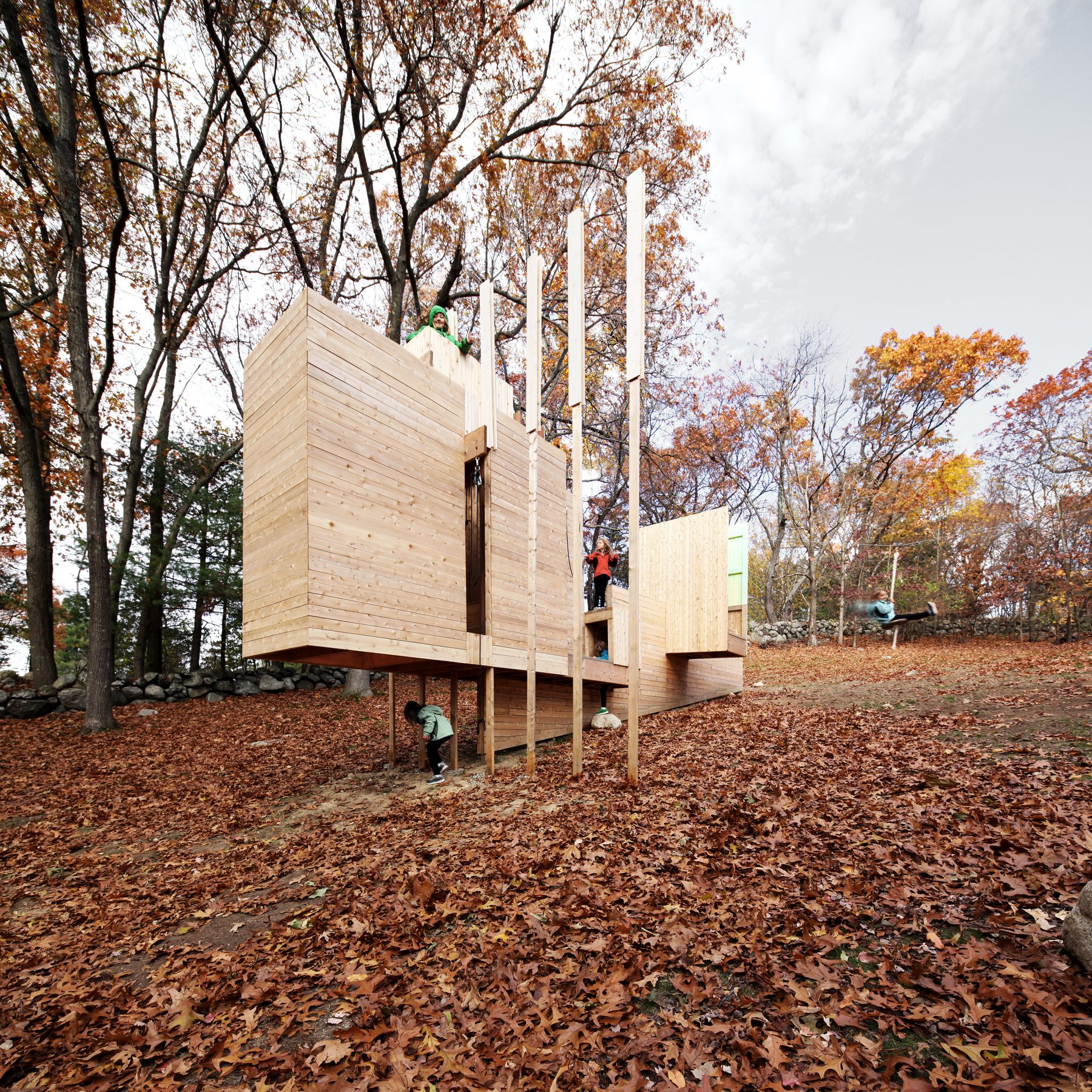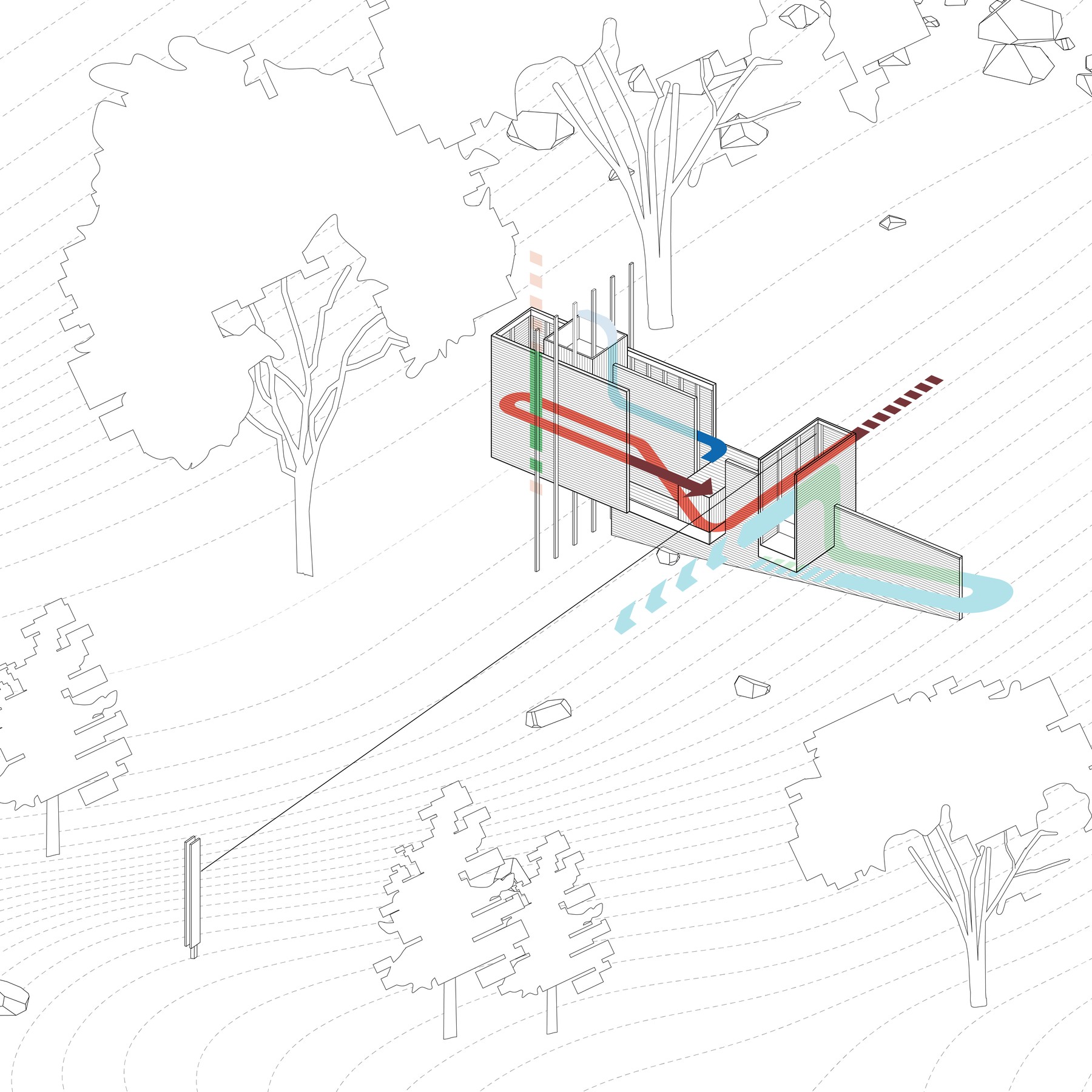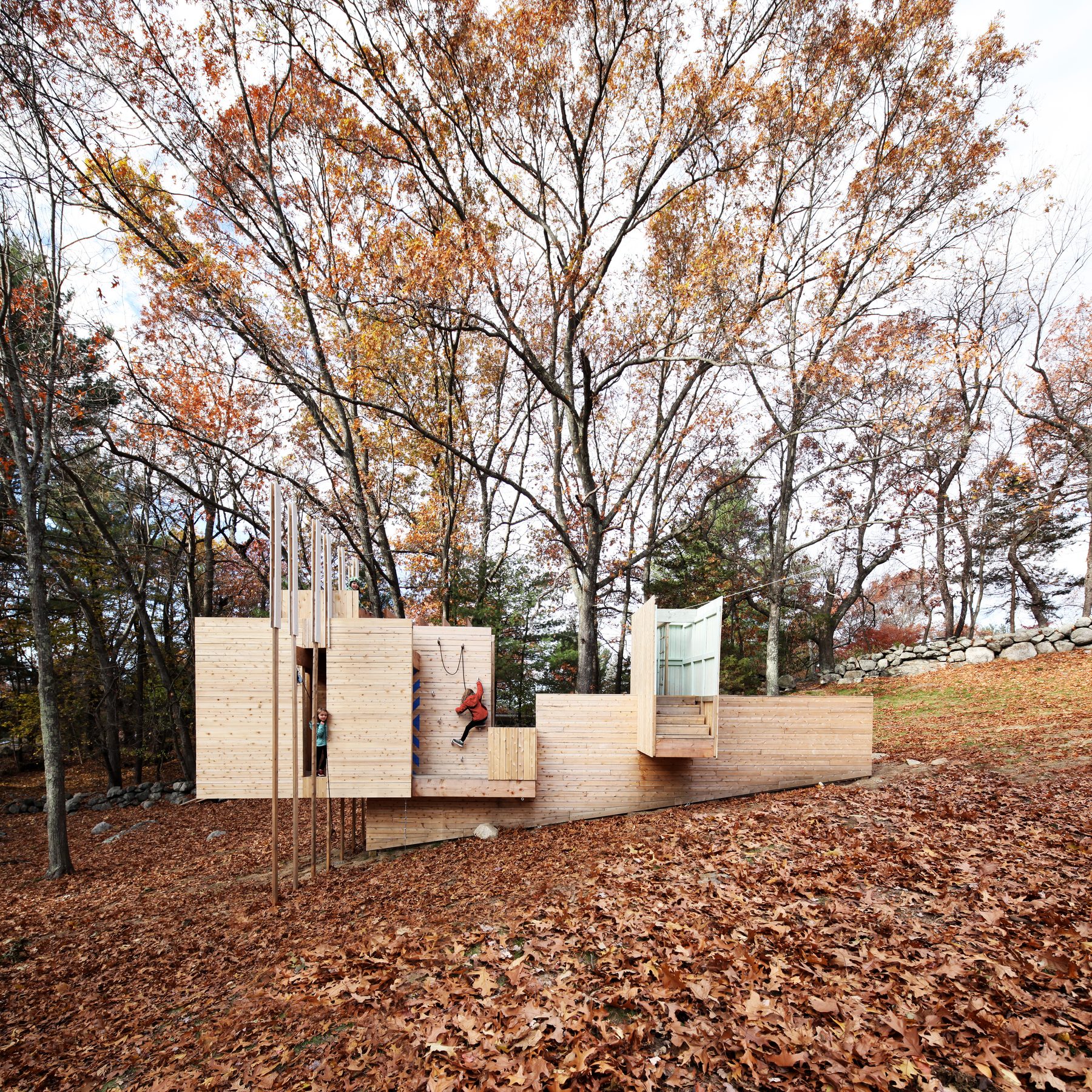
The play structure sits in a clearing on the common land of the Five Fields neighborhood — the TAC-designed Lexington neighborhood the practice takes its name from. It is built into a slope, set against an old stone wall, framed by the forest. Existing play equipment was already on the site when we arrived: swings, a slide, a sandbox, the things a neighborhood accumulates over sixty years of using a piece of shared ground. We treated those as the program. The new structure is the part that wasn’t there yet.
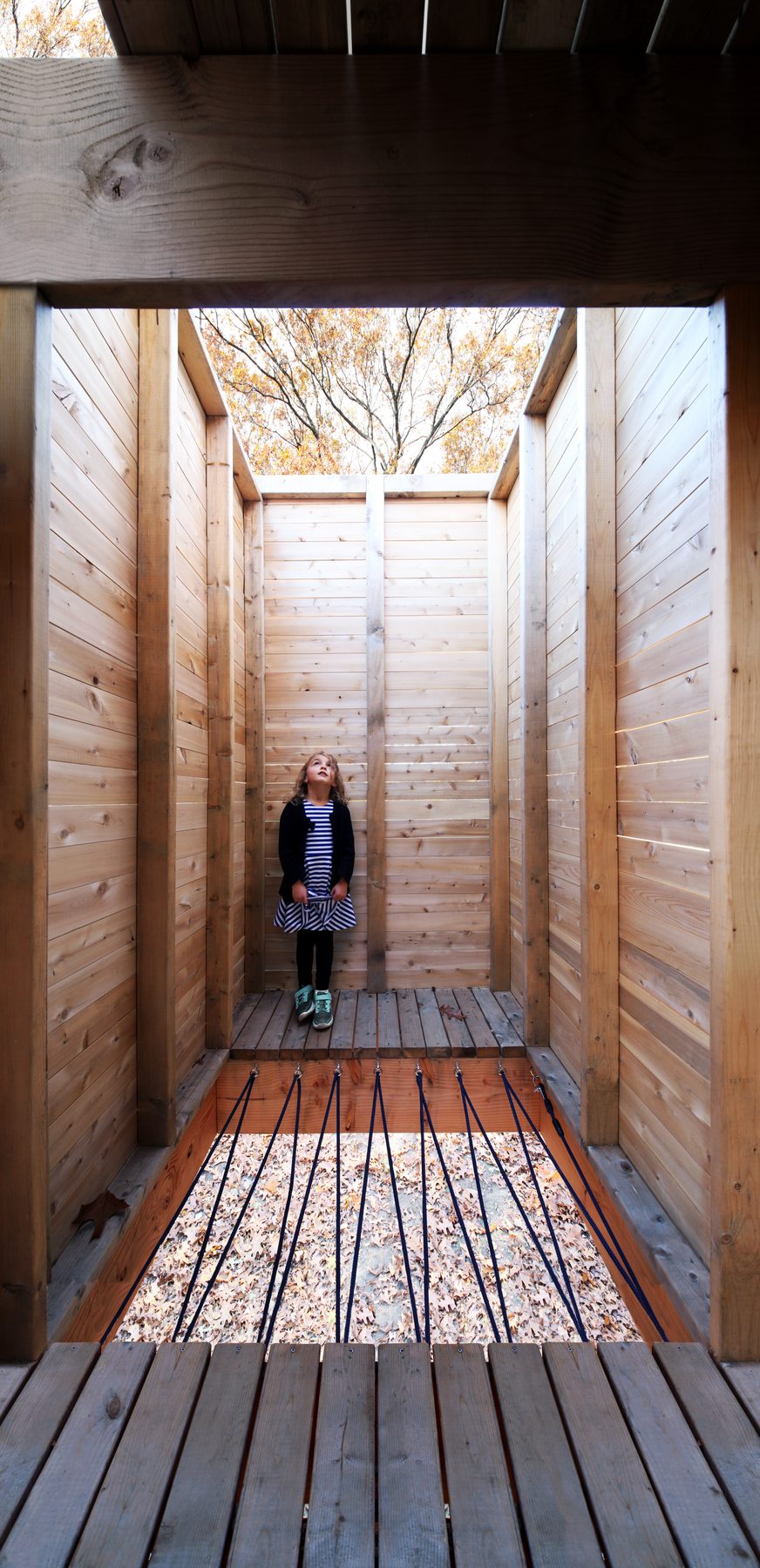
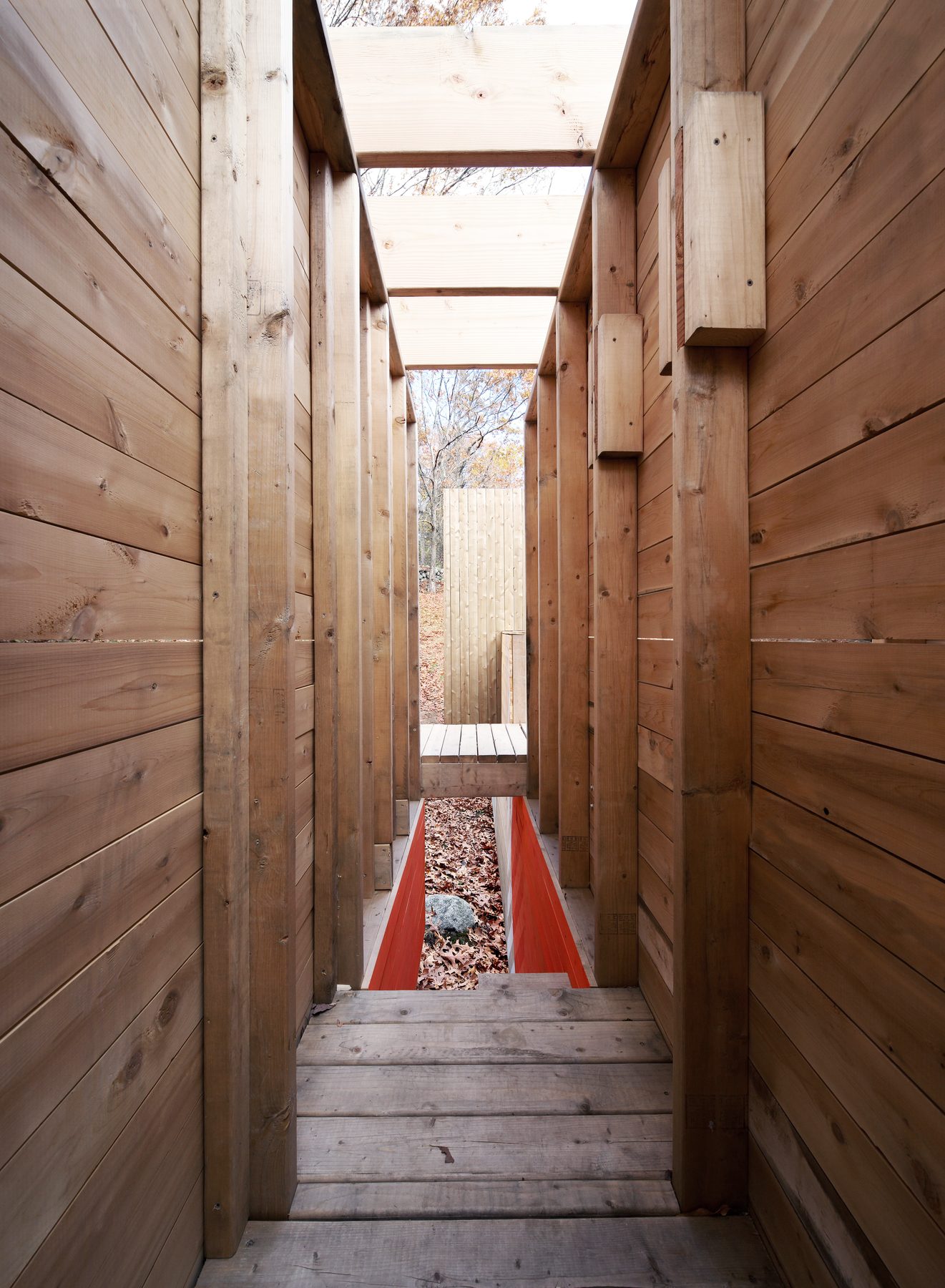
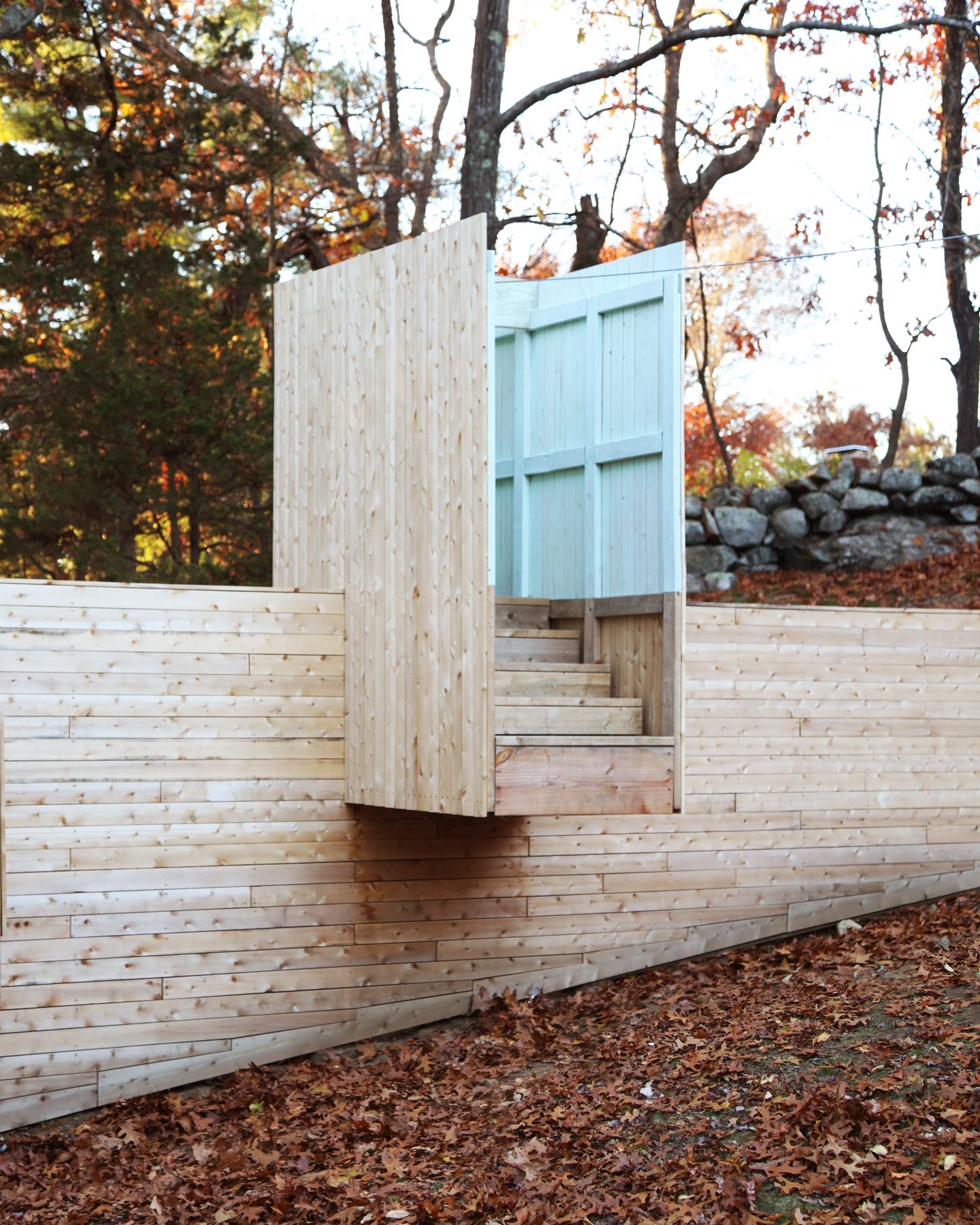
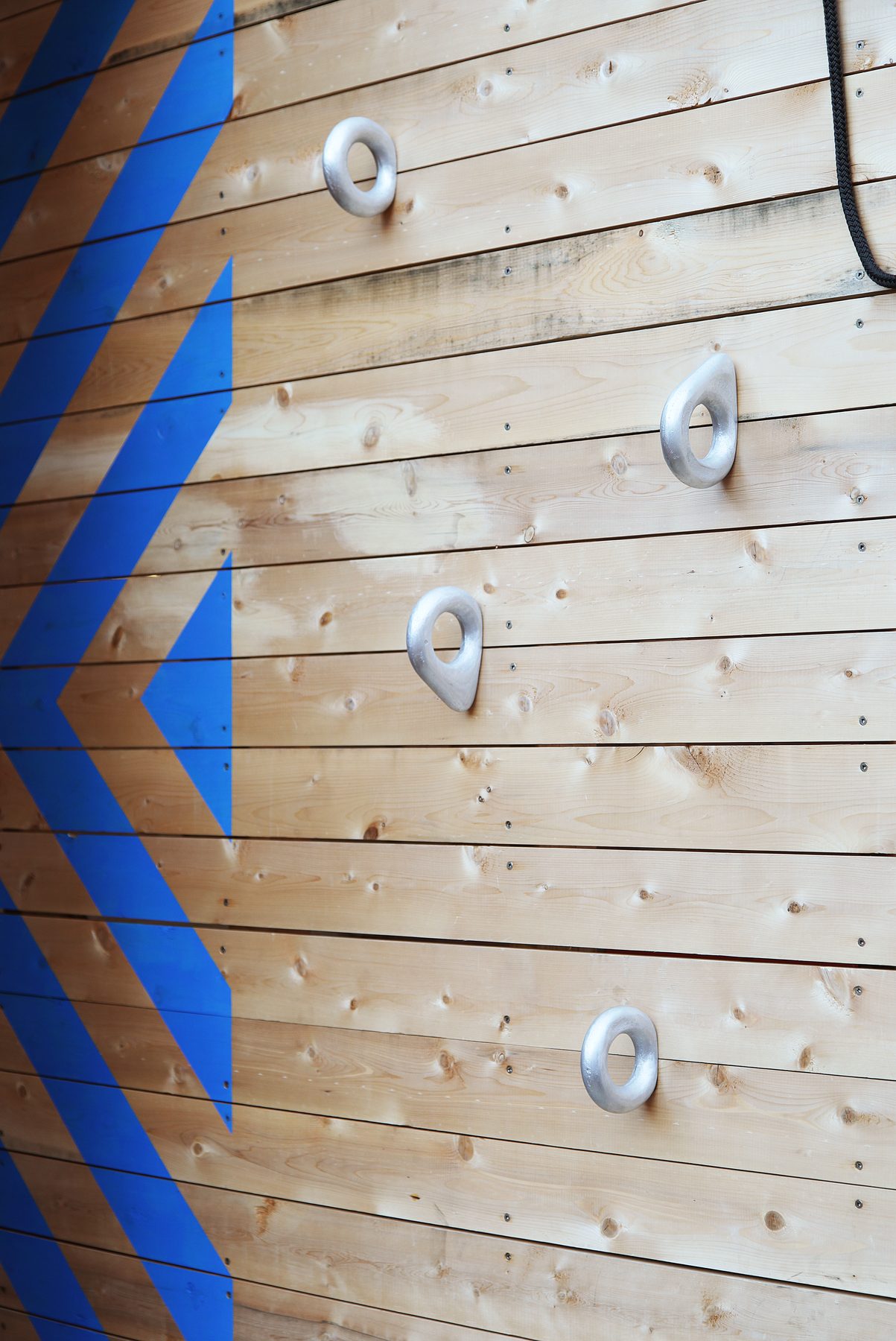
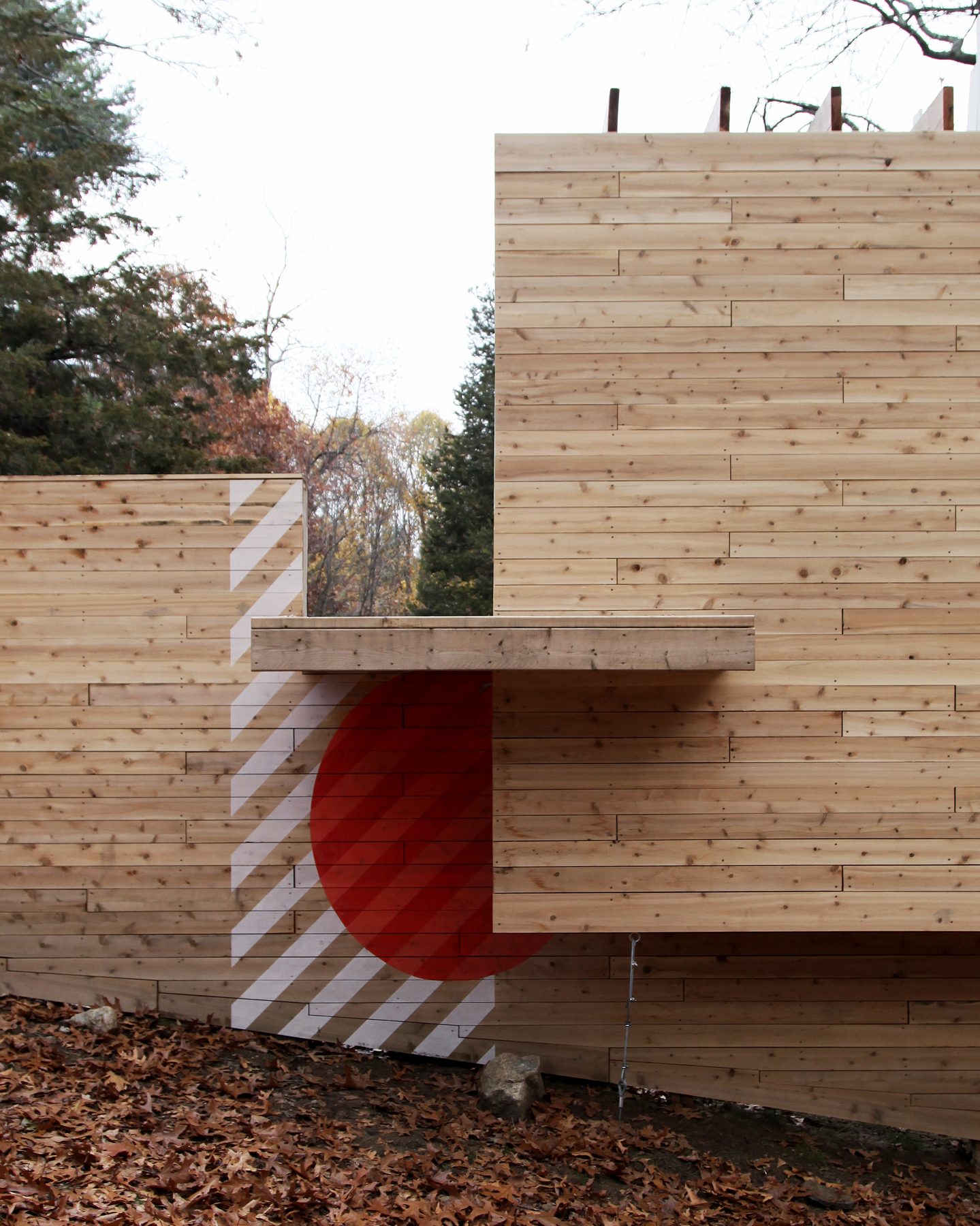
Designed in collaboration with Matter Design, the structure was given no fixed use. We wanted something to be discoverable rather than prescriptive. The wood volumes overlap and step along the slope; some levitate above the ground, some are entered from below. Doors and stairs exist but not where you would expect them — a door opens to nothing in particular, a stair leads to a vista. Painted graphics suggest entries without prescribing them. Cast aluminum holds let a child climb a wall that an adult reads as nothing more than a wall. The structure is sized for children and accessible to adults, so a parent can follow a child through it without redefining it.
The Five Fields neighborhood was conceived in the early 1950s as an experiment in shared land — houses turned toward common ground rather than toward lot lines. The neighborhood has cared for that ground continuously ever since. The play structure is meant as a continuation of that experiment, built for the neighborhood’s children on the neighborhood’s common land. Six of those children served as kid consultants on the design. Their feedback shaped the result.