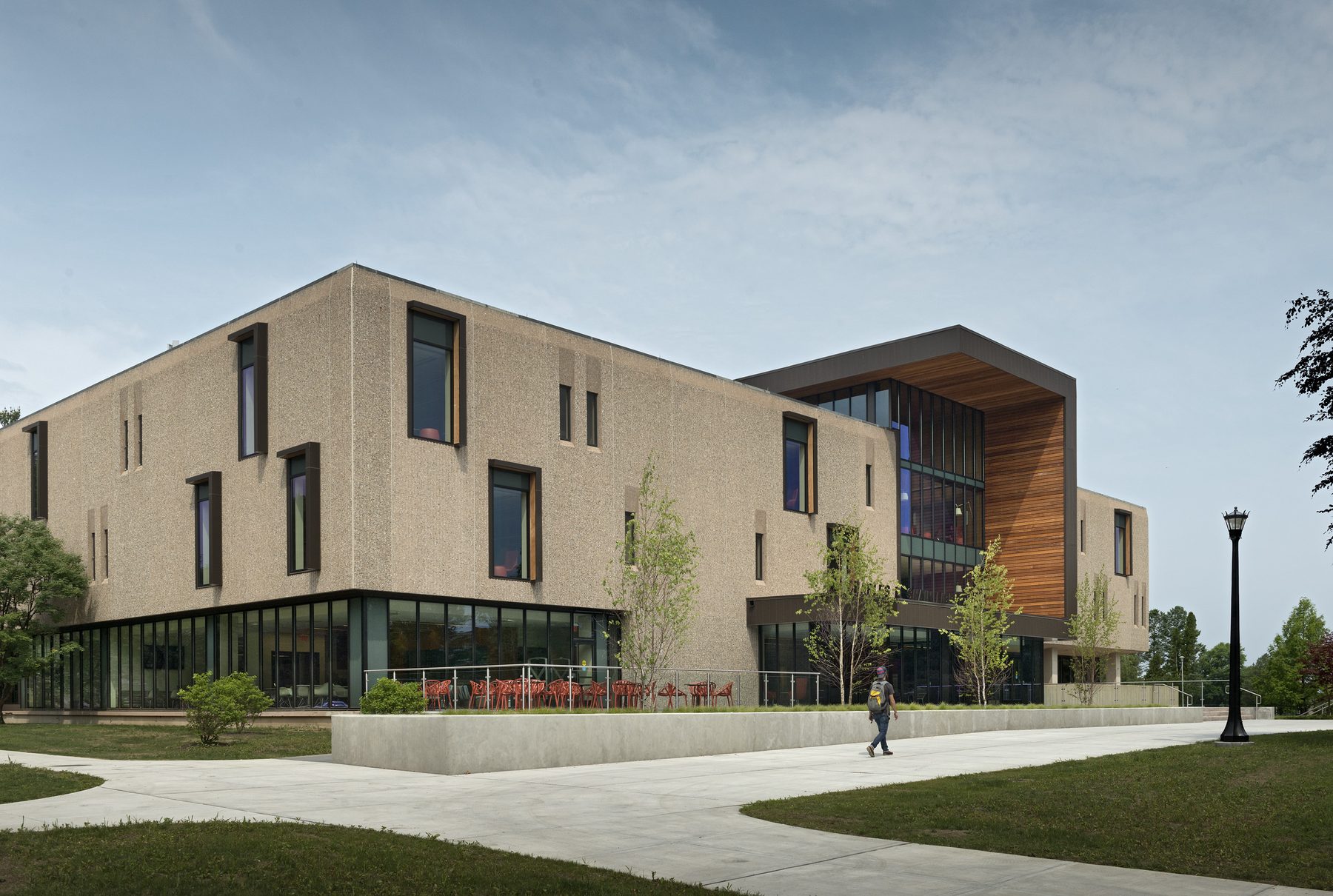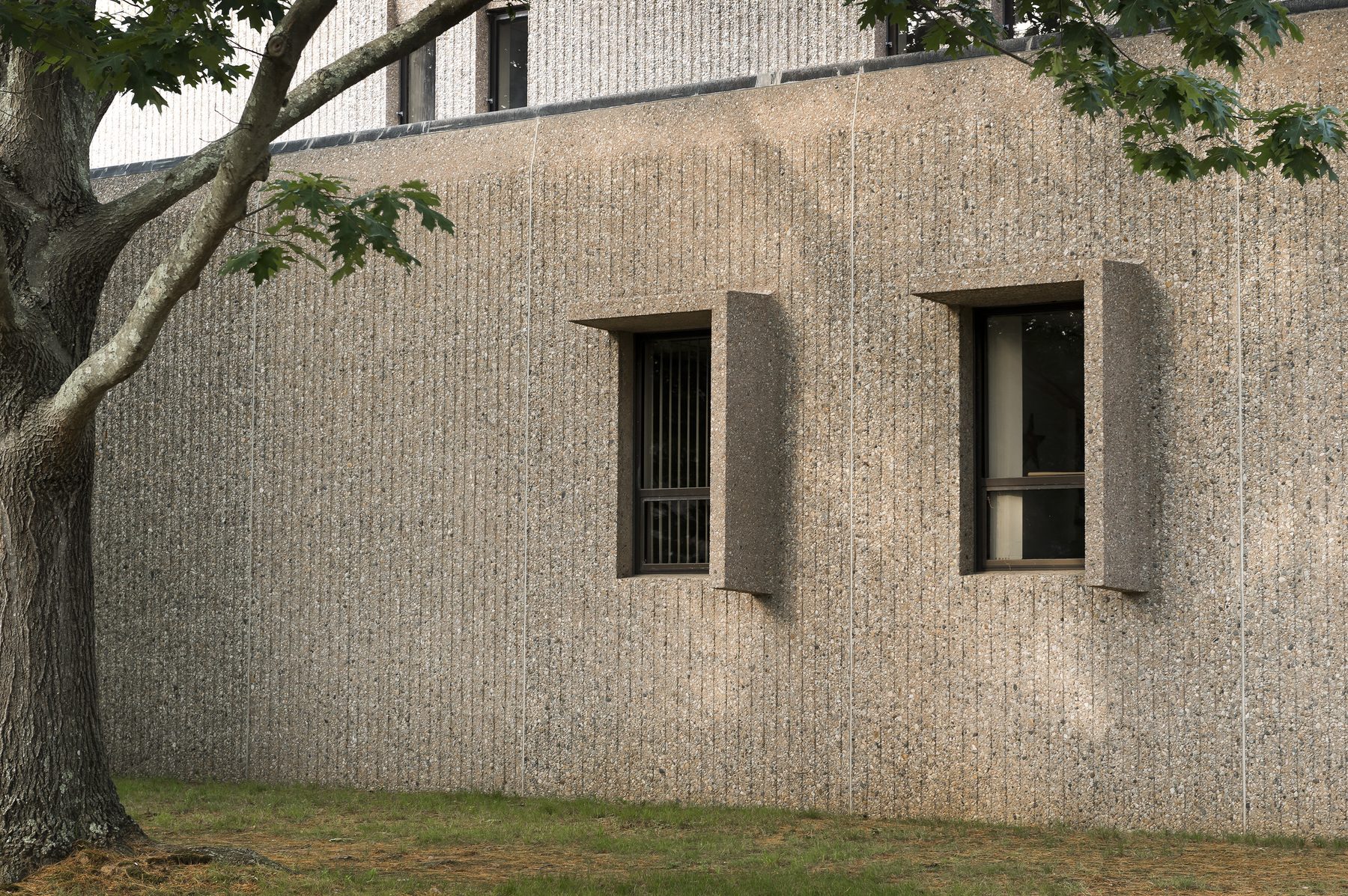
Connecticut College’s Shain Library was built in 1973, at a moment when academic libraries were going up across the country as fortresses for their collections and against their student bodies. Slit windows, deeply set in textured precast panels, kept the light out. A dry moat ringed the building, and the only way in was a bridge across it. The library sat at the geometric center of campus and yet was disconnected from it — a building students used because they had to, not because they were drawn there.
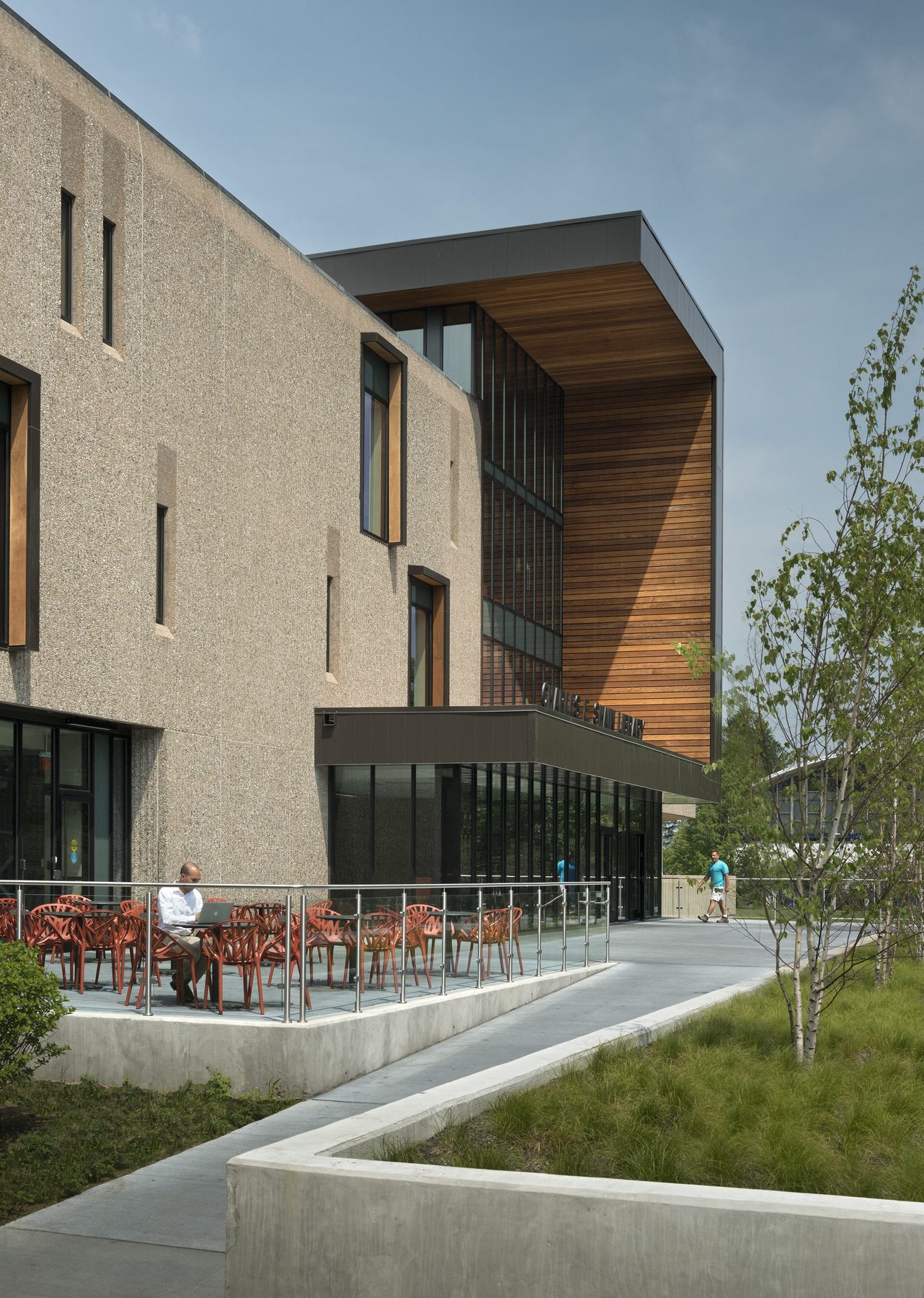
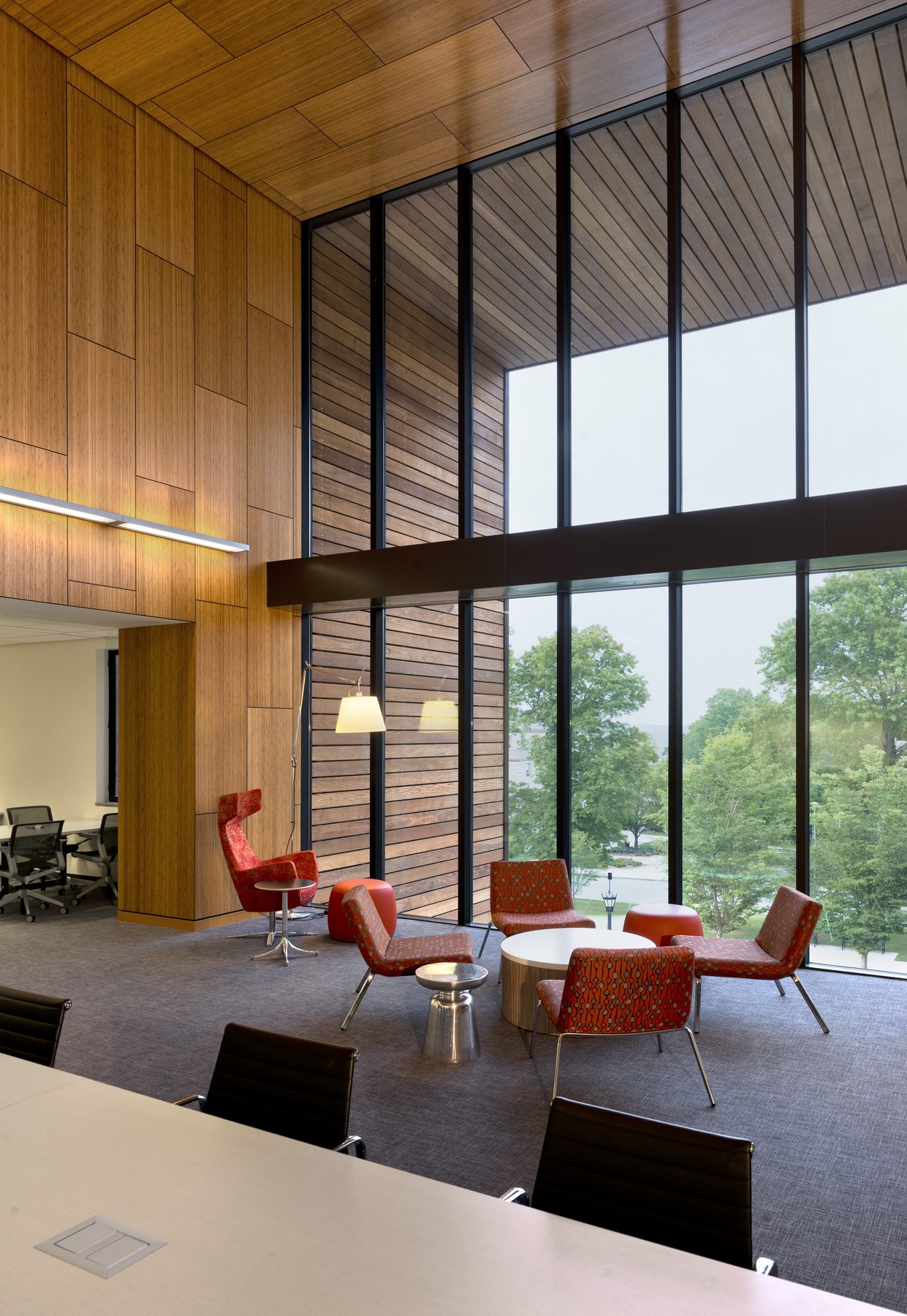
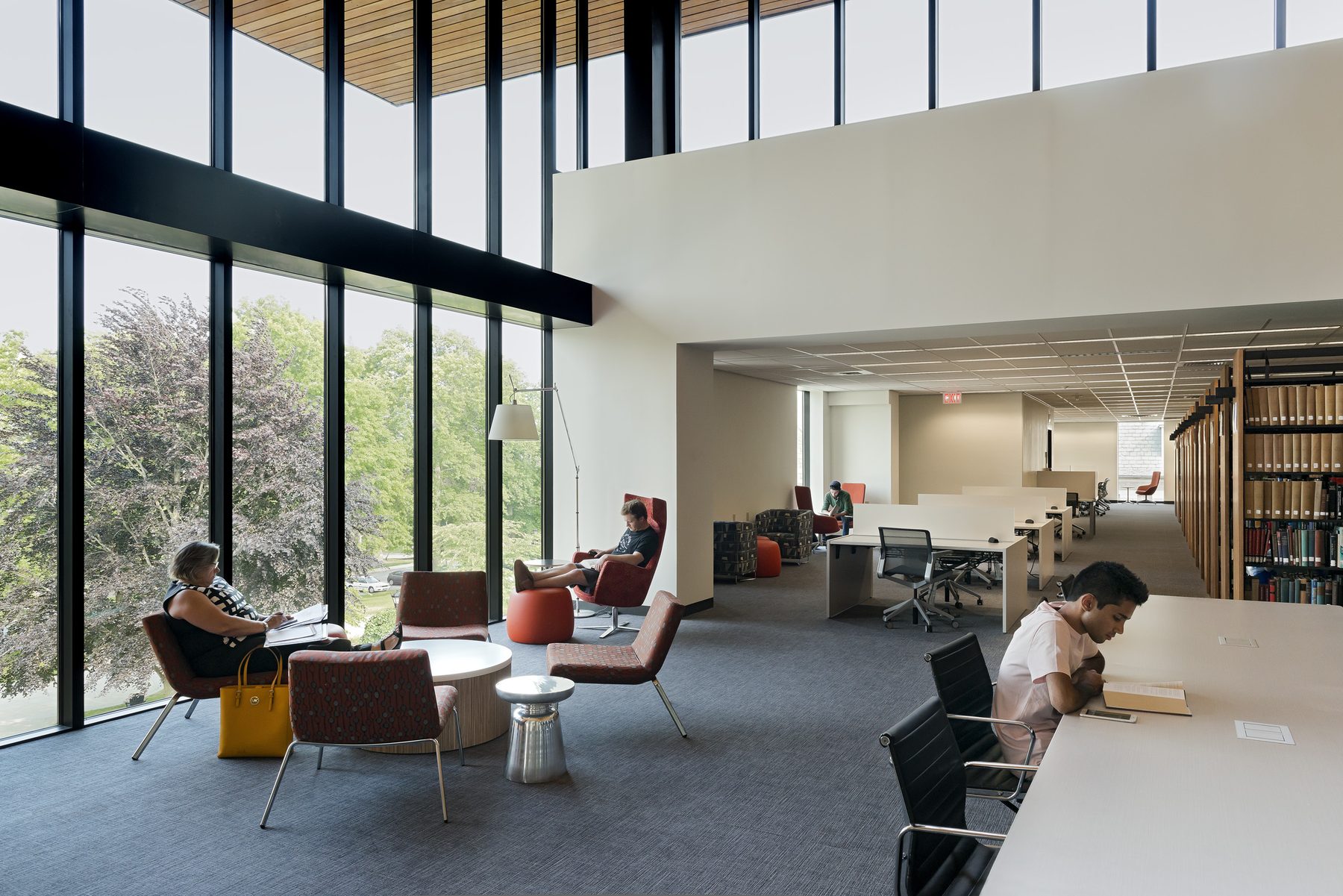
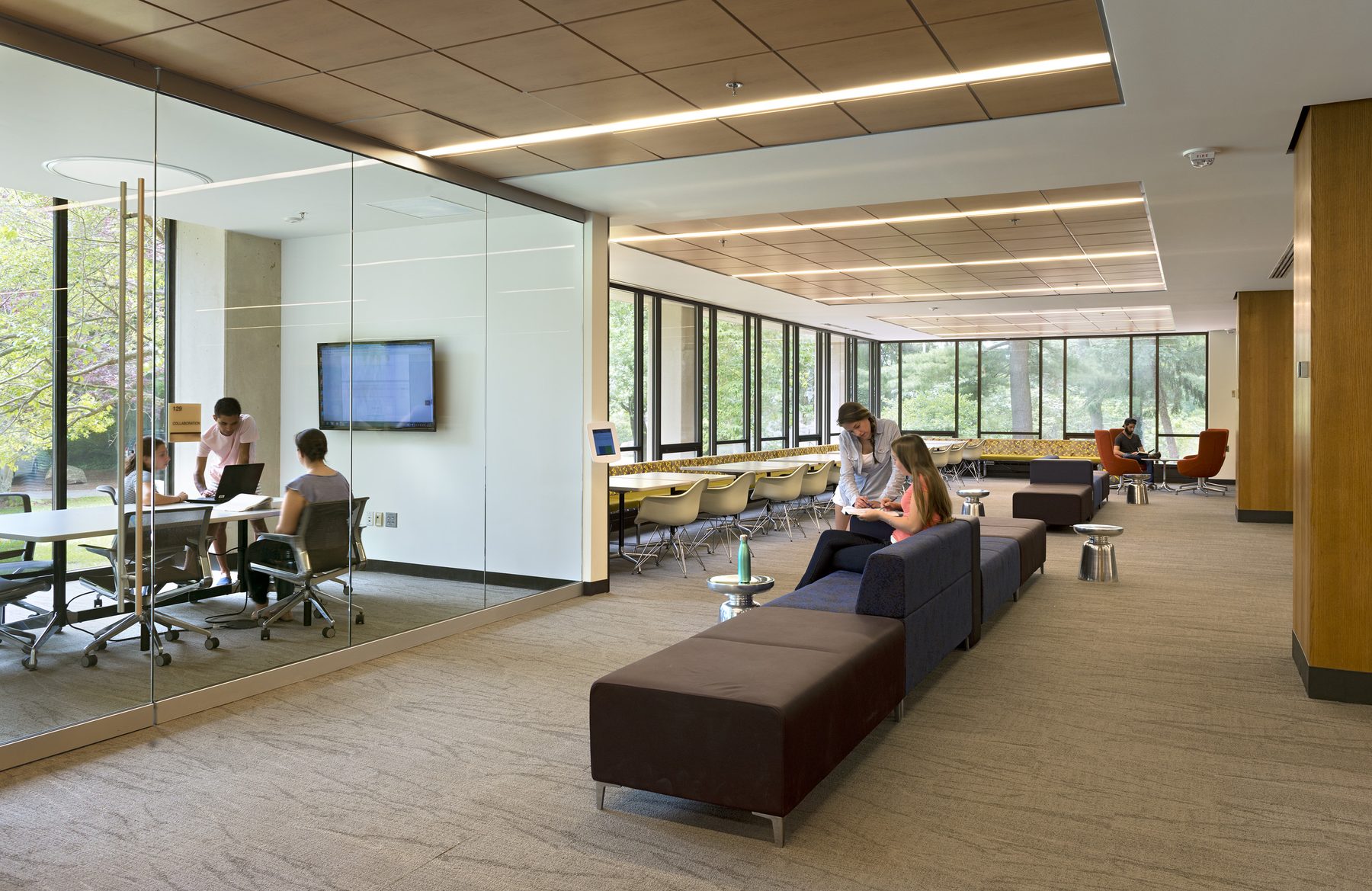
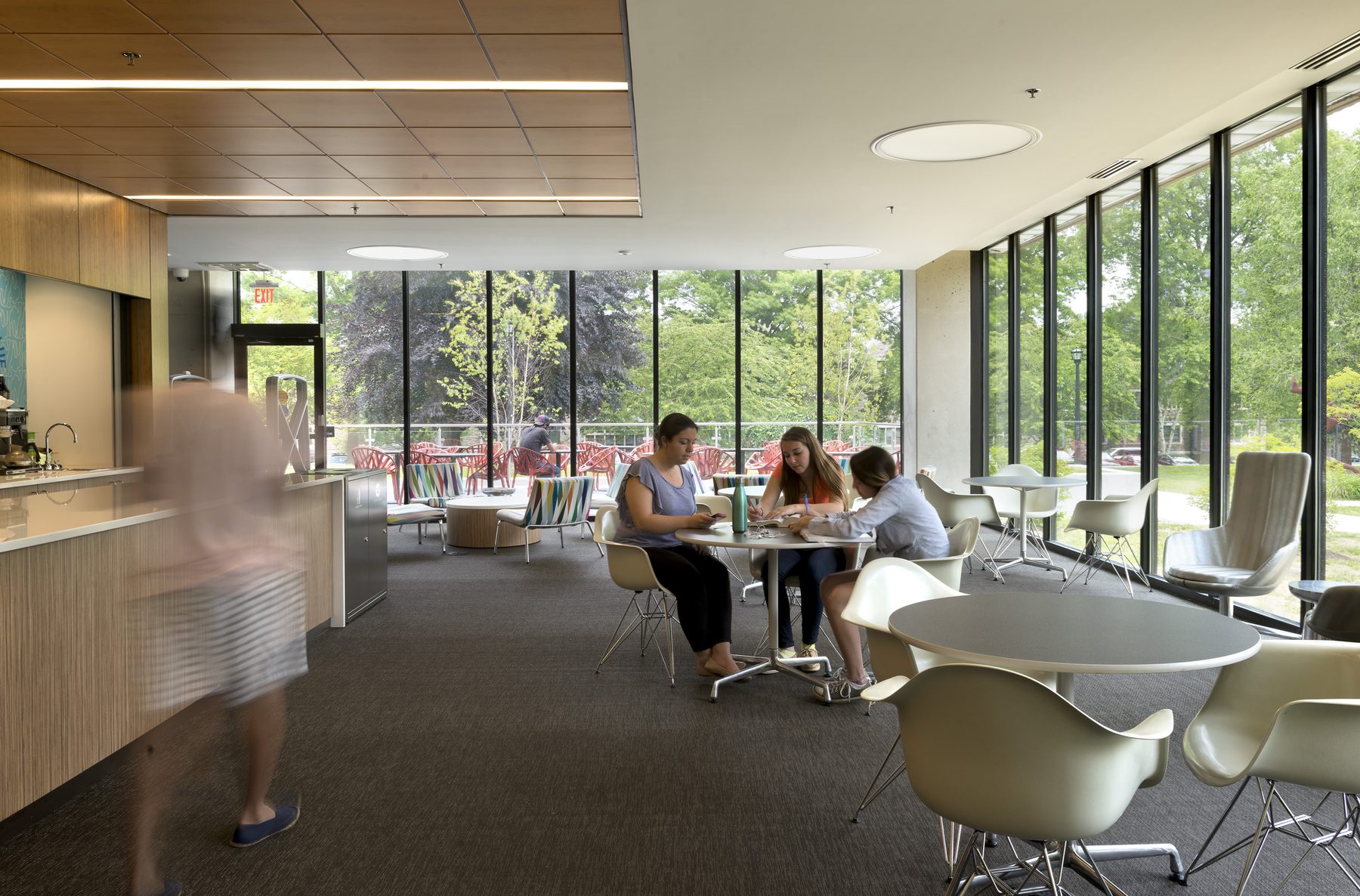
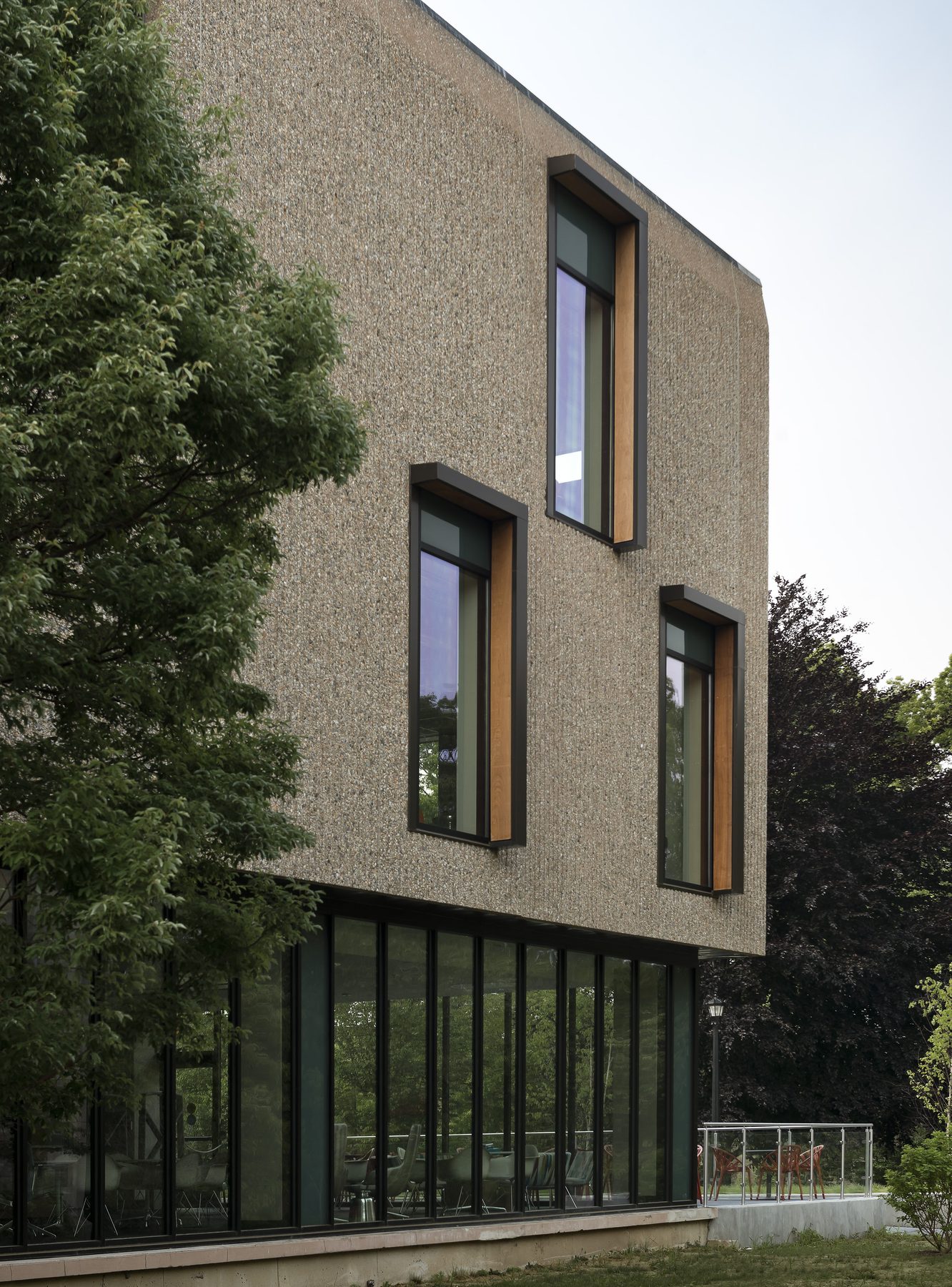
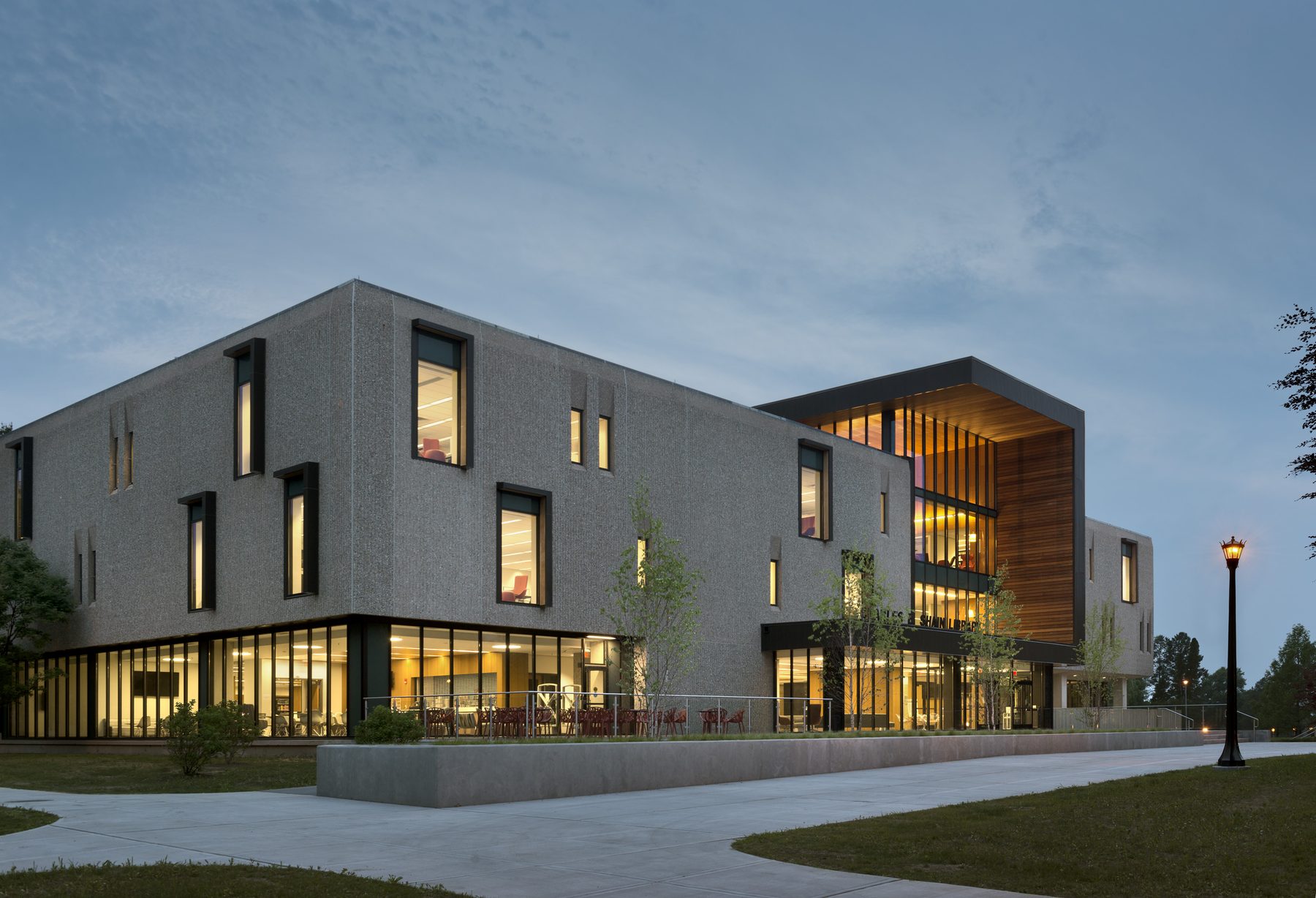
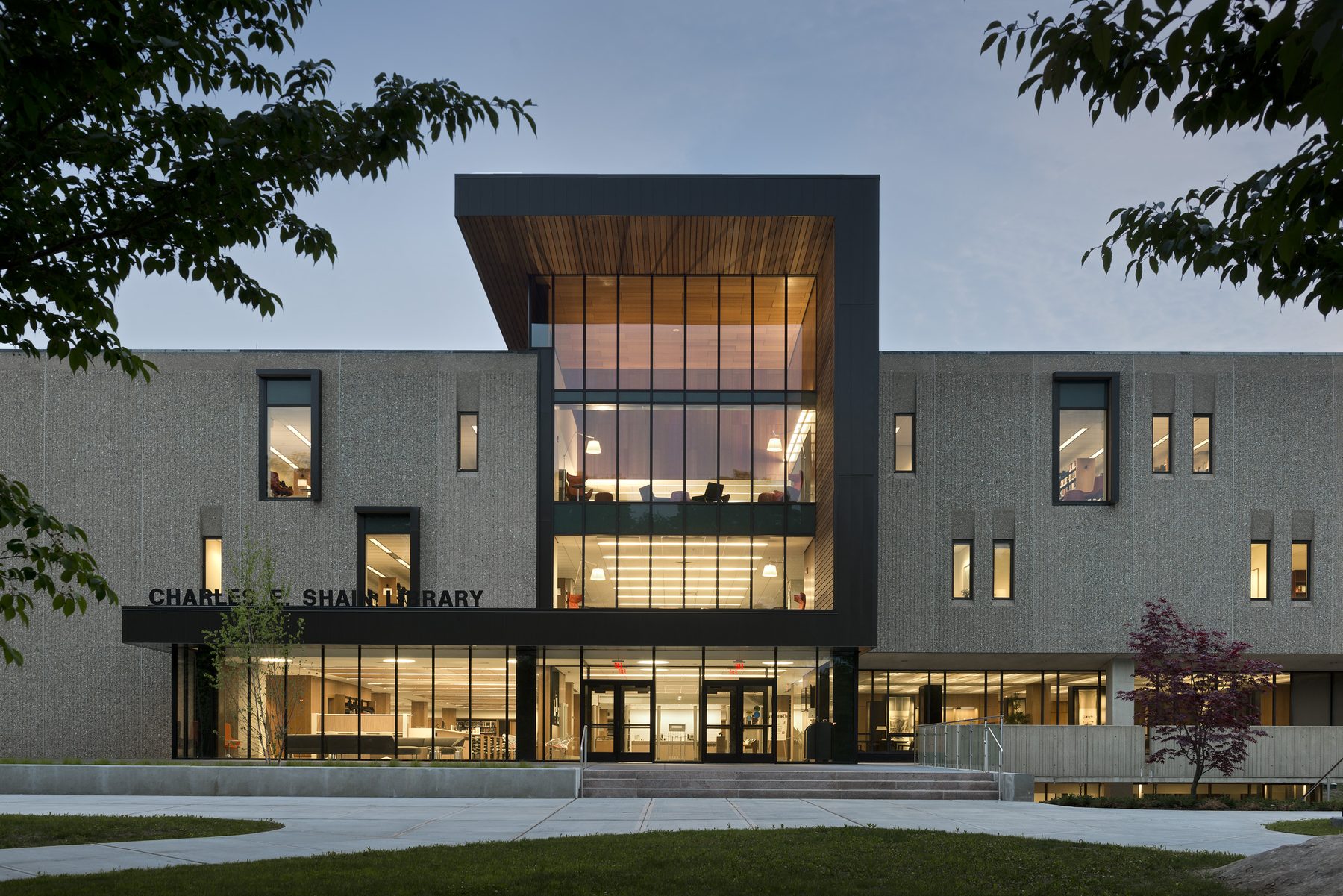
The brief was to reassert the library as the center of campus without replacing the building that was already there. We worked through a series of incisions in the existing facade. At the front, three sections of precast were removed and a new wood-lined volume punched through the wall to mark the entry; the moat partly filled, with a glass-walled cafe taking its place, opening onto a terrace at grade. Around the rest of the building, individual slit windows were enlarged where the budget allowed, and the rest were left as they were — narrow openings that have since become some of the most sought-after reading spots in the library. Cutting into the original precast carried real risk: shop drawings for the panels no longer existed, and we had no way of knowing where the reinforcing ran. We kept spare panels from the rear elevation in reserve in case one came apart during the cuts. Thankfully none did.
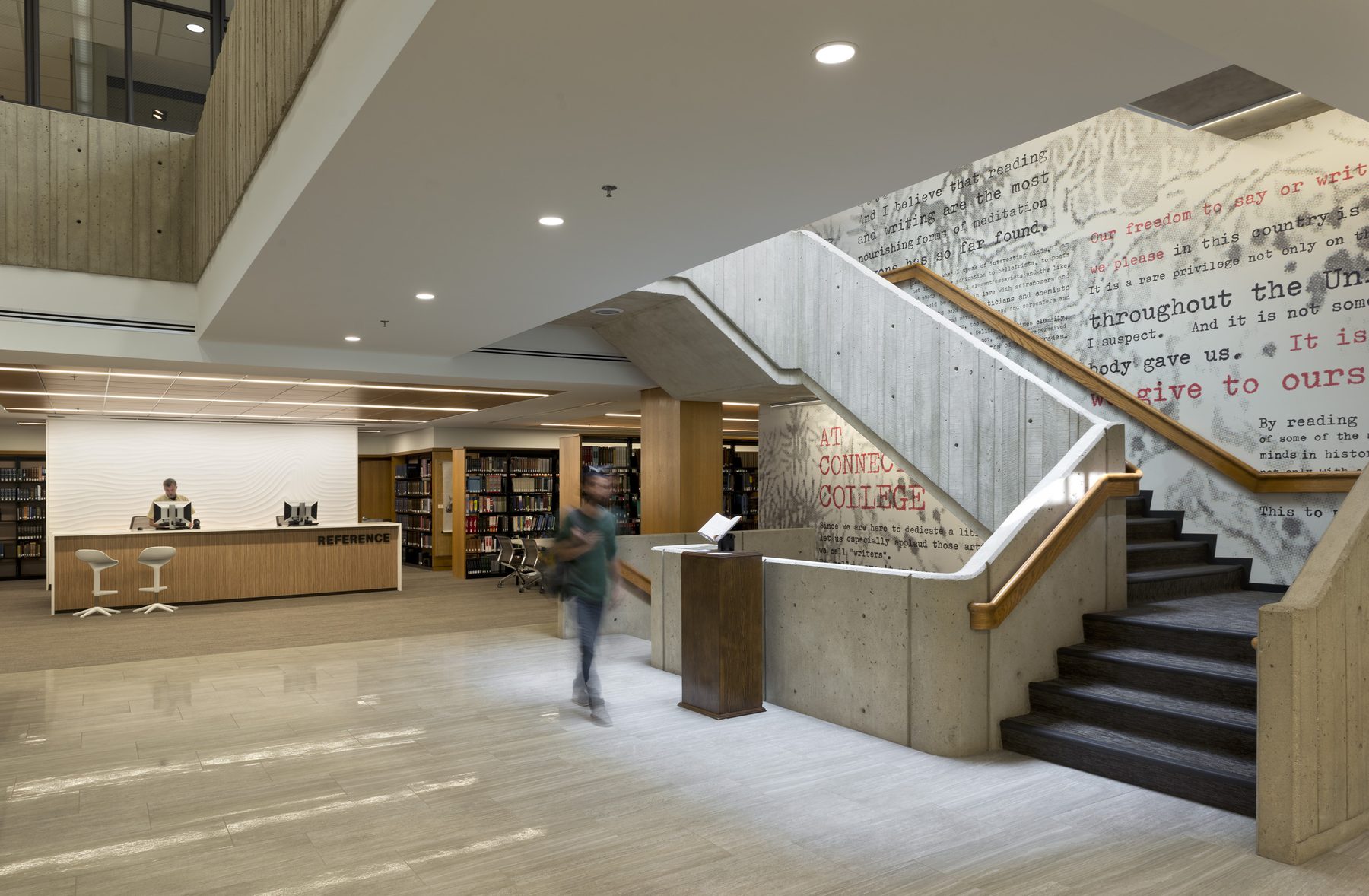
Inside, a board-formed concrete stair rises through the center of the building. Running up the wall alongside it is a graphic mural drawn from Kurt Vonnegut’s 1976 dedication speech, in which he called the new library “The Noodle Factory” — a name the building has answered to ever since. The mural lays his typed manuscript over an image from the Charles Chu Asian Art Reading Room, holding two of the library’s stories in a single surface. At the base of the stair, a small wood pedestal carries an open book; the building, finally, is read as well as walked through.