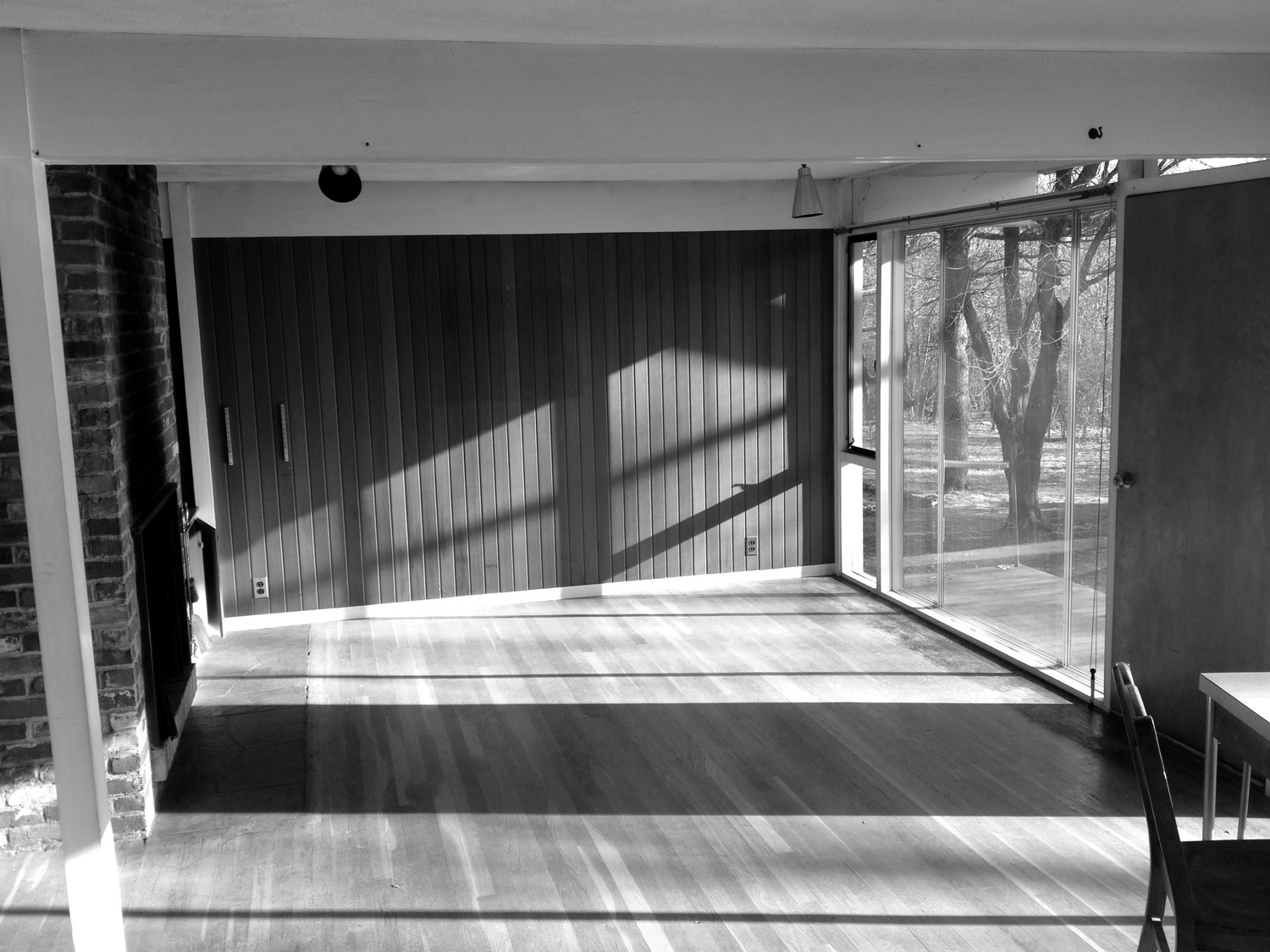
The original living room photographed before any work began: empty floor, mid-century vertical wood paneling on the far wall, the edge of the brick chimney at left, a slim ceiling beam, and floor-to-ceiling sliding glass at right giving onto bare winter trees

Mid-Century Modern Renovation

Lexington, Massachusetts

The house is the principal’s own home, in the Five Fields neighborhood in Lexington that the practice is named for. It was built in the early 1950s by The Architects Collaborative as a custom design for its original owners, who lived in it for sixty years; we are the second family to own it. We found it in a state of disrepair and have been renovating it room by room since we moved in, taking the work in phases as time and family life allow. Each phase has been an occasion to look carefully at what TAC originally drew and to ask what the room wants to be now.

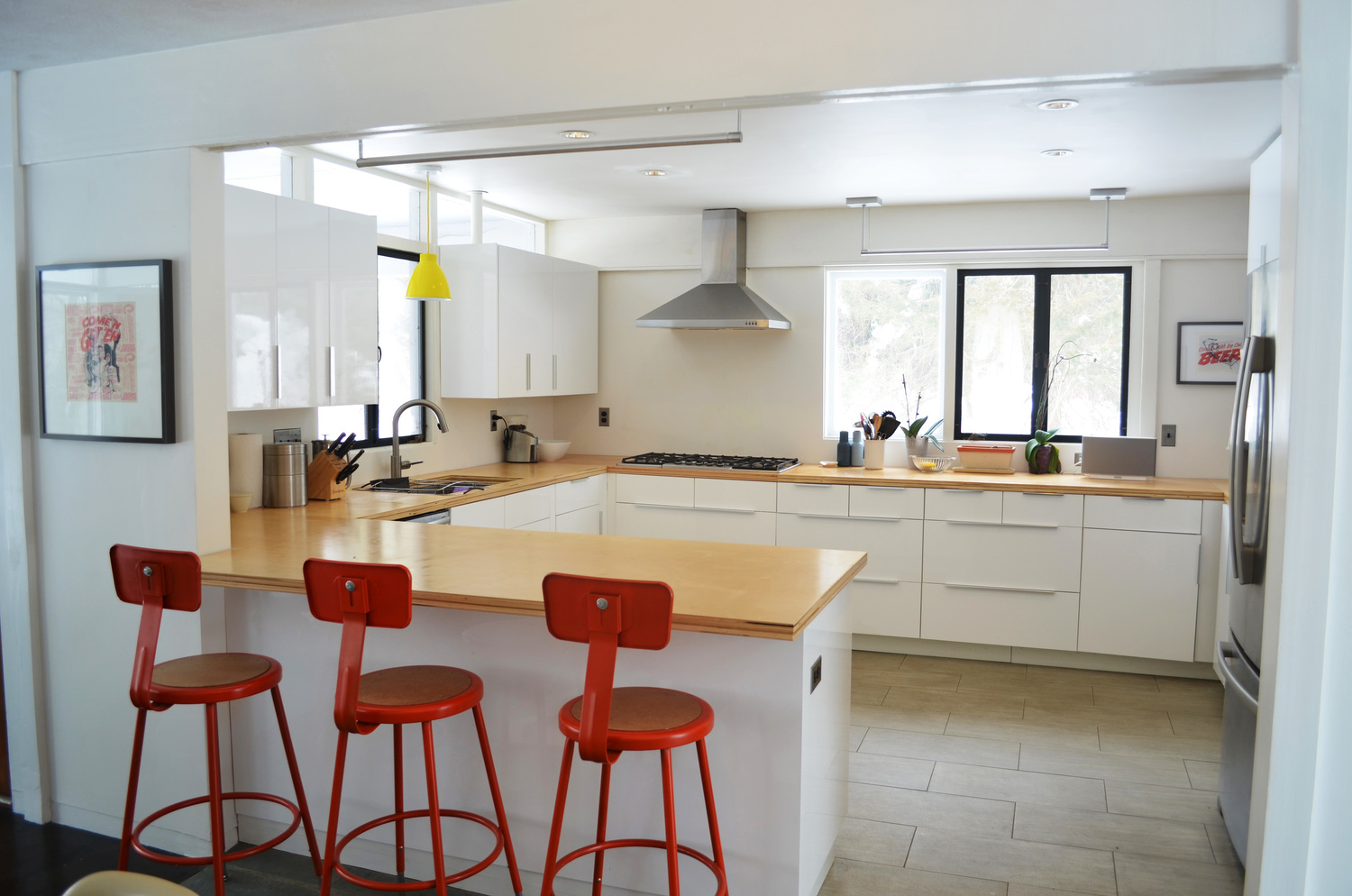
The kitchen was the first phase. As built, it was a closed room connected to the rest of the house only by a single framed opening, which made it impossible to be in the kitchen and with the family at the same time. The wall came down. The kitchen and the living room now read as one room, with the original brick chimney left exposed where it always was and the original wood paneling kept on the far wall. The new cabinetry is plain white casework with a butcher-block counter and a small bar with red stools; the move is to keep the mid-century character of the room and to let the kitchen be a kitchen inside it, rather than to redesign the room around the kitchen.

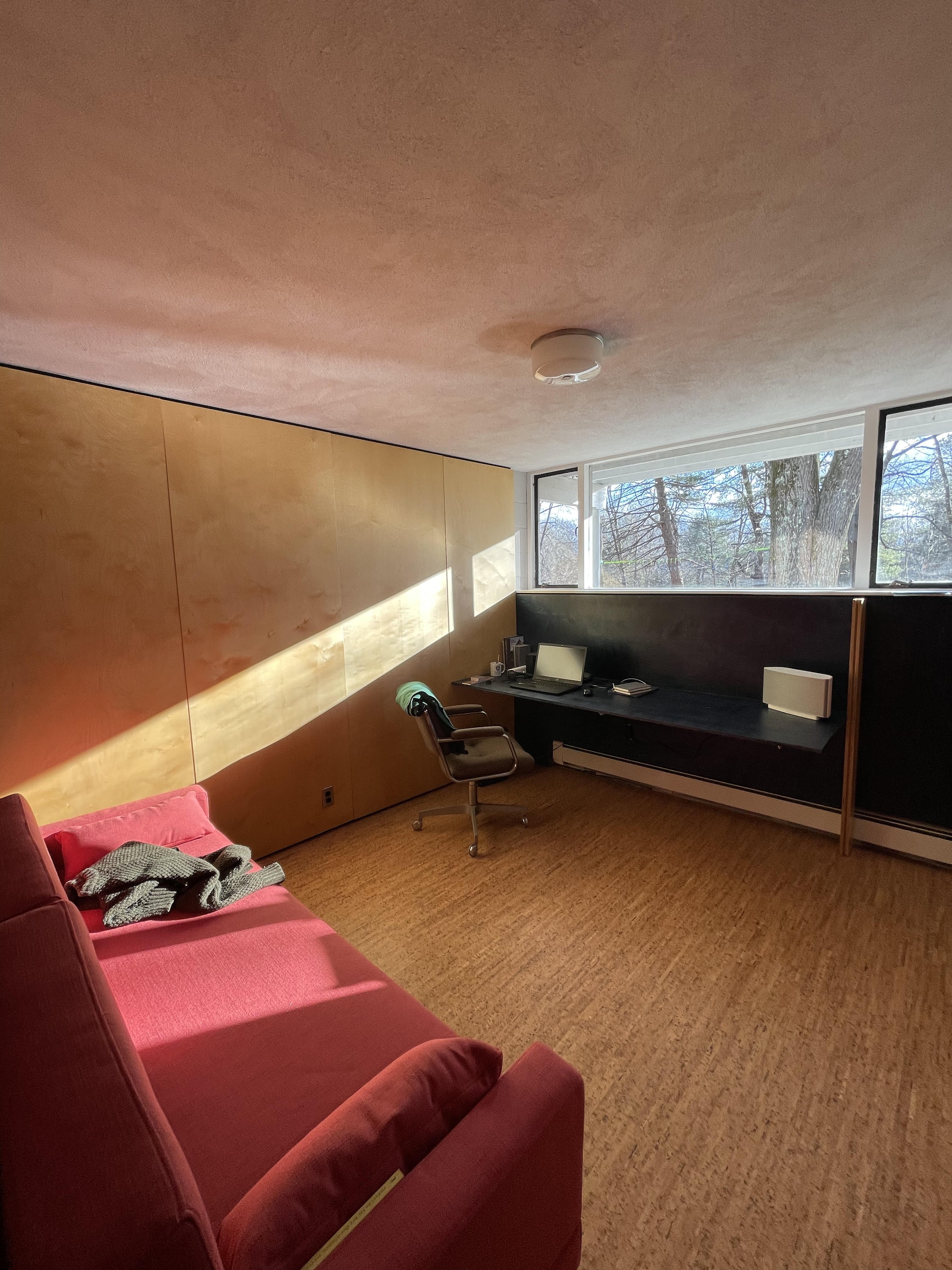
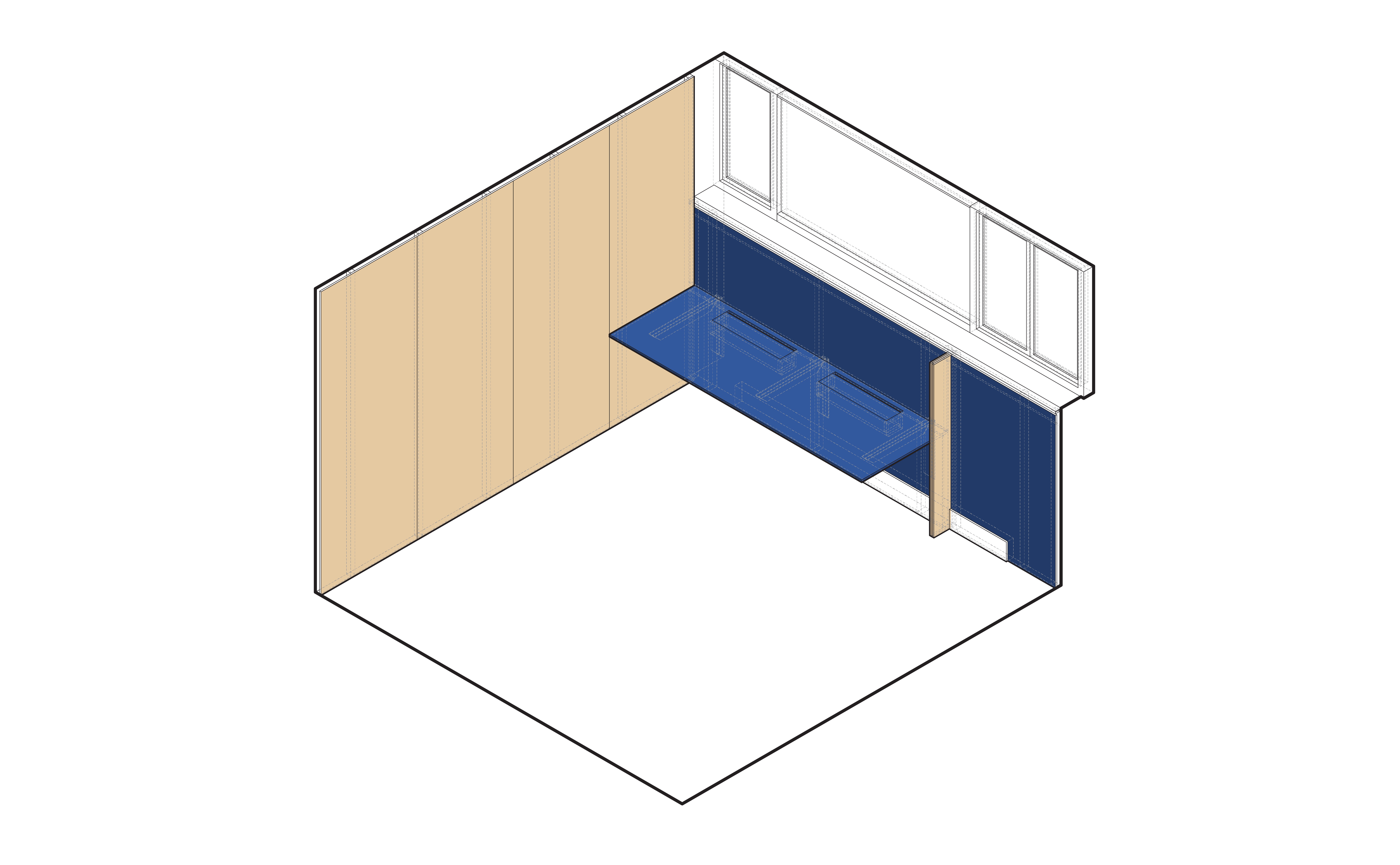
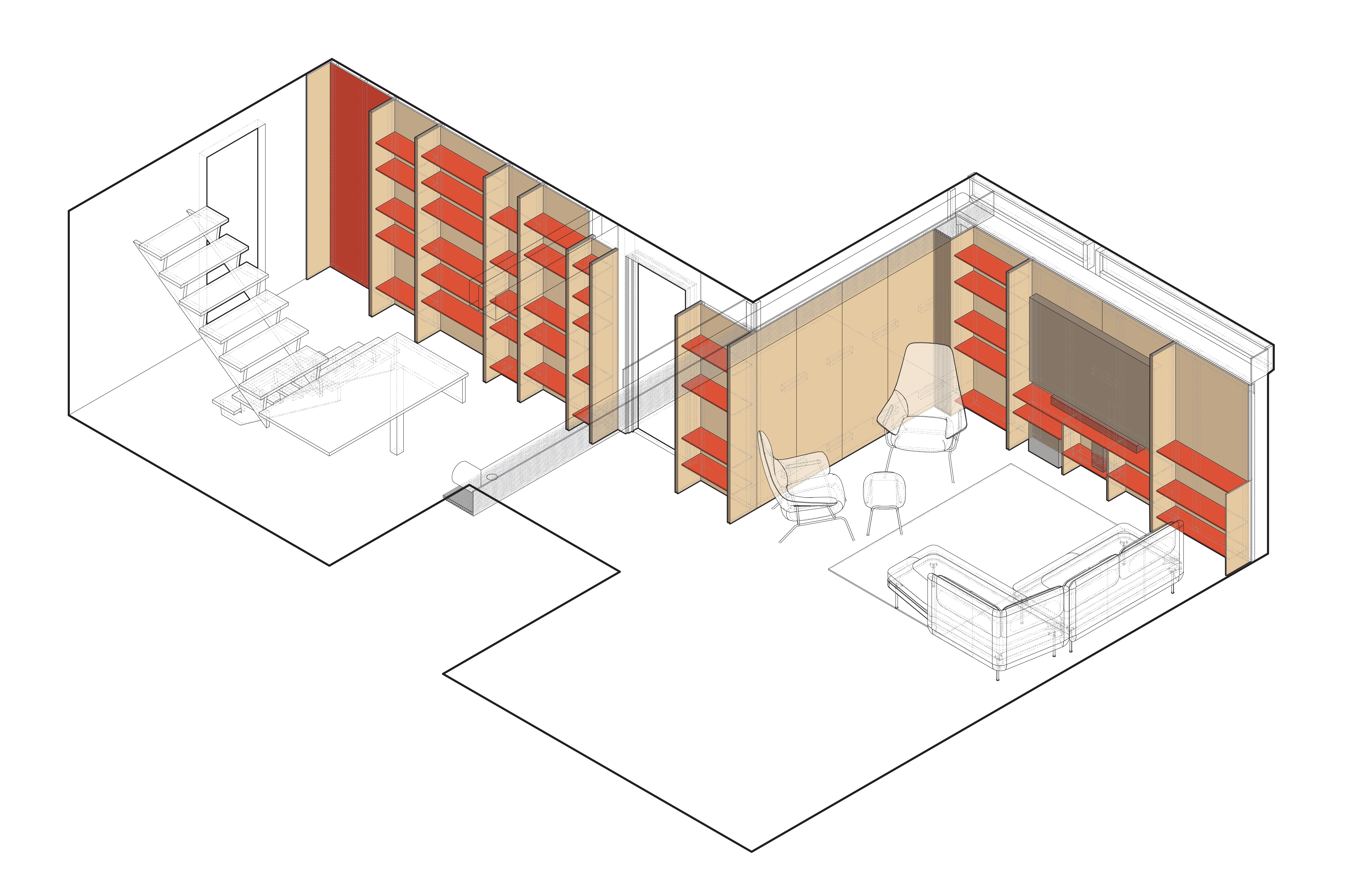
The walkout basement was the second phase. It had been used as a fourth bedroom and a large undefined space; we kept the fourth bedroom but reorganized it as an office that doubles as a guest room, with a long built-in desk under the clerestory windows and a sofa that opens into a bed against a birch panel wall. The large space became a family room and laundry, with a built-in library wall running the length of the corridor from the stair. The orange shelf-back register, the dark blue desk, and the saturated millwork colors are deliberate — mid-century houses were never neutral, and the new work is allowed to sit alongside the original in its own confident voice.
Project Team
Architect
Five Fields Collaborative
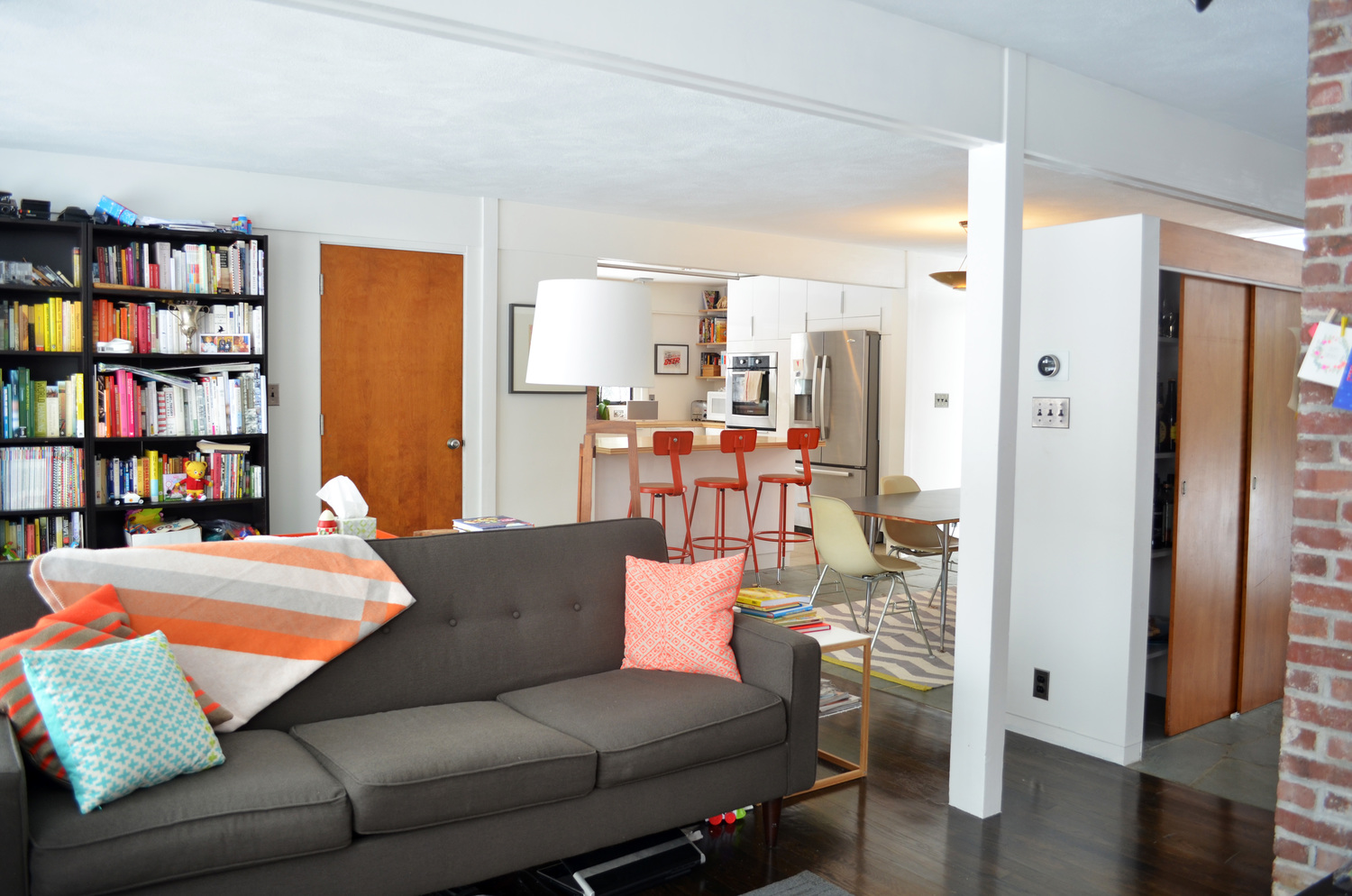
View from the living room across the back of a gray sofa, looking through the new opening in the central wall to the dining table and the kitchen beyond, with red counter stools at the bar and the orange book spines on the bookshelf at left
The renovated kitchen seen from the new opening: a U-shaped island with butcher-block counter and three red bar stools, white casework along two walls, a stainless hood over the cooktop, and tall windows above the counters looking out to bare winter trees
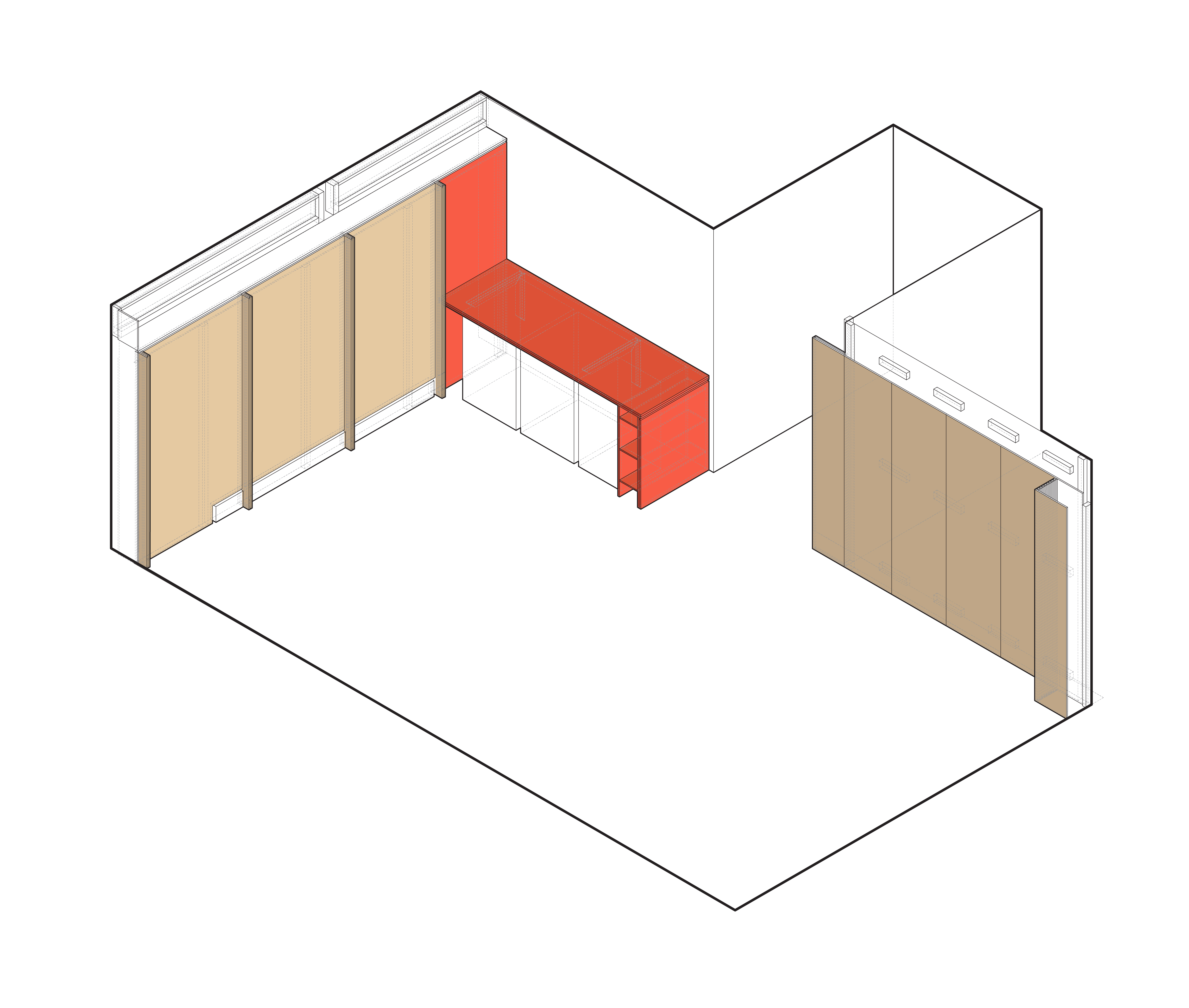
The basement office in use: a birch plywood panel wall at left, a long built-in desk in dark blue running under a horizontal clerestory window, a red sofa for a sleeper bed, cork flooring, and a single office chair Isometric drawing of the same office: the birch panel wall in tan, the dark blue built-in desk and back panel under the clerestory windows, and the existing room boundary drawn in light line, no furniture shown
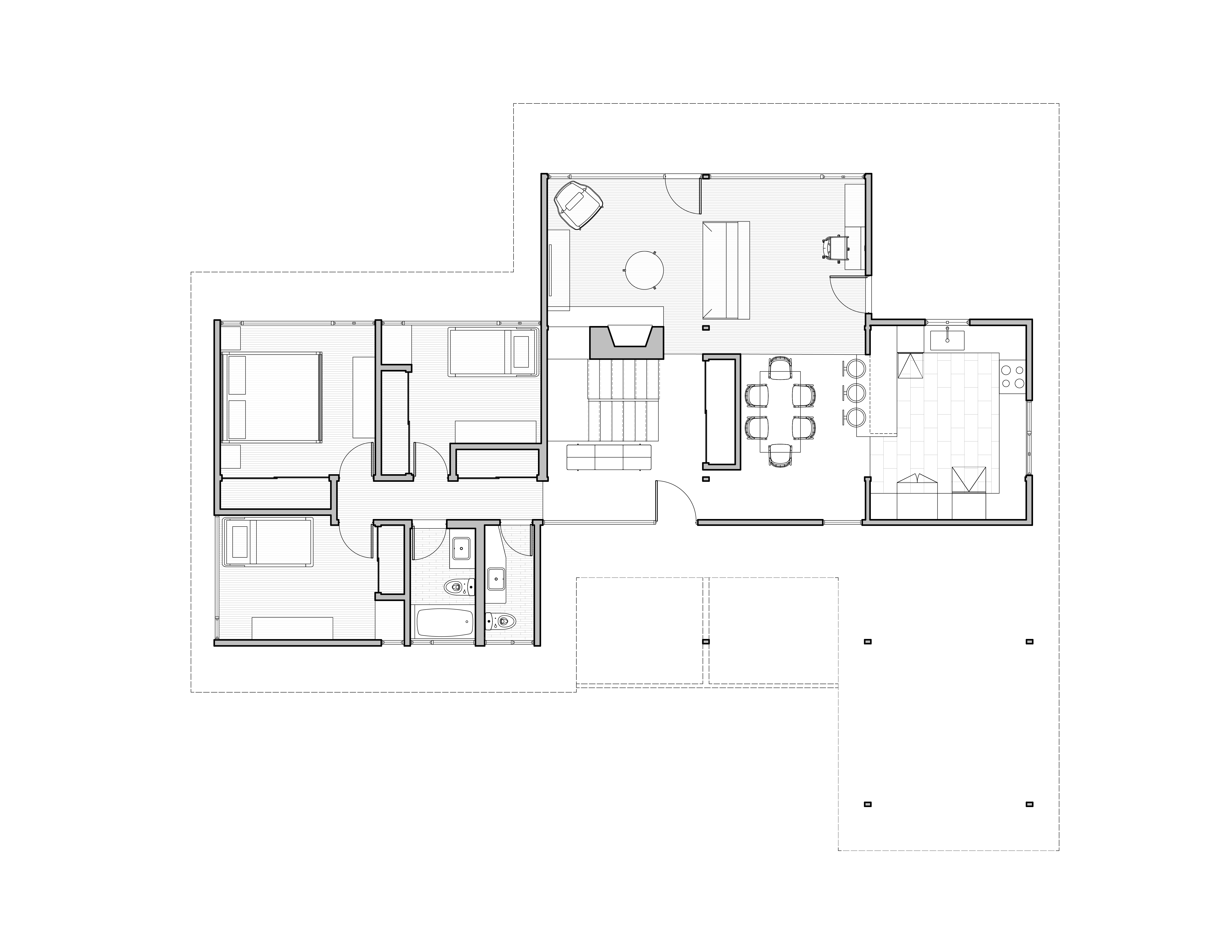
First floor plan: bedrooms and bath to the left of the central stair, and the open kitchen-dining-living wing to the right, with a U-shaped kitchen island, a dining table for six, and a seating area around the central brick chimney
First Floor Plan
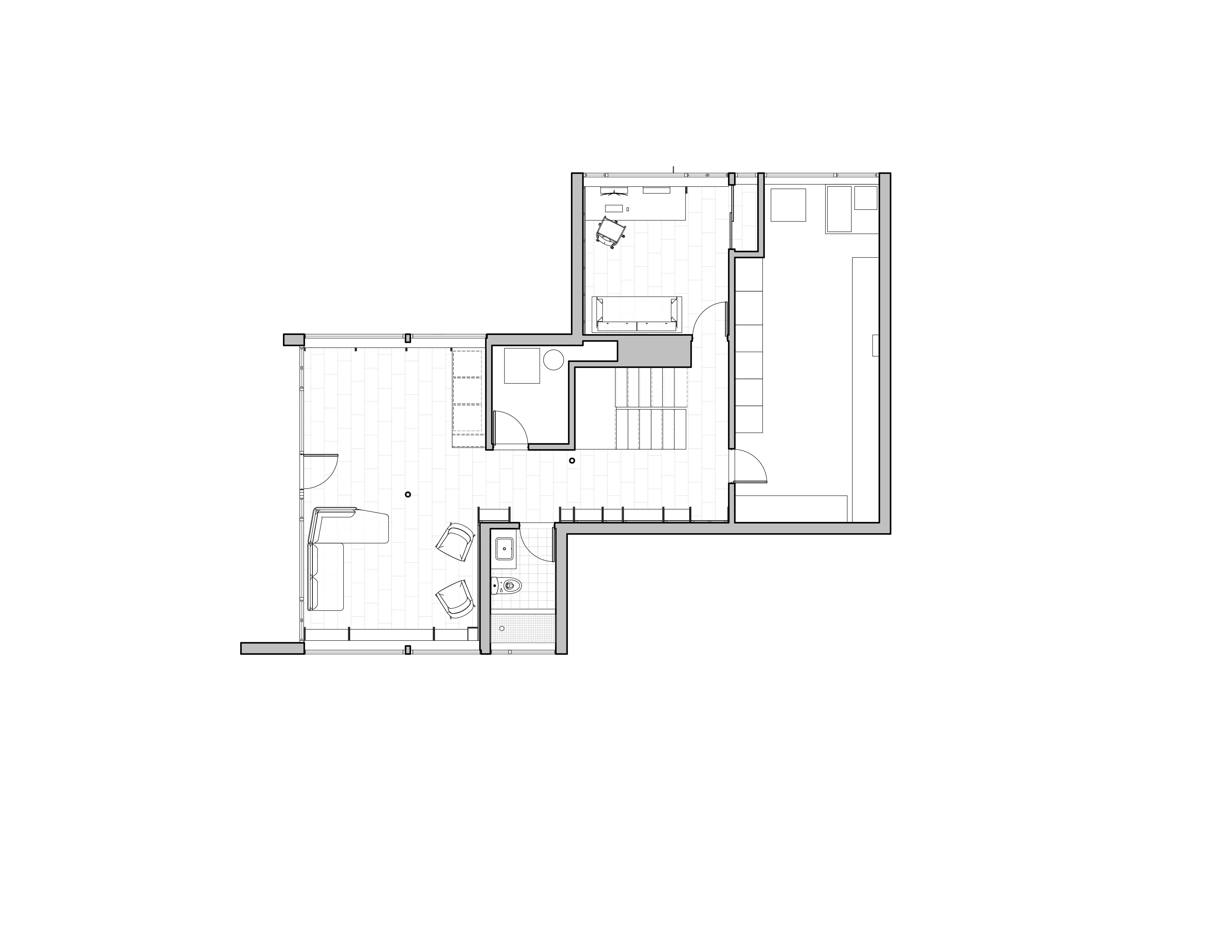
Lower level plan: the family room with sectional and lounge chairs at lower left, the office and guest room at upper, a bath in the middle, the laundry off the corridor, and the stair from the first floor coming down at center
Lower Level Plan
Isometric drawing of the basement family room and corridor: the stair coming down at far left, a long built-in library wall of tall bookshelves with orange-painted backs running across the middle, and the lounge furniture and TV credenza in their own bay to the right, all within the existing room outline
Family Room
Isometric drawing of the basement laundry: a long built-in storage wall in tan with white-faced cabinets below, an orange work surface running across the top, and a second taller storage piece on the opposite wall
Laundry
Archive
Further work