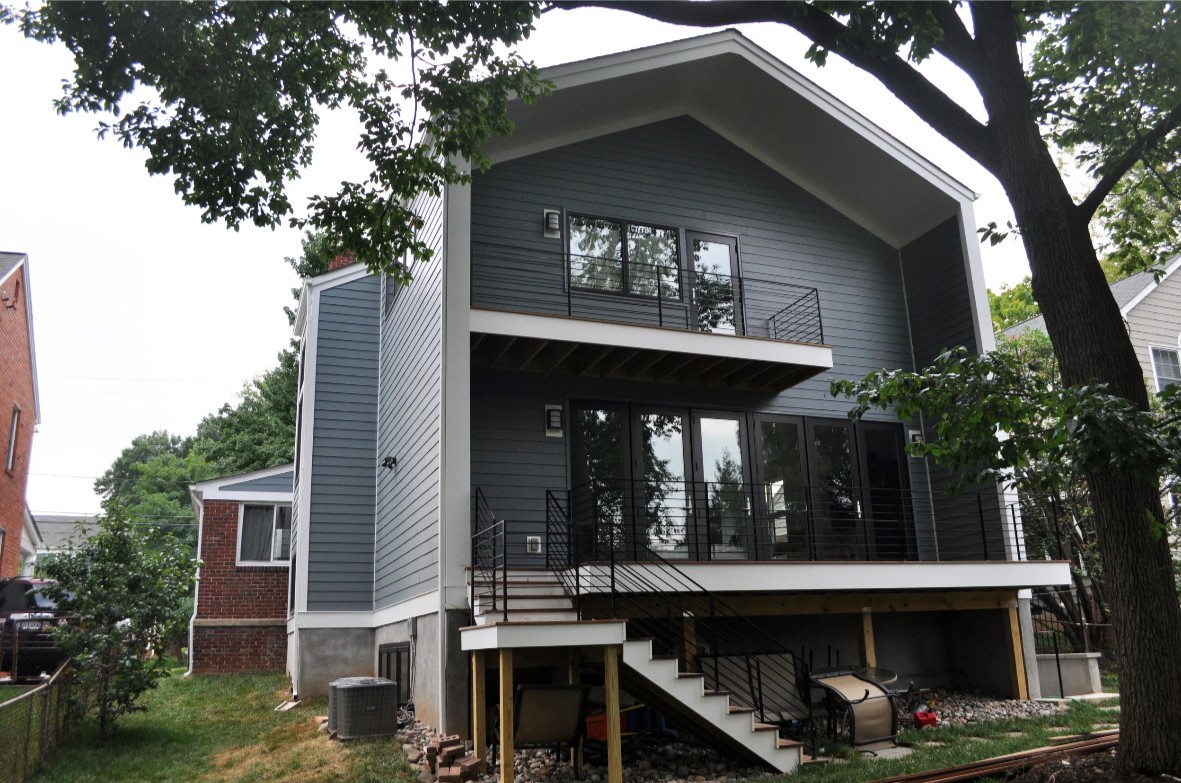
Rear elevation of the renovated house: a tall dark gray gable with deep overhanging eaves over a two-story addition, a full-height wall of black-framed windows on the main level opening onto a deck with cable rails, a smaller balcony off the upper-floor master bedroom, and the brick chimney of the original 1930s colonial visible at left between the addition and the neighbor

Private Residence

Arlington, Virginia

The clients wanted more room for a growing family without leaving Arlington, where they had built their life around a particular street and a particular neighborhood. The house they owned was a 1930s colonial with four rooms over four rooms — well built, tightly planned, and out of room. Rather than move, they asked us to make the house twice as large by working into the deep backyard.

We doubled the footprint with an addition pulled to the rear lot line, adding fourteen hundred square feet of new construction to the fourteen hundred we already had. The new volume reads as its own object — a tall gable wrapped in dark gray HardiePlank, with a deep overhanging eave shading a full-height glazed wall on the main level and a small private balcony off the master suite above. Where the original colonial faces the street with the manners of its neighbors, the addition faces the yard with its own contemporary register; the two volumes meet at the original chimney, which is left exposed in the new living room as a record of the old back wall.

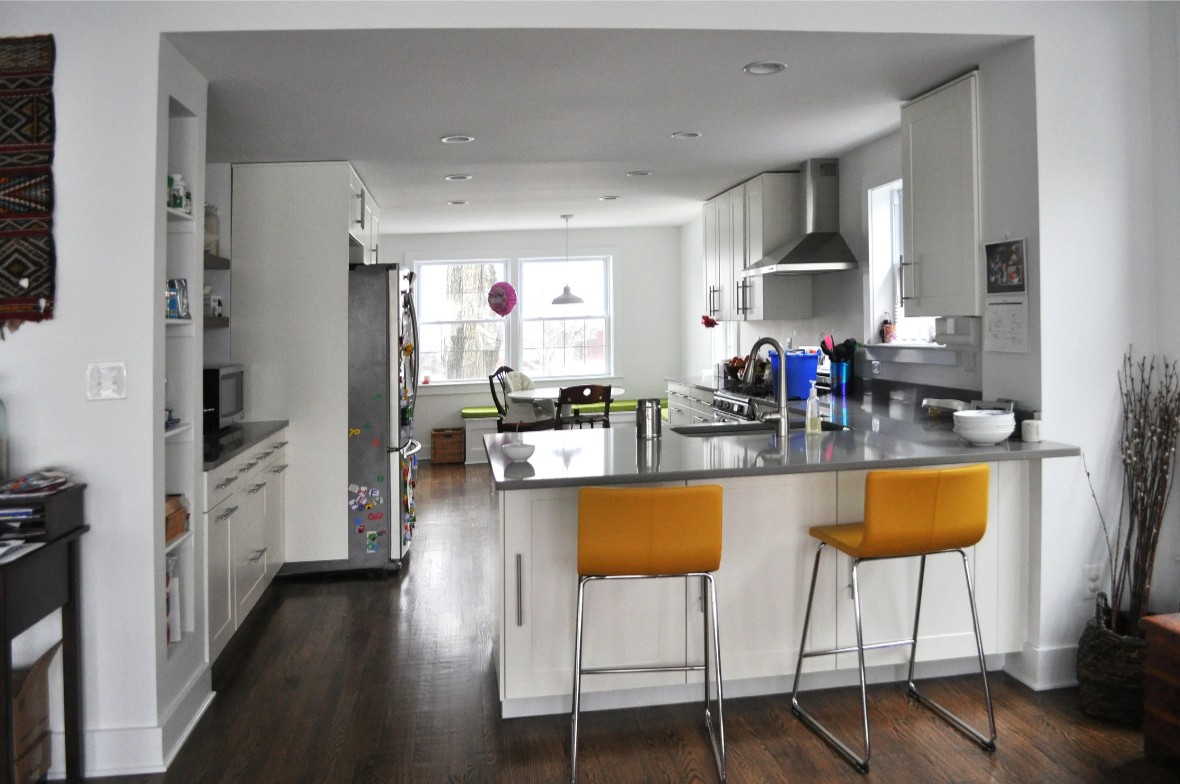
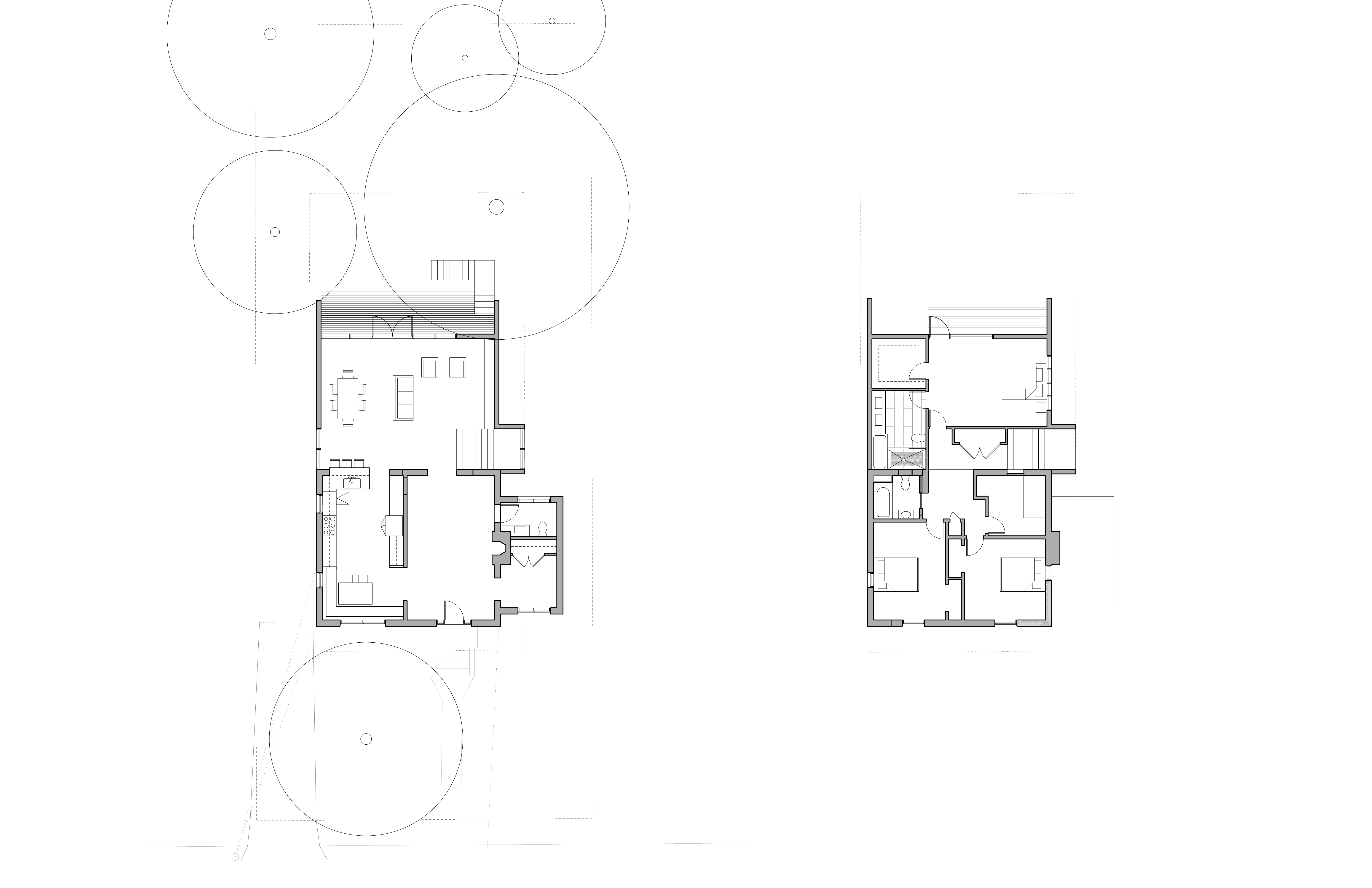
Inside, the work let the original kitchen expand into the former dining room, which now reads as a kitchen, dining, and living wing running the full depth of the house and out to the deck. An enclosed side porch on the original house, used as a back hall by a previous owner, was brought up to the level of the first floor and rebuilt as a mudroom and powder room. A new basement under the addition gave the family a finished lower level; the master suite occupies the second floor of the addition with its own balcony.
Project Team
Principal
Michael Schanbacher, AIA
Project Team
Kerri Frick, AIA
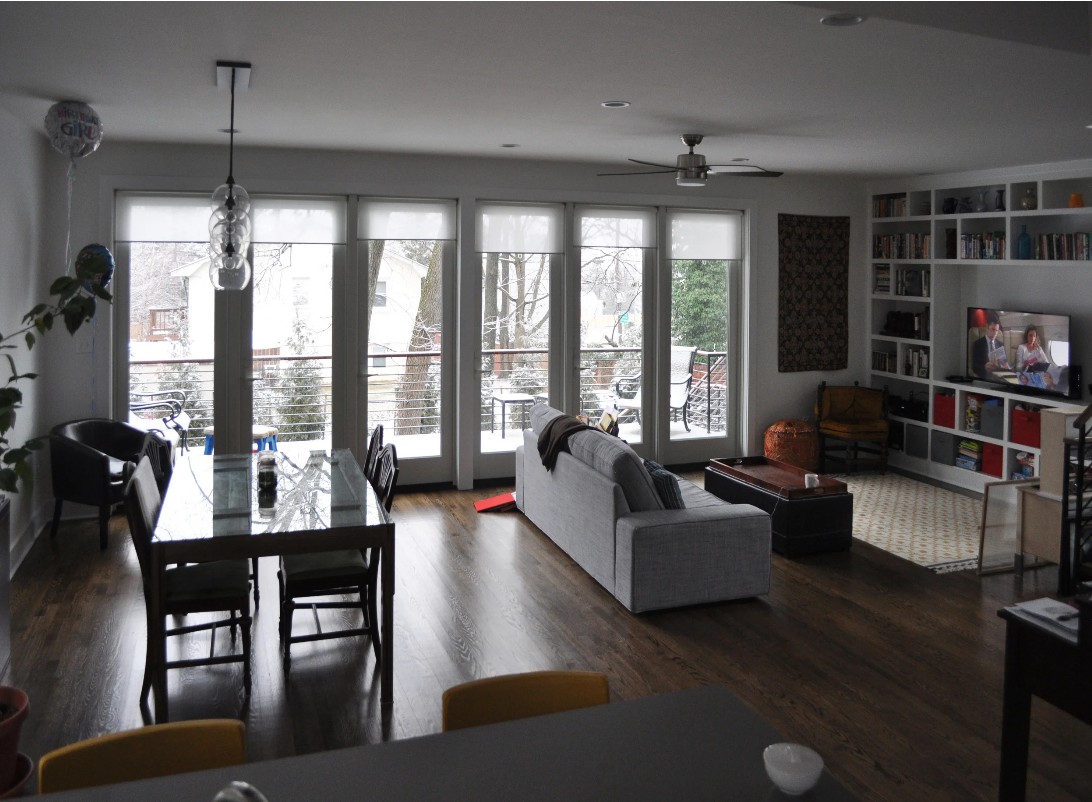
The living and dining wing of the addition looking toward the rear: a full-height glazed wall opens onto the deck and the snow-covered yard beyond, with the dining table at left and a gray sofa, ottoman, and built-in white bookshelves at right
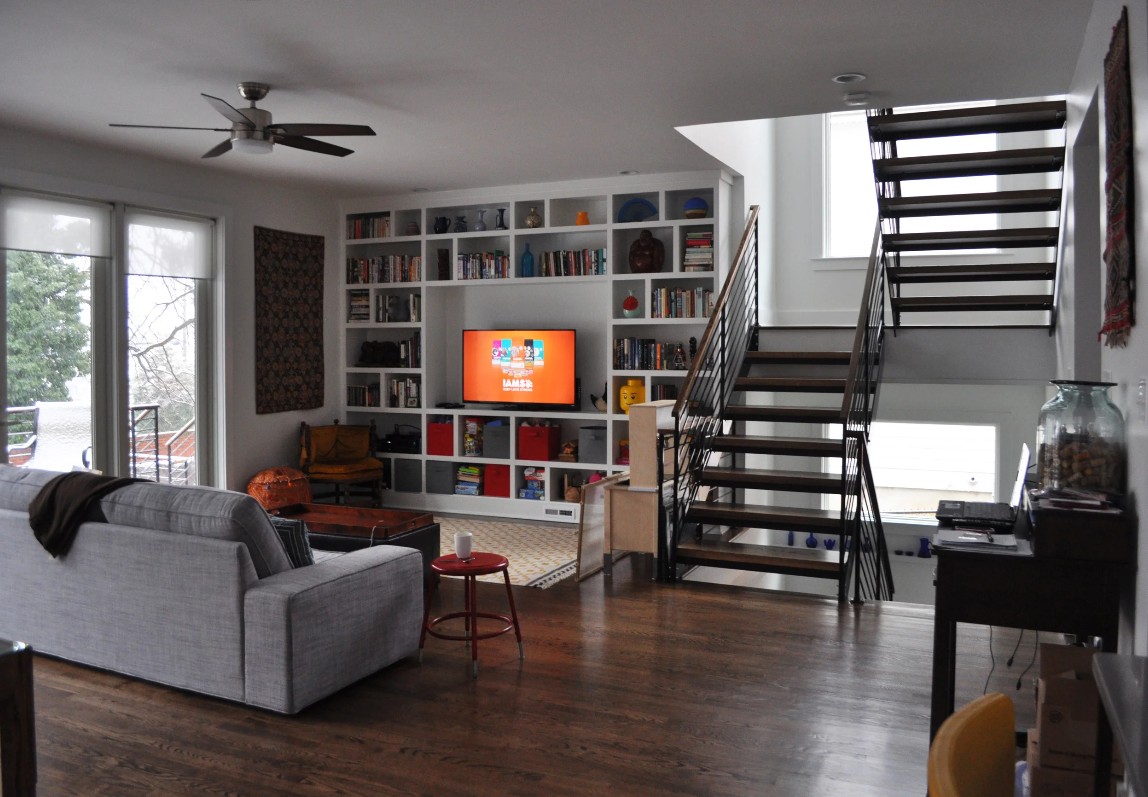
The same living room from the opposite side: a wall of built-in white bookshelves carries the back wall, a gray sofa sits in front, and an open metal-stringer stair with cable rails climbs to the master suite above
The renovated kitchen, expanded into the former dining room: white casework with gray quartz counters, two yellow stools at the counter peninsula in the foreground, a stainless hood over the cooktop, and a banquette under a pair of windows at the far end of the room
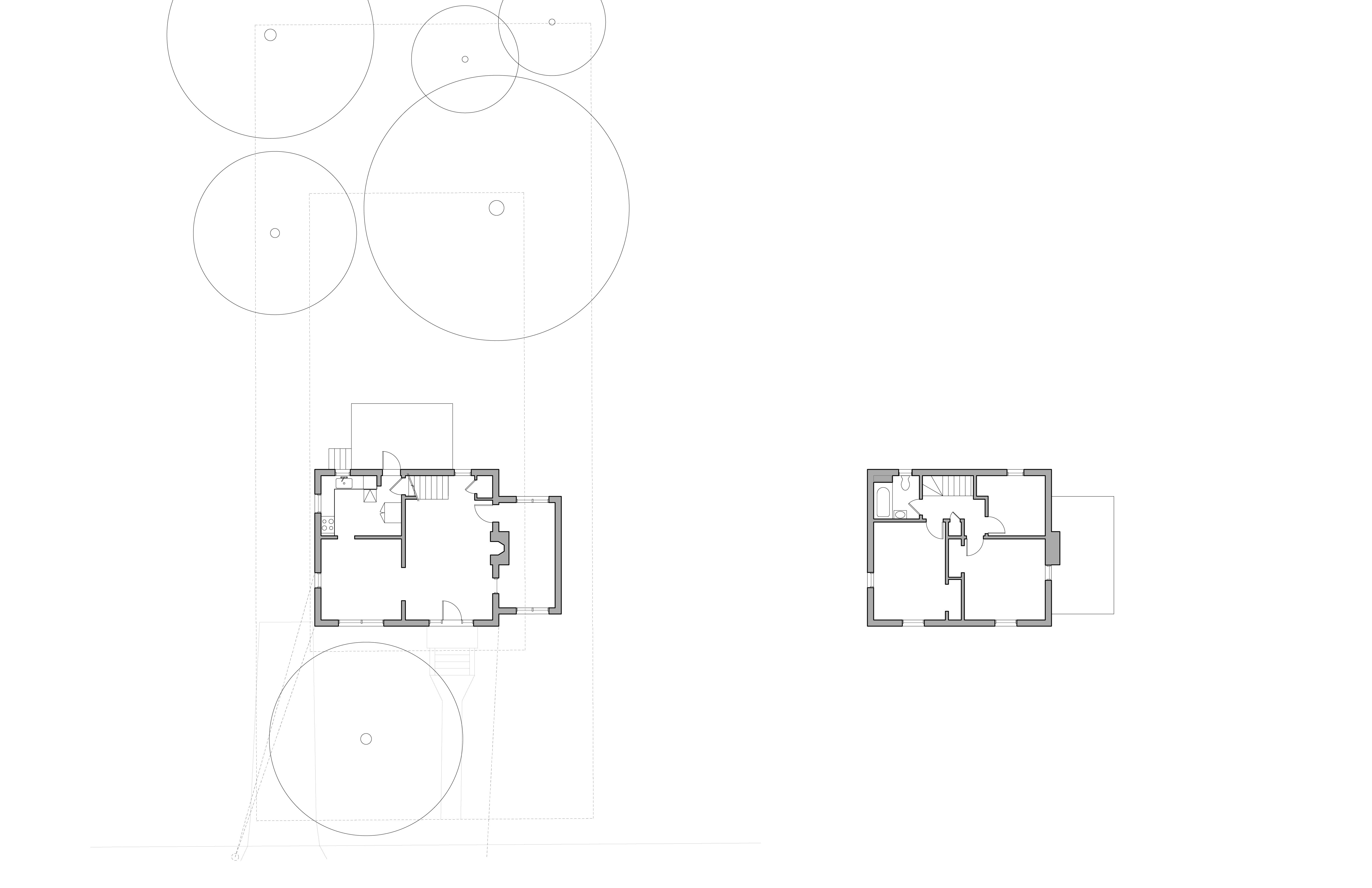
The original 1930s colonial as found: first floor at left in plan with the surrounding lot and tree canopies shown, second floor at right, both drawn at the same scale; the side porch is visible as a small wing on the right side of the first floor
Existing Plans
The renovated house at the same scale and anchor: first floor at left showing the new addition extending into the rear yard with the deck beyond, the kitchen expanded into the former dining room, and the rebuilt side porch as a mudroom; second floor at right with the new master suite in the addition; existing footprint shown as dashed lines for comparison
Renovated Plans
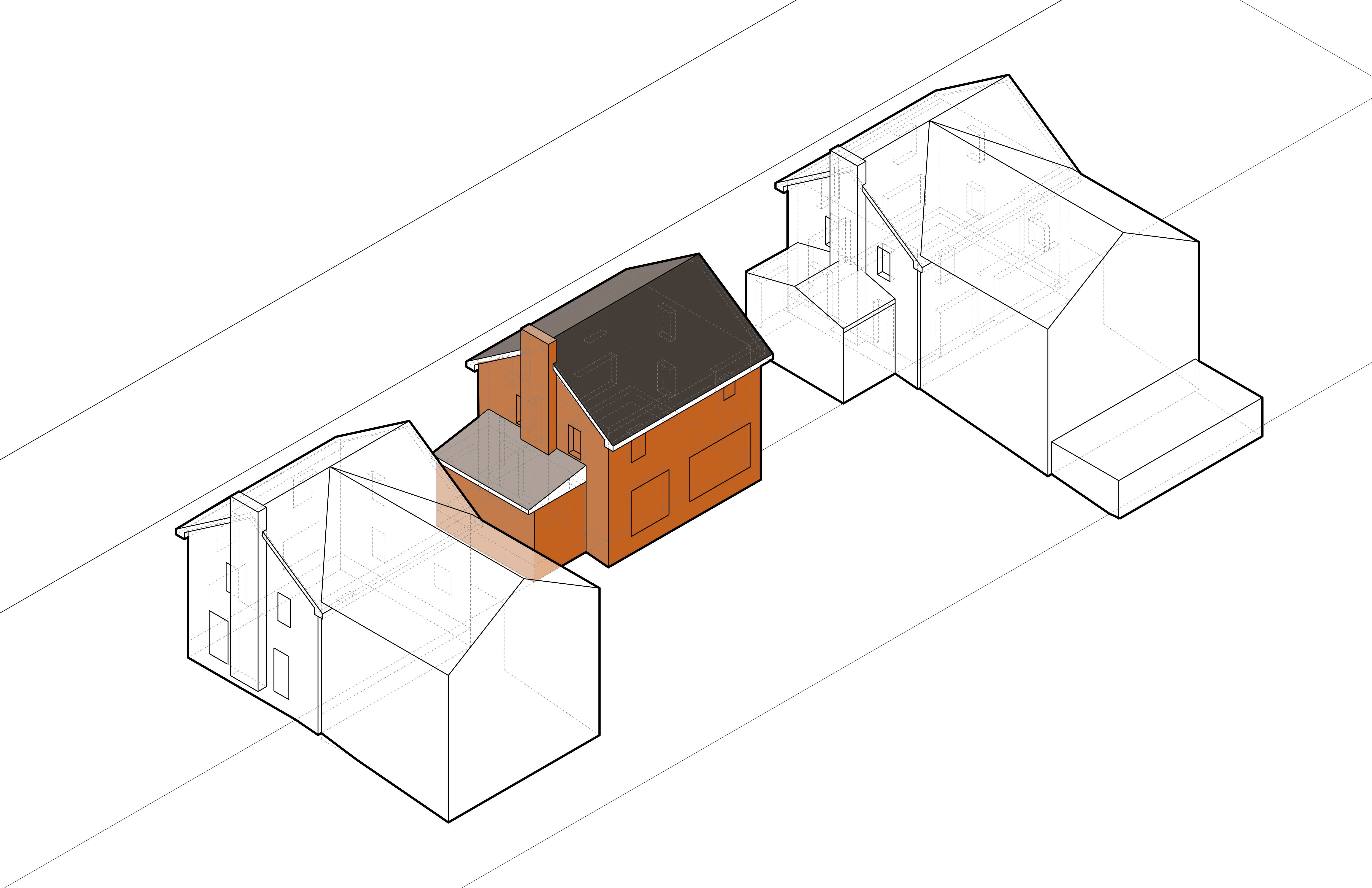
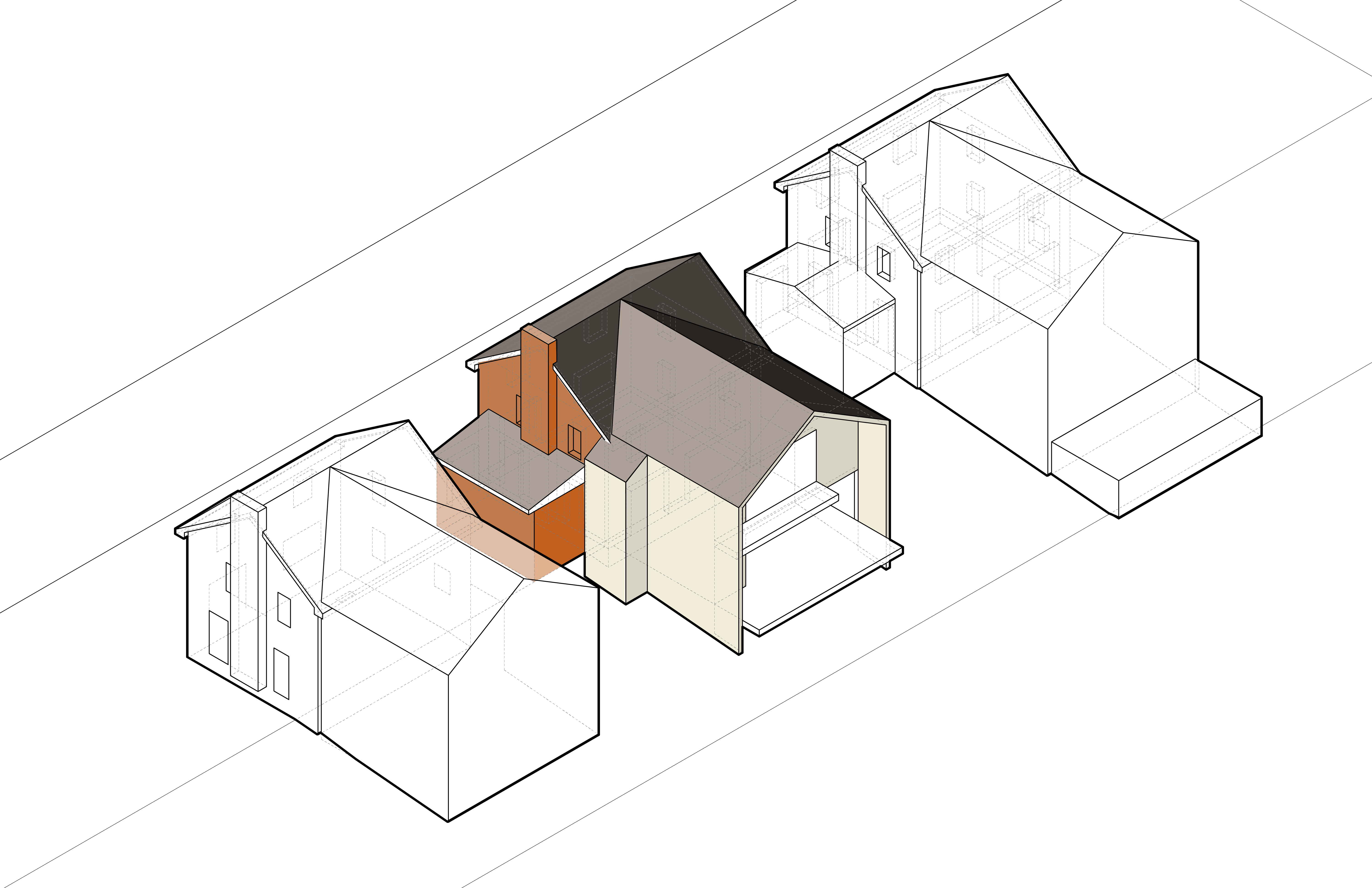
Isometric of the existing 1930s colonial in orange, its enclosed side porch shown in lighter pink, with the two neighboring houses drawn in ghosted line — the original house sits as a smaller object on a row of larger neighbors
Existing
Isometric of the renovated house at the same projection and anchor: the original orange volume remains in its exact original position, with the new tan addition extending into the yard behind it, the new gable roof spanning the two, and the side porch now absorbed into the new first-floor program; the neighbors sit unchanged in the same ghosted positions
Renovated
Archive
Further work